


Insmed (INSM) Could Be 50% Undervalued After TPIP Phase 3 Push
Insmed (INSM) is back in focus after spotlighting its global PALM Clinical Development Program for TPIP at CHEST 2026. This move ties directly to its expanding respiratory pipeline and future product mix.
Recent trading tells a mixed story for Insmed. The 1-day share price return of 1.45% contrasts with a 30-day share price decline of 17.27% and a year-to-date drop of 43.99%. At the same time, the 3-year total shareholder return of about 3x signals earlier, much stronger momentum that has since faded as investors reassess pipeline progress and risk around the latest TPIP and respiratory portfolio updates.
Scan how Insmed compares to other respiratory and biotech stories in motion by running the curated 20 high quality undiscovered gems.For investors watching Insmed after the TPIP spotlight and the sharp pullback, the tension is simple. Is this reset enough compensation for the pipeline risk, or does patience for a cheaper entry still make more sense before running the numbers?
Most Popular Narrative: 50% Undervalued
Against Insmed's last close of $99.21, the most widely followed narrative anchors on a fair value of about $197, which implies a sizeable gap that bulls and skeptics alike are trying to explain.
The analysts have a consensus price target of $197.14 for Insmed based on their expectations of its future earnings growth, profit margins and other risk factors. In order for you to agree with the analysts, you would need to believe that by 2029, revenues will be $4.1 billion, earnings will come to $1.0 billion, and it would be trading on a PE ratio of 56.3x, assuming you use a discount rate of 7.2%.
See why 21 investors see Insmed as 50% undervalued.
Result: Fair Value of $197 (UNDERVALUED)
Still, delays to brensocatib approvals or tougher payer terms for TPIP could quickly challenge the idea that Insmed is trading at a simple discount story.
Find out about the key risks to this Insmed narrative.
Another View: Insmed Looks Expensive On Sales
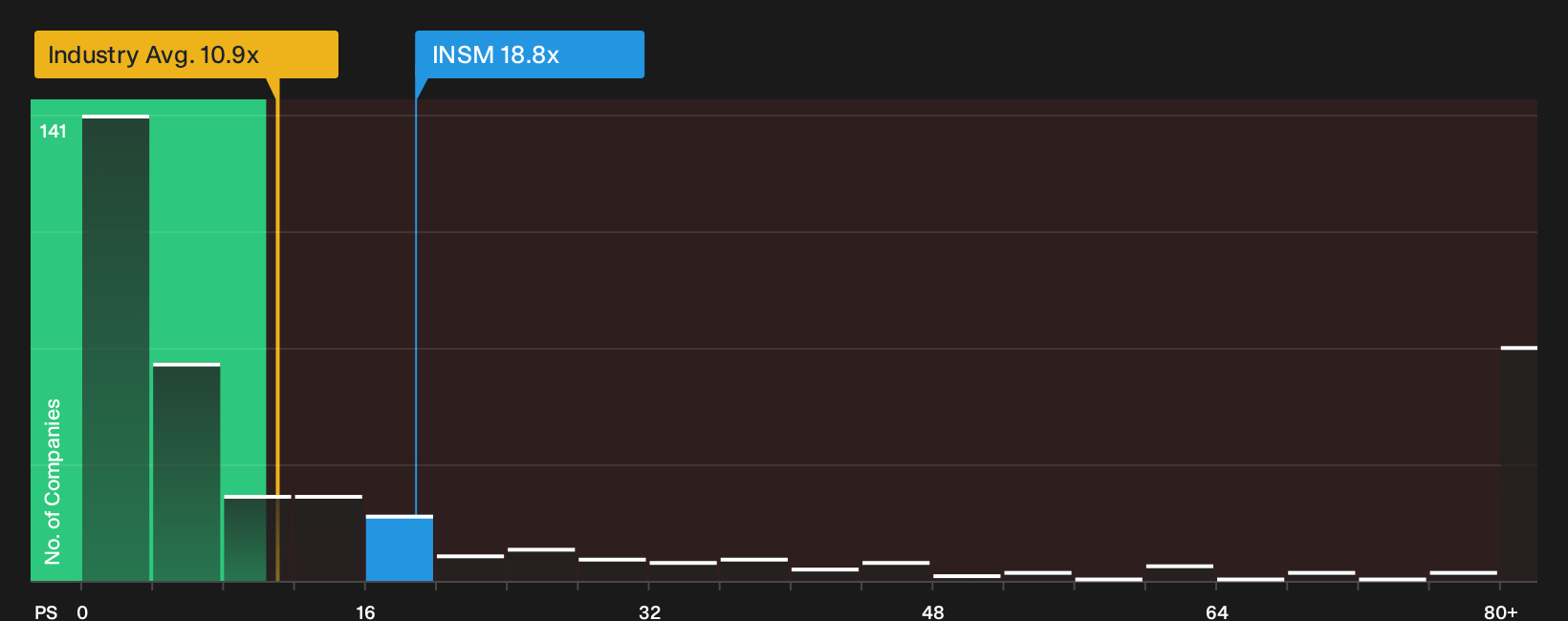
There is a different message when shifting away from fair value models and instead focusing on what investors pay for Insmed's current revenue. On a P/S ratio of 18.8x, the stock trades at a much richer level than both direct peers at 7.4x and the wider US biotechs group at 10.9x. The gap suggests that expectations reflected in the price are already very high, even before comparing that 18.8x against the 16.9x fair ratio that our work suggests the market could move toward. If sentiment cools, how much room is left in that multiple before it starts to work against shareholders rather than for them?
For a closer look at how this sales multiple compares with peers and where the fair ratio points next, See what the numbers say about this price — find out in our valuation breakdown.
Next Steps
Mixed signals on Insmed's story so far. If you want to move fast and ground your own view in the numbers, start with the 3 key rewards and 2 important warning signs.
Looking for more investment ideas beyond Insmed?
If Insmed has you thinking harder about risk, reward and timing, broaden your watchlist and let structured stock ideas do some of the heavy lifting for you.
- Hunt for potential value opportunities by scanning our curated pool of 31 high quality undervalued stocks that combine quality fundamentals with appealing pricing signals.
- Prioritise resilience by reviewing a 32 resilient stocks with low risk scores designed to spotlight businesses with more measured risk profiles and sturdier financial characteristics.
- Target financial strength by filtering through a list of solid balance sheet and fundamentals (25 results) that highlights companies with healthier balance sheets and more robust fundamentals.
This article by Simply Wall St is general in nature. We provide commentary based on historical data and analyst forecasts only using an unbiased methodology and our articles are not intended to be financial advice. It does not constitute a recommendation to buy or sell any stock, and does not take account of your objectives, or your financial situation. We aim to bring you long-term focused analysis driven by fundamental data. Note that our analysis may not factor in the latest price-sensitive company announcements or qualitative material. Simply Wall St has no position in any stocks mentioned.
Have feedback on this article? Concerned about the content? Get in touch with us directly. Alternatively, email editorial-team@simplywallst.com