


Parsons (PSN) Could Be 27% Undervalued Following Weak Revenue And Guidance Miss
Parsons earnings miss puts guidance under the microscope
Parsons (PSN) set the tone for trading after reporting quarterly revenue of US$1.58b, which was flat year over year and below expectations, alongside revenue and EBITDA guidance that also fell short of analyst estimates.
The weak guidance landed on a stock that was already under pressure. Parsons shares have retreated about 23% over the past three months and are down almost 30% year to date, with a 1-year total shareholder return falling roughly 49%. This signals fading momentum despite a still positive 5-year total shareholder return of about 22%.
Scan beyond Parsons and see how other contractors with firmer outlooks are positioned in our hand picked 32 resilient stocks with low risk scores.
Parsons now trades after a sharp reset, with guidance cuts already punished hard in the share price. The next step is working out whether the current valuation still leaves meaningful upside ahead or if most of it is already behind the stock.
Most Popular Narrative: 27% Undervalued
Parsons closed at $43.78, while the most widely followed narrative pegs fair value around $59.64. The gap now comes down to how much faith you put in margin mix, contract clean up and the durability of its backlog.
The main thing that has to go right is Parsons successfully executing its portfolio mix shift toward higher margin, product and AI driven federal work, while continuing to wind down and exit lower return or higher risk construction and advisory contracts without further large charges.
See why 13 investors see Parsons as 27% undervalued.
Result: Fair Value of $59.64 (UNDERVALUED)
Still, the Parsons story can break if more legacy contract losses emerge, or if U.S. federal and Middle East project funding wobbles again and delays cash conversion.
Find out about the key risks to this Parsons narrative.
Another View: Parsons Through The P/E Lens
DCF work points to Parsons trading well below an estimated $114.63 per share, yet the P/E ratio tells a tighter story. At 29.7x earnings, the stock is richer than the US Professional Services industry on 22.3x and the peer average of 16.5x, and only slightly under its 31.2x fair ratio. Is that premium a source of comfort or a margin for error?
For a closer look at what this earnings multiple implies for upside, downside and timing, See what the numbers say about this price — find out in our valuation breakdown.
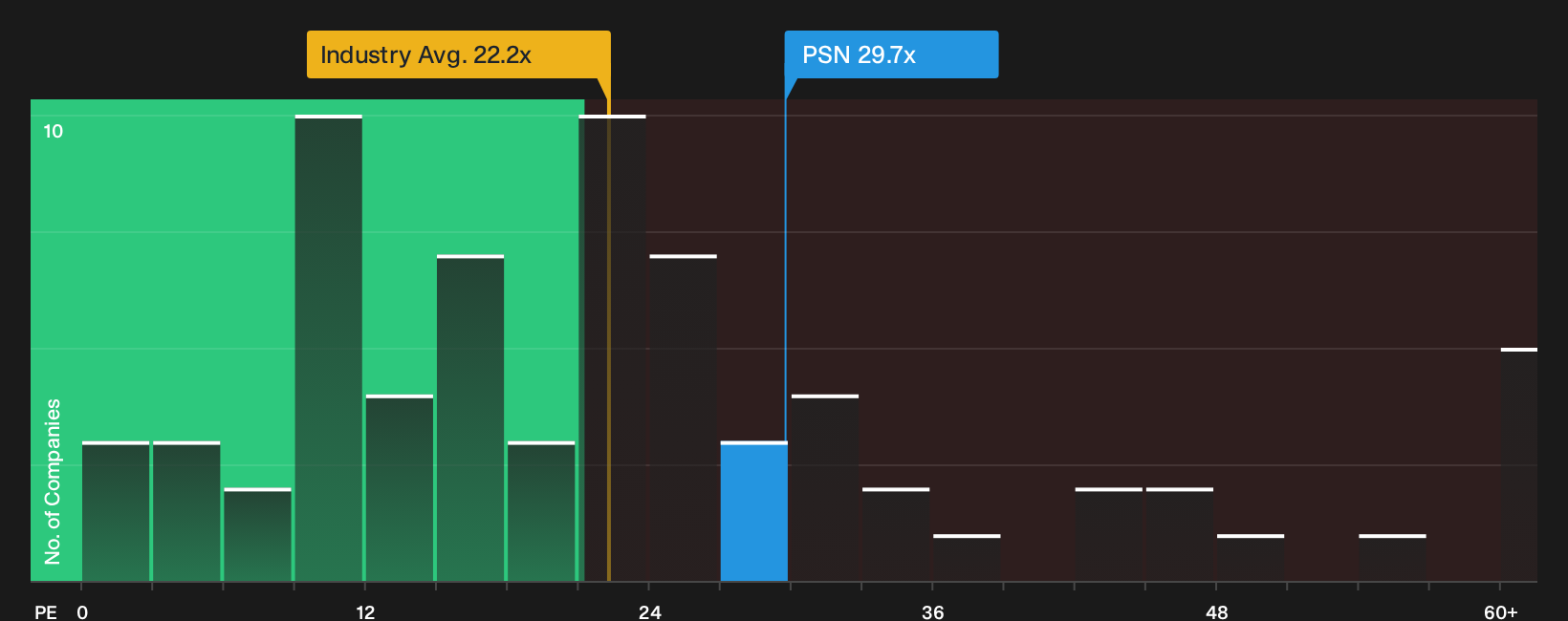
Next Steps
Mixed signals on Parsons so far, which is exactly why you should run the numbers yourself, weigh the risks against the potential rewards, and see the 3 key rewards and 3 important warning signs.
Hunting For Your Next Investment Idea Beyond Parsons?
Parsons might be on your radar, but your next strong idea often comes from looking where others are not. Use the screener to pressure test fresh candidates before they move.
- Target stability in rocky markets by examining companies that show up in our list of solid balance sheet and fundamentals (25 results) and see which ones handle financial stress best.
- Zero in on pricing power and potential mispricings by scanning the 32 high quality undervalued stocks that combine quality fundamentals with compressed expectations.
- Lock in income ideas that pay you to wait by checking the 8 dividend fortresses and filtering for yields that match your risk tolerance.
This article by Simply Wall St is general in nature. We provide commentary based on historical data and analyst forecasts only using an unbiased methodology and our articles are not intended to be financial advice. It does not constitute a recommendation to buy or sell any stock, and does not take account of your objectives, or your financial situation. We aim to bring you long-term focused analysis driven by fundamental data. Note that our analysis may not factor in the latest price-sensitive company announcements or qualitative material. Simply Wall St has no position in any stocks mentioned.
Have feedback on this article? Concerned about the content? Get in touch with us directly. Alternatively, email editorial-team@simplywallst.com