


NFLX Stock Layoffs: What to Know About the Latest Netflix Job Cuts
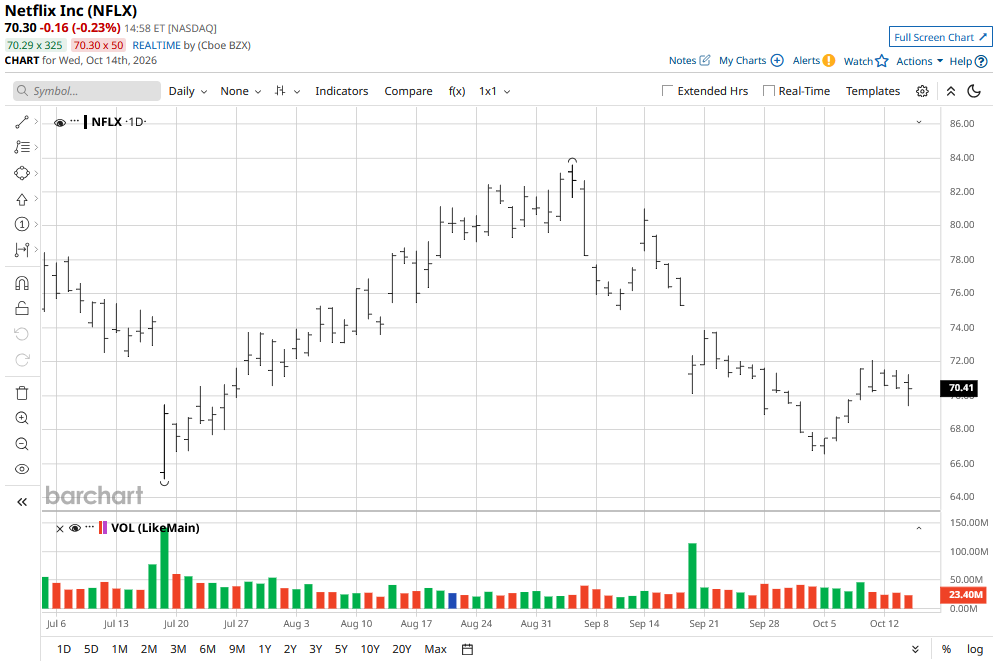
Netflix (NFLX) shares inched down on Oct. 14 after the streaming company revealed plans to eliminate about 1,000 jobs, representing 6% of its global workforce. These layoffs mark Netflix's largest since 2022 and come as investors question its ability to sustain growth. Management, however, said the giant remains on course to meet its full-year forecast.
Versus its year-to-date high, Netflix stock is down more than 35% at the time of writing.
What We Know About the Latest Netflix Layoffs
Netflix said its product, technology, legal, and human resources (HR) teams will bear the brunt of the announced reductions. In its statement, management framed the decision as part of broader organizational changes aimed at directing resources toward priorities with greater impact.
For shareholders, the potential benefit is a leaner expense base, which could support profitability as revenue growth moderates. Still, cutting roles in product and technology carries execution risk; savings could lose their appeal if fewer resources weaken service improvements needed to attract subscribers and retain existing customers.
Is NFLX Stock Still a Good Long-Term Investment?
Despite year-to-date underperformance, Netflix shares retain a credible long-term investment case, supported by international growth, pricing power, and an expanding advertising business.
Its latest shareholder letter projected 2026 revenue of about $51.2 billion on a rather healthy 31.5% operating margin. Management expects ad revenue to roughly double this year to $3 billion, reinforcing that NFLX remains strongly positioned to monetize its audience beyond subscription fees.
That said, Barchart currently has an overall average “100% SELL” opinion on the Nasdaq-listed firm, signaling technical momentum remains against it as of writing.
Wall Street Remains Bullish on Netflix Shares
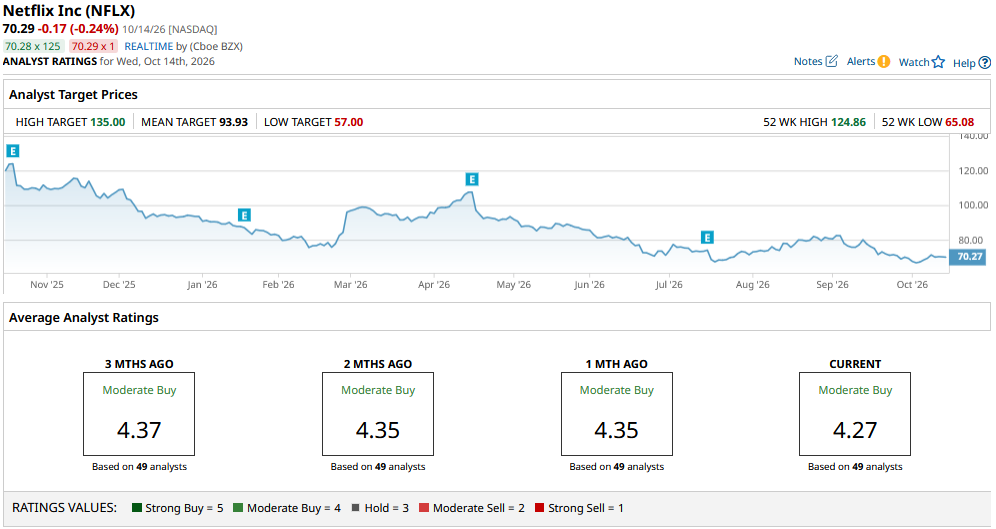
NFLX stock’s year-to-date decline has so far failed to deter Wall Street firms from recommending buying it at current levels.
According to Barchart, the consensus rating on Netflix remains at “Moderate Buy” as of this writing, with the mean price target of about $94 indicating potential upside of more than 30% from current levels.
On the date of publication, Wajeeh Khan did not have (either directly or indirectly) positions in any of the securities mentioned in this article. All information and data in this article is solely for informational purposes. For more information please view the Barchart Disclosure Policy here.