


3 U.S. Industrial REIT Stocks Built For Higher Rates
Surging U.S. debt above $40b, higher Treasury yields near 5%, and rising borrowing costs are reshaping how investors think about risk, especially in capital heavy areas like industrial and logistics REITs. Some companies look pressured, others look quietly prepared. This article walks through three REIT stocks that appear better positioned on balance sheet strength and shows how their exposure to these macro shocks could either support or undermine investor returns over time.
The three stocks highlighted below are a sample set, and the full screen surfaced 10 more U.S. industrial and logistics REITs with similarly detailed balance sheet stories that are not covered here. To sort through that wider group yourself, identify stronger balance sheets, and analyze which profiles best fit your risk tolerance, head straight into the U.S. Industrial & Logistics REITs with Strong Balance Sheets screener.
First Industrial Realty Trust (FR)
First Industrial Realty Trust is a pure-play U.S. logistics landlord with a large footprint in key freight hubs, which makes its balance sheet quality highly relevant as financing costs climb and new warehouse construction becomes harder to justify for weaker peers.
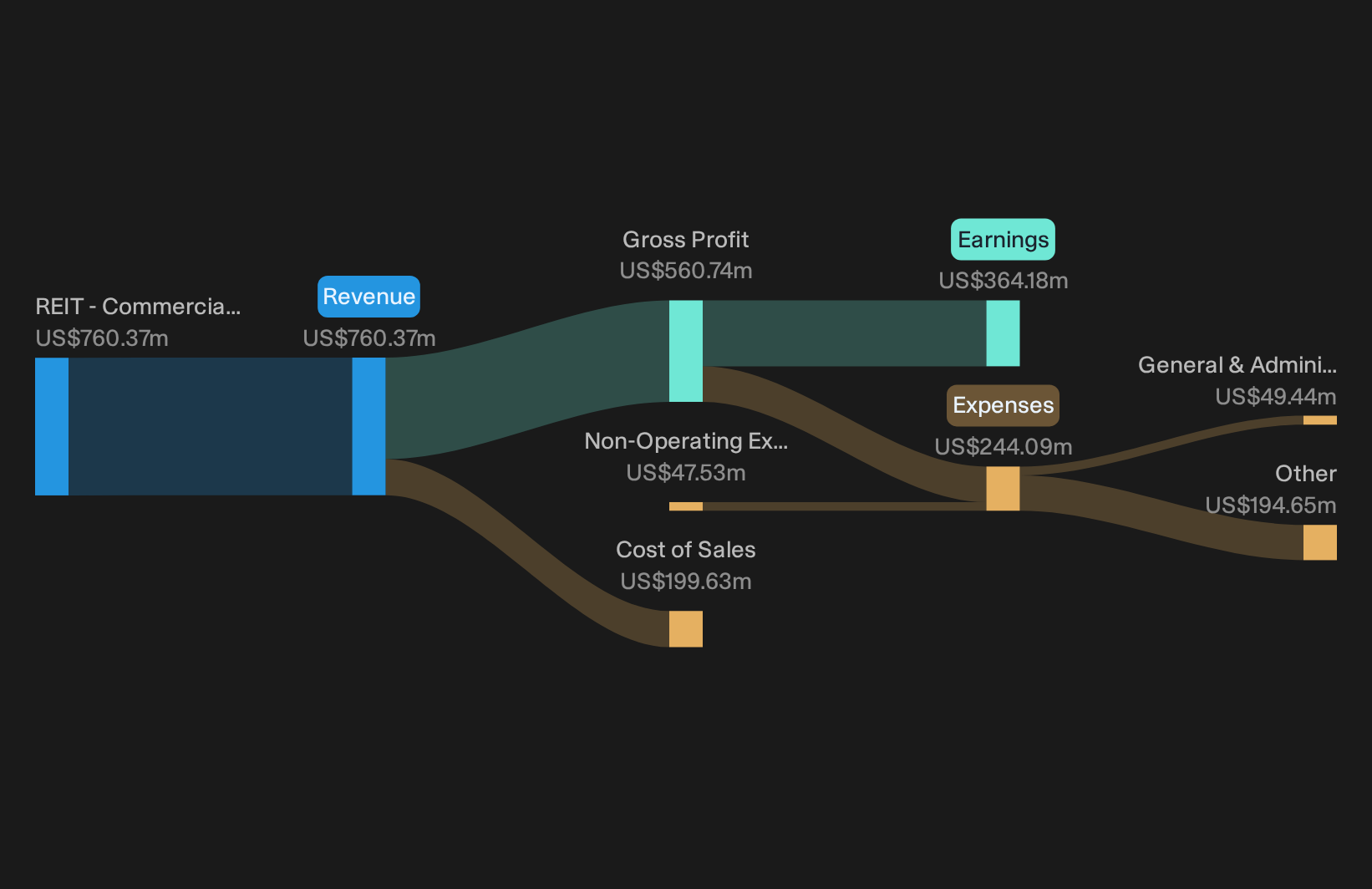
First Industrial Realty Trust generates about US$760 million in REIT commercial revenue and focuses entirely on U.S. industrial and logistics properties, with a market cap near US$8.2b that places it firmly in the larger, balance-sheet-focused REIT camp.
Very strong rent mark to market on new and renewal leases in 2026, with 39% cash rent increases year to date and 35% to 40% guided on commencements, suggests First Industrial Realty Trust still has meaningful embedded rent uplift to capture as below-market leases roll.
What happens if a single pressure point quietly reshapes how much of that embedded rent uplift actually reaches long-term cash margins?
That quiet pressure point matters, and the full narrative for First Industrial Realty Trust shows how First Industrial Realty Trust’s rent uplift, debt profile, and capital choices could be quietly decoupling from weaker peers.
EastGroup Properties (EGP)
EastGroup Properties sits in the sweet spot of this screener. It is a mid cap industrial REIT built around modern distribution space in high growth U.S. markets, where balance sheet discipline and funding choices carry extra weight as borrowing costs rise.
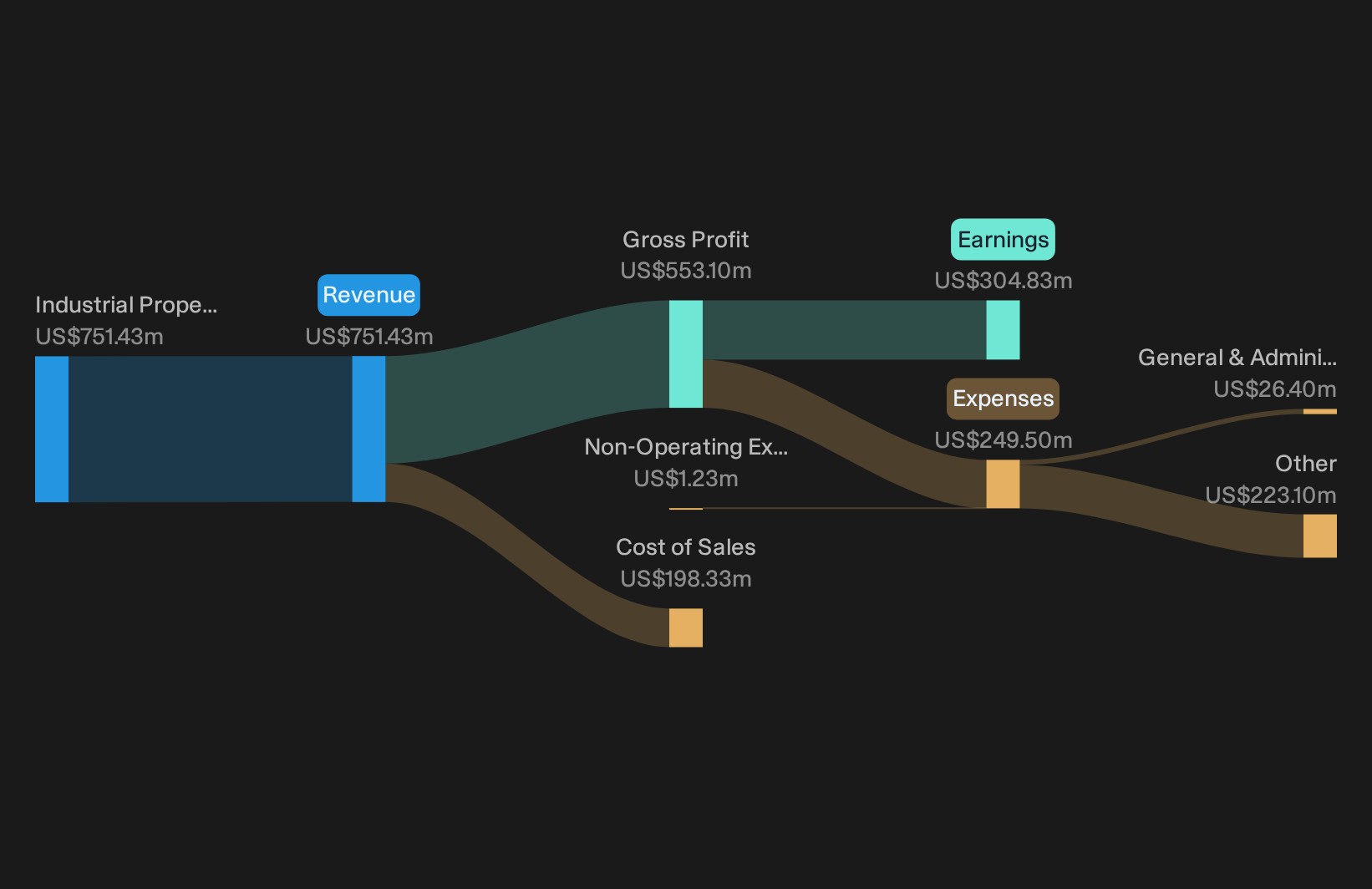
EastGroup Properties develops, acquires and operates industrial properties for mid sized tenants across high growth U.S. markets, generating about US$751 million in industrial property revenue and carrying a market cap of roughly US$10.6b.
Structural demand for EastGroup Properties infill shallow bay assets in fast growing Sunbelt markets, supported by tenant comments on higher diesel costs and traffic congestion, can keep occupancy and re leasing spreads healthy. This feeds directly into rental revenue and same store NOI.
What really moves the needle from here is how one less visible financing decision shapes the balance between that cash flow strength and future returns.
That hidden financing choice is the real hinge for EastGroup Properties, and the full narrative for EastGroup Properties shows whether it is quietly accelerating value or masking future risk.
Safehold (SAFE)
Safehold plugs into this industrial and logistics screener as a different kind of landlord, supplying long term ground lease capital that can matter when higher borrowing costs push developers to seek lower cost funding for warehouses, distribution centers and related projects.
Safehold focuses on acquiring, managing and capitalizing ground leases that generated about US$436 million in revenue in the United States, with a business model aimed at helping property owners free up capital while it collects predictable land rent, and the REIT carries a market cap near US$854 million.
Although Safehold highlights an estimated US$9.8b of unrealized capital appreciation together with a higher implied 7.4% inflation adjusted economic yield, the transition of two Park Hotels assets to fee simple ownership already reduced Q1 2026 net income by about US$3.5m and shows that converting or unwinding ground leases can redirect value away from recurring rent into lower yielding ownership structures, which may weigh on earnings and pressure return on equity if similar situations recur.
The real test is whether one quiet shift in how counterparties use these ground leases ends up tilting future cash margins and balance sheet strength.
If that shift is what you are watching, the full narrative for Safehold shows how Safehold’s ground leases could be quietly accelerating value or masking future pressure.

Seeking Fresh Alternatives Before They Fly
Fresh ideas move first. Once momentum builds, strong candidates can be re rated quickly while weaker ones get caught dropping. Scan under the radar for now and get in early.
- Target reliable income streams while others chase headlines by reviewing the 8 dividend fortresses that focus on durable cash flows and disciplined payout profiles.
- Spot potential breakouts in cutting edge automation by tracking the 91 robotics and automation stocks packed with businesses tied to real world robots, sensors and factory upgrades.
- Position ahead of infrastructure momentum by assessing the 43 power grid technology and infrastructure stocks featuring companies linked to grid upgrades, transmission hardware and critical system technology.
This article by Simply Wall St is general in nature. We provide commentary based on historical data and analyst forecasts only using an unbiased methodology and our articles are not intended to be financial advice. It does not constitute a recommendation to buy or sell any stock, and does not take account of your objectives, or your financial situation. We aim to bring you long-term focused analysis driven by fundamental data. Note that our analysis may not factor in the latest price-sensitive company announcements or qualitative material. Simply Wall St has no position in any stocks mentioned.
Have feedback on this article? Concerned about the content? Get in touch with us directly. Alternatively, email editorial-team@simplywallst.com