


Yamaha Motor (TSE:7272) Climbed, What Is Behind The Fresh Attention?
Yamaha Motor (TSE:7272) has put its DiASil Cylinder technology back in focus after announcing a gradual shift from virgin to recycled aluminum alloy, with the aim of achieving a sizeable cut in estimated annual CO2 emissions by 2030.
Recent price action suggests investors are warming to Yamaha Motor again, with a 30 day share price return of 7.65% and a 90 day share price return of 48.11%. This builds on product news like the DiASil shift and contributes to a 1 year total shareholder return of 77.58%.
Scan Yamaha Motor's peers that are benefiting from similar sustainability and mobility tailwinds by zeroing in on our hand picked 74 high quality undiscovered gems.
After a 77.58% 1 year total return, the question around Yamaha Motor shifts. Is this still early in the rerating, or has most of the upside already played out in the price?
Most Popular Narrative: 11% Undervalued
Against a last close of ¥1,864, the most followed narrative pegs Yamaha Motor's fair value at ¥2,100, which frames the recent share price strength as only a partial catch up to its earnings potential under that scenario.
Cross business cost structure reforms and manufacturing and staffing reviews, combined with the decision to discontinue in house ROV production in Outdoor Land Vehicles and shift toward partner based models, create room for a leaner asset base that could lift operating margin and earnings quality if tariff headwinds level out.
See why 2 investors see Yamaha Motor as 11% undervalued.
Result: Fair Value of ¥2,100 (UNDERVALUED)
Still, this storyline can break if U.S. tariffs bite harder than expected or if stricter engine regulations hit Yamaha Motor’s combustion heavy portfolio faster than analysts assume.
Find out about the key risks to this Yamaha Motor narrative.
Another View: What Multiples Say About Yamaha Motor
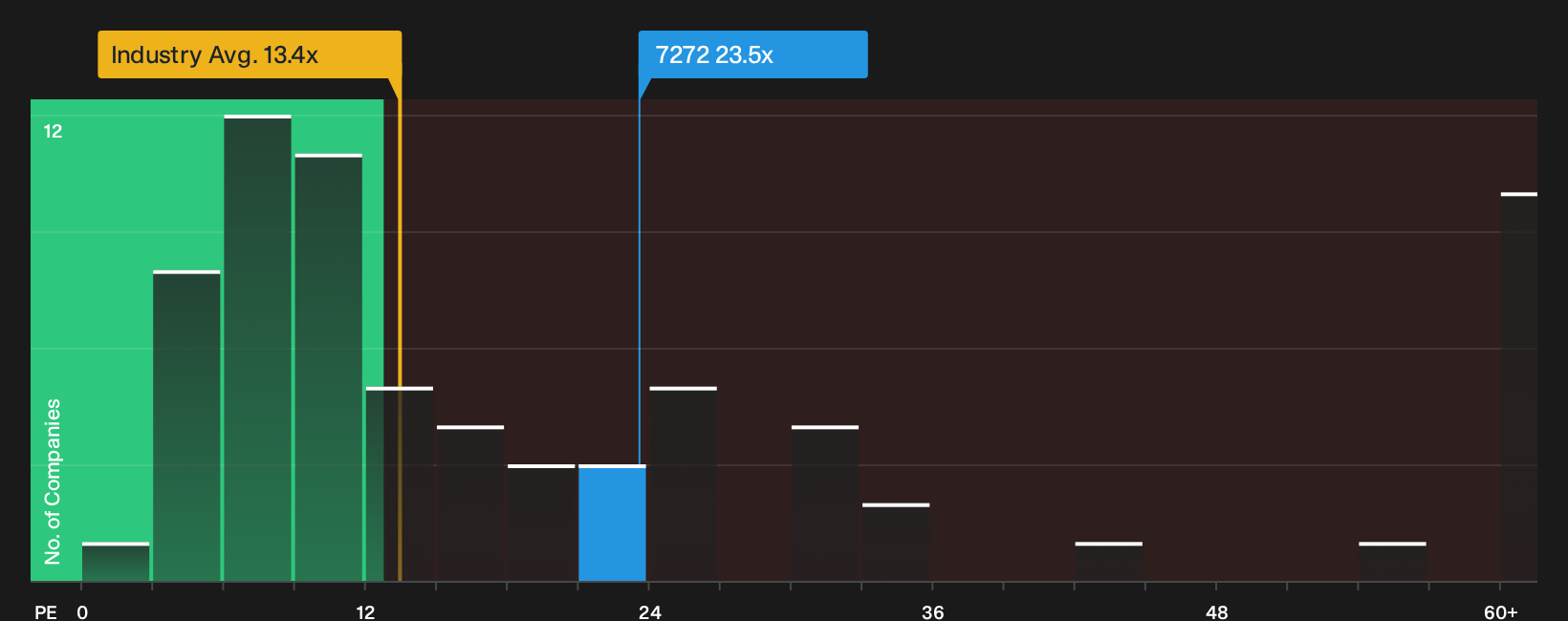
The narrative fair value of ¥2,100 paints Yamaha Motor as 11% undervalued, yet the current P/E of 23.5x tells a different story. That multiple sits well above the Asian auto sector on 13.4x and the peer average on 11.4x, and even tops its own fair ratio of 18.5x. For anyone weighing fresh upside after a strong run, this gap points to valuation risk rather than a clear bargain and raises a simple question: Which signal earns more weight in your process, the optimistic narrative or the rich earnings multiple?
See what the numbers say about this price in our valuation breakdown, starting with the See what the numbers say about this price — find out in our valuation breakdown.
Next Steps
Sentiment around Yamaha Motor is split, which is exactly when it pays to move fast, review the underlying numbers yourself, and decide where you stand. To see both sides of that debate in one place, start with the 2 key rewards and 3 important warning signs.
Looking for more investment ideas beyond Yamaha Motor?
Do not stop with a single stock story when the broader market still offers plenty of under the radar opportunities that could better fit your risk and return goals.
- Target potential upside with a curated pool of strong fundamentals using the 74 high quality undiscovered gems.
- Strengthen your income stream by scanning companies that feature resilient payouts through the 27 dividend fortresses.
- Dial down volatility by focusing on sturdier balance sheets with the 24 resilient stocks with low risk scores.
This article by Simply Wall St is general in nature. We provide commentary based on historical data and analyst forecasts only using an unbiased methodology and our articles are not intended to be financial advice. It does not constitute a recommendation to buy or sell any stock, and does not take account of your objectives, or your financial situation. We aim to bring you long-term focused analysis driven by fundamental data. Note that our analysis may not factor in the latest price-sensitive company announcements or qualitative material. Simply Wall St has no position in any stocks mentioned.
Have feedback on this article? Concerned about the content? Get in touch with us directly. Alternatively, email editorial-team@simplywallst.com