


Sysco (SYY) Los Angeles Strike Drags On With Food Deliveries At Risk
- Sysco (NYSE:SYY) is facing an ongoing labor strike at its Los Angeles facility, affecting foodservice distribution in a key market.
- Management has urged Teamsters Locals 630 and 848 to end the walkout, saying economic terms for a new contract are already agreed.
- The dispute now centers on contract language that Sysco says could permit workers to strike at any time if left unresolved.
- The Los Angeles labor standoff, and the risk of further delivery disruption, should sit alongside other factors in any Sysco view. We have also spotted 3 other big wins worth knowing about at Sysco.
This kind of labor dispute can ripple across supply chains, so it may be worth reviewing other income focused distributors through 8 dividend fortresses.
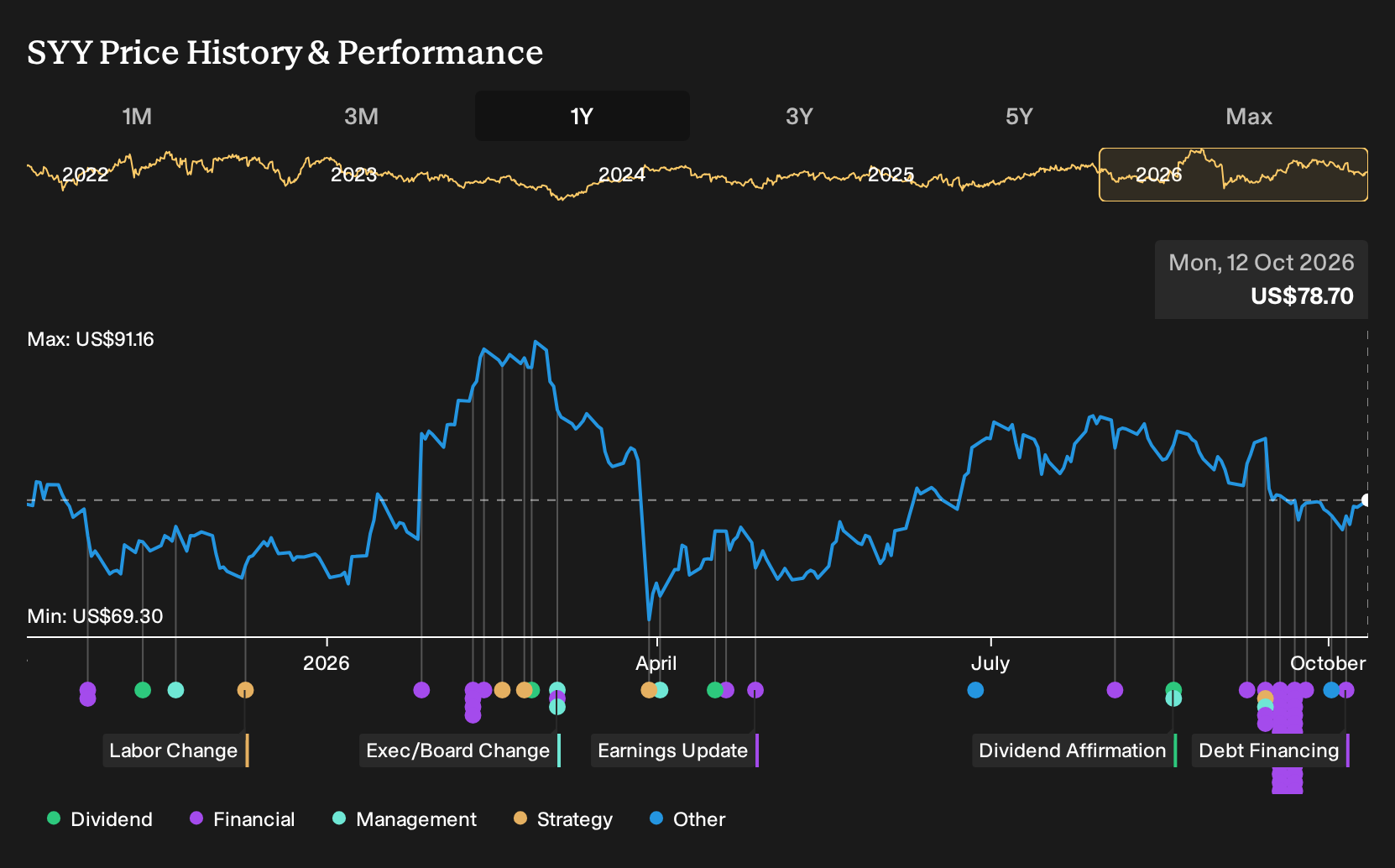
Sysco, a US foodservice distributor with a market value of about $38.7b, supplies restaurants, hospitals, schools, hotels and other institutional kitchens. Any disruption at a major hub can quickly affect how reliably these customers receive key ingredients and supplies.
Sysco’s labor standoff tests an efficiency led Narrative
The Sysco Narrative leans on management turning AI projects and the planned Restaurant Depot deal into higher earnings while handling more debt and a complex workforce. This strike lands squarely on that leadership promise, because the story only works if operations stay dependable while the balance sheet becomes heavier.
"The main factor that has to go right is for Sysco to execute on its AI and technology initiatives and successfully integrate Restaurant Depot while managing higher leverage and a paused buyback..."
See how the full story points towards a $90.31 fair value for Sysco.
The Los Angeles dispute undercuts the part of the thesis that assumes smooth execution of a higher margin mix and AI driven supply chain efficiencies. If a key hub struggles to provide reliable service during contract friction, it raises practical questions about rolling out more than 30 technology projects while integrating Restaurant Depot and serving customers that could also turn to US Foods or Performance Food Group.
At the same time, Sysco’s willingness to offer sizeable wage, pension and vacation improvements keeps faith with a Narrative that hinges on retaining frontline staff who run that complex network. The unresolved contract language on future strike rights is the big open issue, because recurring walkouts would weigh directly on the higher leverage risk analysts already flag.
The same strike can look like a temporary execution setback or an early warning on labor dependent efficiency plans, depending on which Sysco Narrative you believe.
Add Sysco to your Watchlist and get alerts as these catalysts play out.
This article by Simply Wall St is general in nature. We provide commentary based on historical data and analyst forecasts only using an unbiased methodology and our articles are not intended to be financial advice. It does not constitute a recommendation to buy or sell any stock, and does not take account of your objectives, or your financial situation. We aim to bring you long-term focused analysis driven by fundamental data. Note that our analysis may not factor in the latest price-sensitive company announcements or qualitative material. Simply Wall St has no position in any stocks mentioned.
Have feedback on this article? Concerned about the content? Get in touch with us directly. Alternatively, email editorial-team@simplywallst.com