


Bristol-Myers Squibb's Quarterly Earnings Preview: What You Need to Know
Princeton, New Jersey-based Bristol-Myers Squibb Company (BMY) discovers, develops, licenses, manufactures, markets, distributes, and sells biopharmaceutical products worldwide. With a market cap of $120.8 billion, the company offers products for oncology, hematology, immunology, cardiovascular, neuroscience, and other areas. BMY is expected to release its Q3 2026 earnings before the market opens on Thursday, October 29.
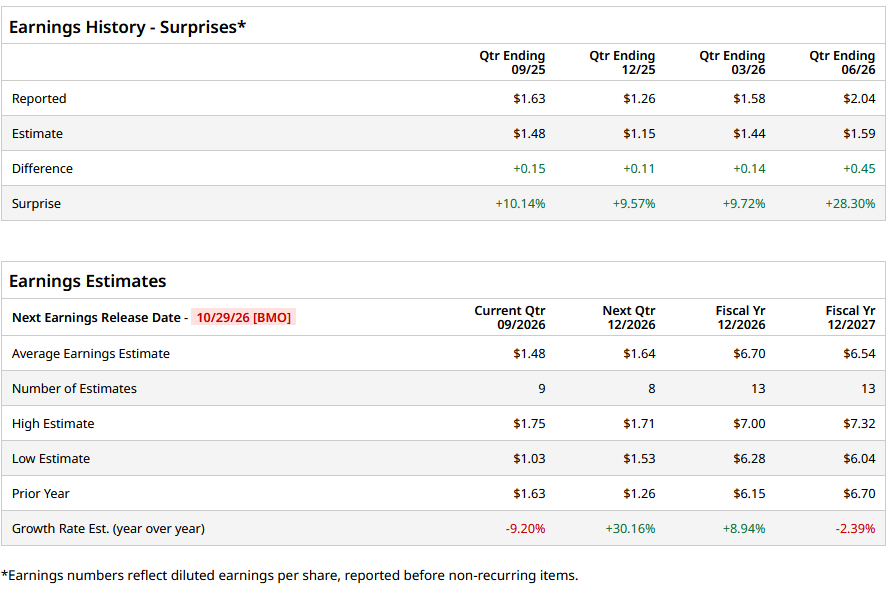
Ahead of this event, analysts anticipate the company will generate earnings of $1.48 per share, representing a decrease of 9.2% from $1.63 per share reported in the same quarter last year. The company has surpassed the Street’s bottom-line estimates in each of the past four quarters, which is impressive.
For fiscal 2026, analysts expect the company to report an EPS of $6.70, indicating an 8.9% rise from $6.15 reported in fiscal 2025. However, its EPS is expected to fall nearly 2.4% year over year (YoY) to $6.54 in fiscal 2027.
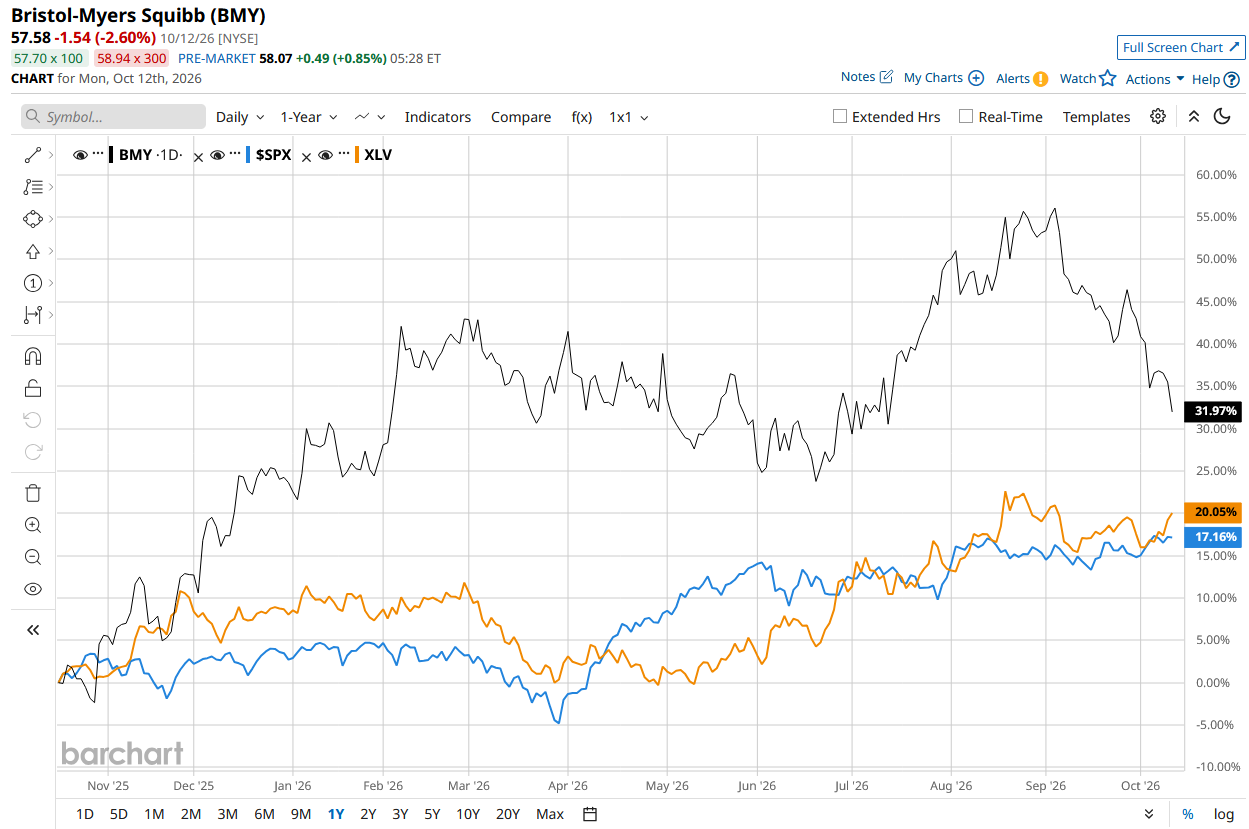
BMY stock has surged 31% over the past 52 weeks, outpacing the S&P 500 Index’s ($SPX) 19.2% rise and the State Street Healthcare Select Sector SPDR ETF’s (XLV) 21% rise during the same time frame.
On Sept. 30, BMY announced the U.S. Food and Drug Administration (FDA) approval of CAMZYOS ® (mavacamten) for the treatment of symptomatic obstructive hypertrophic cardiomyopathy (oHCM) to improve functional capacity and symptoms in adults and pediatric patients. The approval of CAMZYOS marks a landmark moment for pediatric cardiology for the company, strengthens its portfolio to offer its solutions to pediatric patients with symptomatic obstructive hypertrophic cardiomyopathy, and advances its cardiovascular pipeline further.
Analysts’ consensus opinion on the stock is moderately bullish, with a “Moderate Buy” rating overall. Among the 30 analysts covering the stock, 12 are recommending a “Strong Buy,” one advises a “Moderate Buy,” 16 suggest a “Hold,” and the remaining analyst gives a “Strong Sell” for the stock. BMY’s average analyst price target is $66.19, indicating an upside of 15% from the current level.
On the date of publication, Aritra Gangopadhyay did not have (either directly or indirectly) positions in any of the securities mentioned in this article. All information and data in this article is solely for informational purposes. For more information please view the Barchart Disclosure Policy here.