


National Grid (LSE:NG.) Lifts Guidance, Is The Stock Still Undervalued?
National Grid (LSE:NG.) reset expectations this week after updating its earnings outlook. The group now guides to slightly above its prior 13 to 15% EPS growth range for fiscal 2027.
At a £11.645 share price, National Grid has edged higher in the very short term, with a 1-day share price return of 1.53% and a 30-day share price return of 3.01%. However, the 90-day share price return has declined 6.77%. The combination of this week’s raised guidance with recent regulatory filings in the US helps frame a longer record where total shareholder return sits at 10.62% over 1 year and 79.08% over 5 years, indicating momentum that has cooled recently but remains supported over multi year periods.
Scan beyond National Grid and see how other regulated utilities and power infrastructure players stack up in our hand picked 43 power grid technology and infrastructure stocks for potential grid focused opportunities.
National Grid now trades at a double digit discount to both intrinsic value estimates and analyst targets after raising guidance this week. Is that gap cautious pricing, or an overreaction that misprices regulated risk ahead of the next review cycle?
Most Popular Narrative: 13% Undervalued
On the most followed view, National Grid’s narrative fair value of £13.40 sits above the latest £11.65 close, which puts the upgraded guidance and valuation trim side by side for investors to weigh.
National Grid plans to invest around £60 billion in its networks over the next 5 years, which is expected to drive significant asset growth and provide strong visibility on future revenues. This is likely to positively impact future revenue streams and earnings growth.
See why 131 investors see National Grid as 13% undervalued.
The popular narrative applies a 7.56% discount rate and arrives at a fair value of £13.398, which implies a 13.1% gap to the current share price. That view rests on analysts’ assumptions for mid to high single digit revenue expansion, margins in the low 20s, and a future P/E of 16.2x that sits above the current GB integrated utilities average of 9.4x.
Those inputs, along with roughly £23.2b of forecast revenue and £5.3b of earnings around 2029, point to a business model where regulated cash flows and planned grid upgrades are expected to support that higher multiple. The same narrative also highlights very specific risks, including the RIIO T3 reset, U.S. tax policy, supply chain constraints and planning delays, which could all move that fair value mark if outcomes differ from the current base case.
Result: Fair Value of £13.40 (UNDERVALUED)
Still, regulatory resets like RIIO T3 and potential shifts in US tax policy could chip away at the National Grid narrative if allowed returns or cash flows tighten.
Find out about the key risks to this National Grid narrative.
Another View: Multiples Push Back On National Grid Valuation
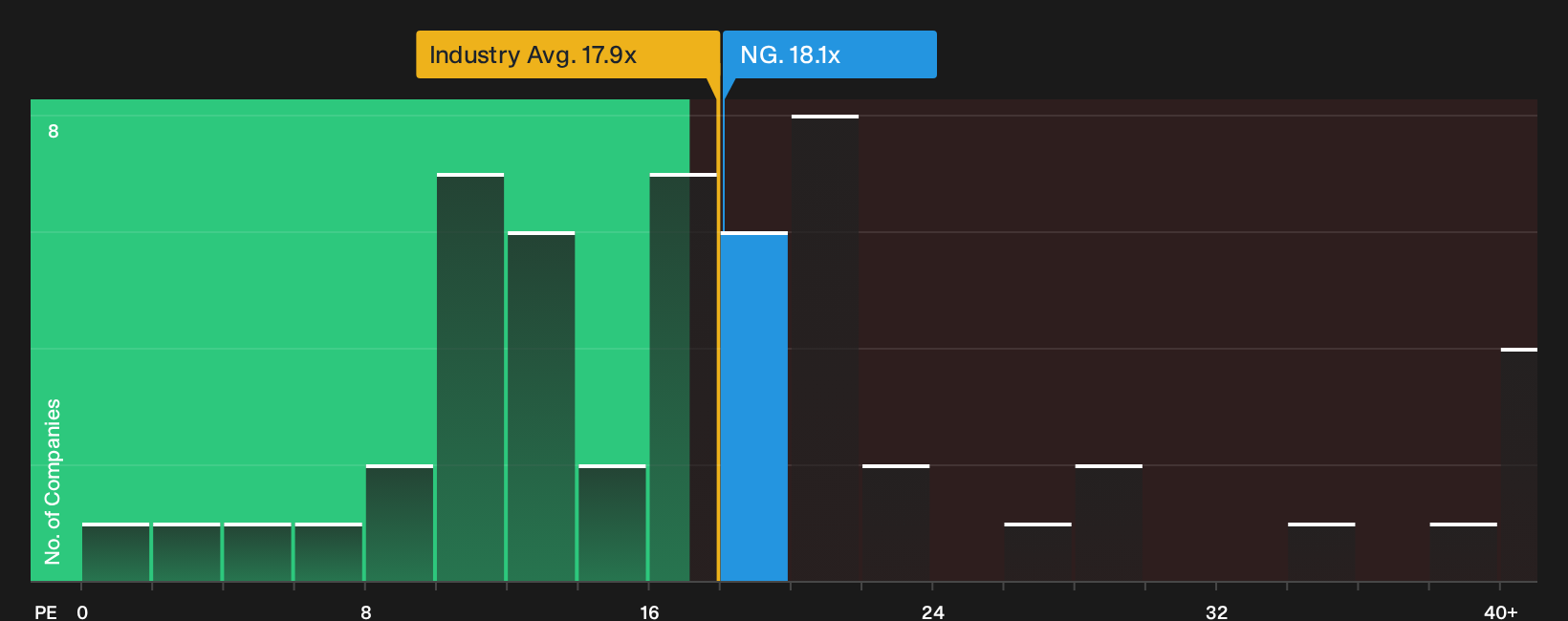
Our DCF fair value points to upside, yet the current 18.1x P/E tells a different story. That level is higher than both peers at 14x and a fair ratio of 17.6x. This means the share price already carries a valuation premium. Is that extra multiple a cushion, or a margin of risk?
See what the numbers say about this price in our valuation breakdown with See what the numbers say about this price — find out in our valuation breakdown..
Next Steps
Feeling torn between the optimism around National Grid and the risks that keep coming up in the fine print? Take a moment now to weigh both sides for yourself with 3 key rewards and 2 important warning signs.
Looking For More Investment Ideas Beyond National Grid?
If National Grid has sharpened your focus on regulated assets, now is the moment to widen your opportunity set with a few targeted screeners.
- Spot robust balance sheets and steady fundamentals before the crowd by scanning our list of solid balance sheet and fundamentals (9 results).
- Hunt for companies that combine quality with pricing gaps using the 7 high quality undervalued stocks.
- Lock in ideas where income potential takes center stage through the 1 dividend fortresses.
This article by Simply Wall St is general in nature. We provide commentary based on historical data and analyst forecasts only using an unbiased methodology and our articles are not intended to be financial advice. It does not constitute a recommendation to buy or sell any stock, and does not take account of your objectives, or your financial situation. We aim to bring you long-term focused analysis driven by fundamental data. Note that our analysis may not factor in the latest price-sensitive company announcements or qualitative material. Simply Wall St has no position in any stocks mentioned.
Have feedback on this article? Concerned about the content? Get in touch with us directly. Alternatively, email editorial-team@simplywallst.com