


3 Utility Stocks With Reliable Dividends As Higher Rates Rewrite Long Term Investing
Rising US debt costs and stubbornly higher interest rates are quietly rewriting the playbook for long term investing, and the stocks that weather this shift may not be the ones that led the last cycle. When funding the government becomes as expensive as running it, reliable dividend payers with solid balance sheets start to look less like boring utilities and more like potential shock absorbers. This article spotlights three stocks from a high quality dividend value screener that appear better placed than many to handle a world in which fiscal risk, policy surprises and tail events matter much more than the next quarter’s headline story.
The three stocks that follow are just a starting sample, and the full screen surfaced 17 more companies with equally grounded dividend stories and balance sheet profiles that are not covered here.
To see the broader opportunity set and identify which ideas best fit your own income goals and risk comfort level, head straight into the High-Quality Dividend-Paying Value Stocks screener.
Atmos Energy (ATO)
Atmos Energy fits this dividend value screen because it is a large, regulated utility where investors tend to prioritise income reliability and balance sheet discipline over eye catching growth stories.
Atmos Energy is a regulated natural gas utility that distributes fuel to about 3.4 million customers across eight US states and runs pipeline and storage assets, with roughly US$4.6b of revenue from Distribution and about US$1.2b from Pipeline and Storage, and a market value near US$27.3b.
For income focused investors trying to protect against higher fiscal and rate stress, the real intrigue with Atmos Energy is how one unresolved pressure could shape future dividend headroom and earnings quality.
Strong customer and industrial load growth, including nearly 51,000 new customers over 12 months and 12 new industrial customers expected to use about 950,000 Mcf per year once fully operational, supports ongoing volume expansion that can lift Atmos Energy revenue and earnings power.
What matters next is how a single assumption about future funding costs and capital spending discipline holds up when conditions eventually shift again.
That funding question is exactly where the full narrative for Atmos Energy joins the dots between Atmos Energy’s growth projects, rate decisions and dividend headroom.

Consolidated Edison (ED)
Consolidated Edison slots into this high quality dividend value screen as a large, regulated utility that many investors treat as an income anchor when markets start to worry about government debt costs and policy shocks.
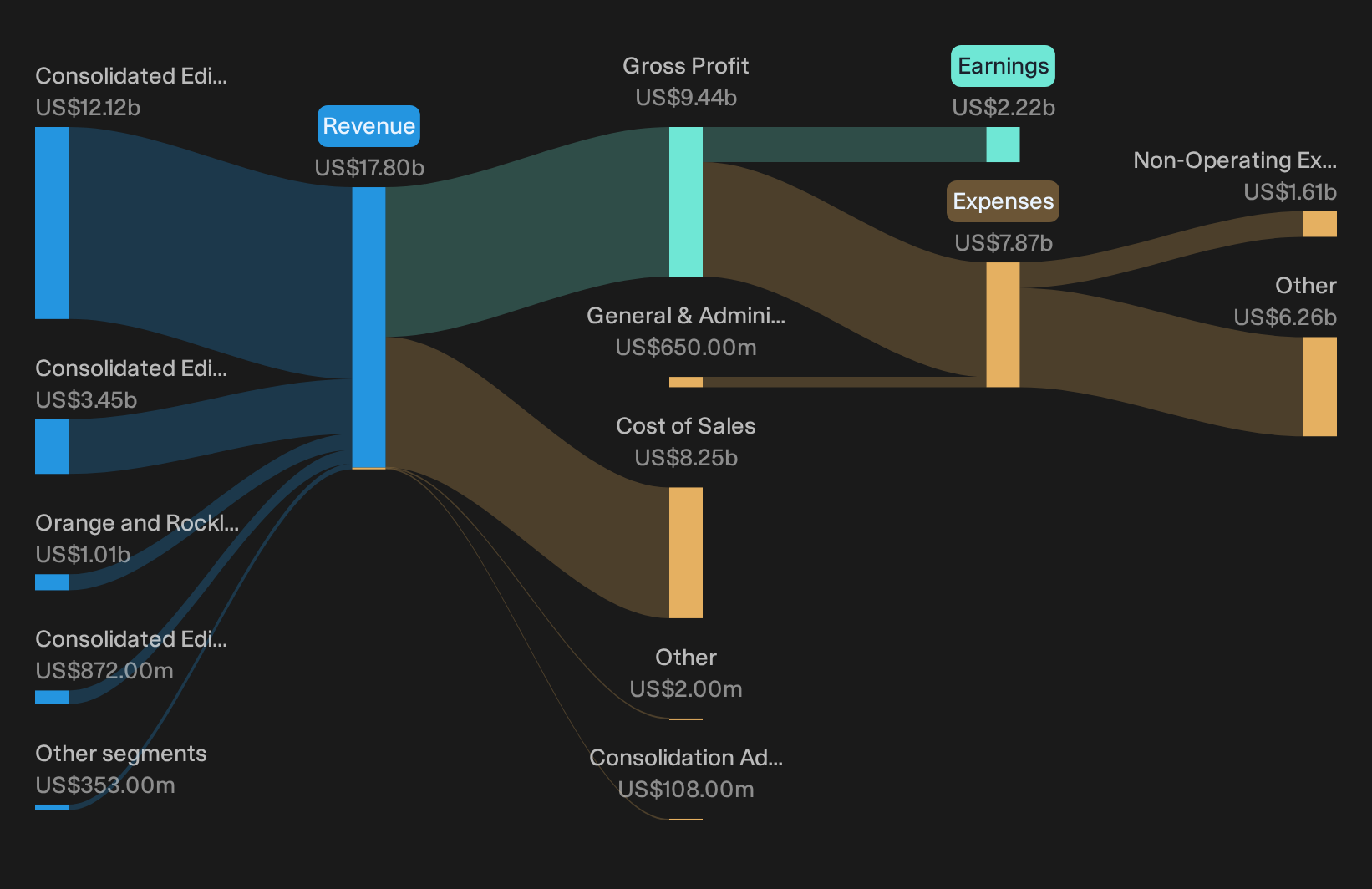
Consolidated Edison runs regulated electric, gas and steam networks across New York and parts of New Jersey, with most of its roughly US$17.7b in revenue coming from CECONY electric at US$12.1b, CECONY gas at US$3.4b and O&R electric at about US$1.0b, and the stock carries a market value near US$39.2b.
Planned infrastructure investment of about US$38b over the next five years and US$72b over the next decade at CECONY is expected to expand Consolidated Edison’s regulated asset base, which can support future revenue and earnings tied to that growing rate base.
What investors should keep an eye on now is how one less visible pressure could shape future margins, cash coverage and dividend headroom if conditions tighten again.
That quiet pressure point is exactly where the full narrative for Consolidated Edison pulls together how Consolidated Edison’s investment plans, funding costs and payout ambitions could be decoupling from headline earnings.
Sempra (SRE)
Sempra fits this high quality dividend value screen as a large regulated utility that leans on rate based cash flows from essential energy networks across California, Texas and Mexico. This profile can look especially appealing when investors prioritize income resilience over rapid growth stories.
Sempra runs regulated electric and gas utilities plus energy infrastructure, with Sempra California generating about US$11.7b of its roughly US$13.6b business revenue and Sempra Infrastructure adding about US$2.0b. The stock carries a market value near US$53.2b.
Strong demand growth in Texas, including large load requests under the Batch Zero process that equate to about 140% of Oncor's current peak load and are backed by over US$2b of customer collateral, shapes expectations that Sempra's multi decade grid buildout plan will influence its regulated rate base and future revenues.
What really matters for income focused investors is how one unseen pressure shapes the balance between future earnings growth and dividend headroom.
That unseen pressure is exactly what the full narrative for Sempra unpacks, revealing where Sempra’s grid ambitions, funding costs and dividend capacity could be quietly accelerating or stalling.

Seeking Alternatives Before The Crowd?
Fresh ideas move first. Breakout themes gain momentum while they are still under the radar for now, and slow research gets caught flat footed. Do your homework while it matters and get in early.
- Spot resilient balance sheets before sentiment turns and run your eye over the curated list of solid balance sheet and fundamentals (25 results) that filters for staying power when conditions get rough.
- Track where early capital is quietly lining up and review the hand picked 39 profitable AI stocks that aren't just burning cash that screens for real earnings instead of cash burn stories.
- Position ahead of potential infrastructure momentum and scan the focused 16 nuclear energy infrastructure stocks built to highlight power grid players tied to long dated energy themes.
This article by Simply Wall St is general in nature. We provide commentary based on historical data and analyst forecasts only using an unbiased methodology and our articles are not intended to be financial advice. It does not constitute a recommendation to buy or sell any stock, and does not take account of your objectives, or your financial situation. We aim to bring you long-term focused analysis driven by fundamental data. Note that our analysis may not factor in the latest price-sensitive company announcements or qualitative material. Simply Wall St has no position in any stocks mentioned.
Have feedback on this article? Concerned about the content? Get in touch with us directly. Alternatively, email editorial-team@simplywallst.com