


Earnings Beat Could Be A Big Moment For Micron Stock (MU)
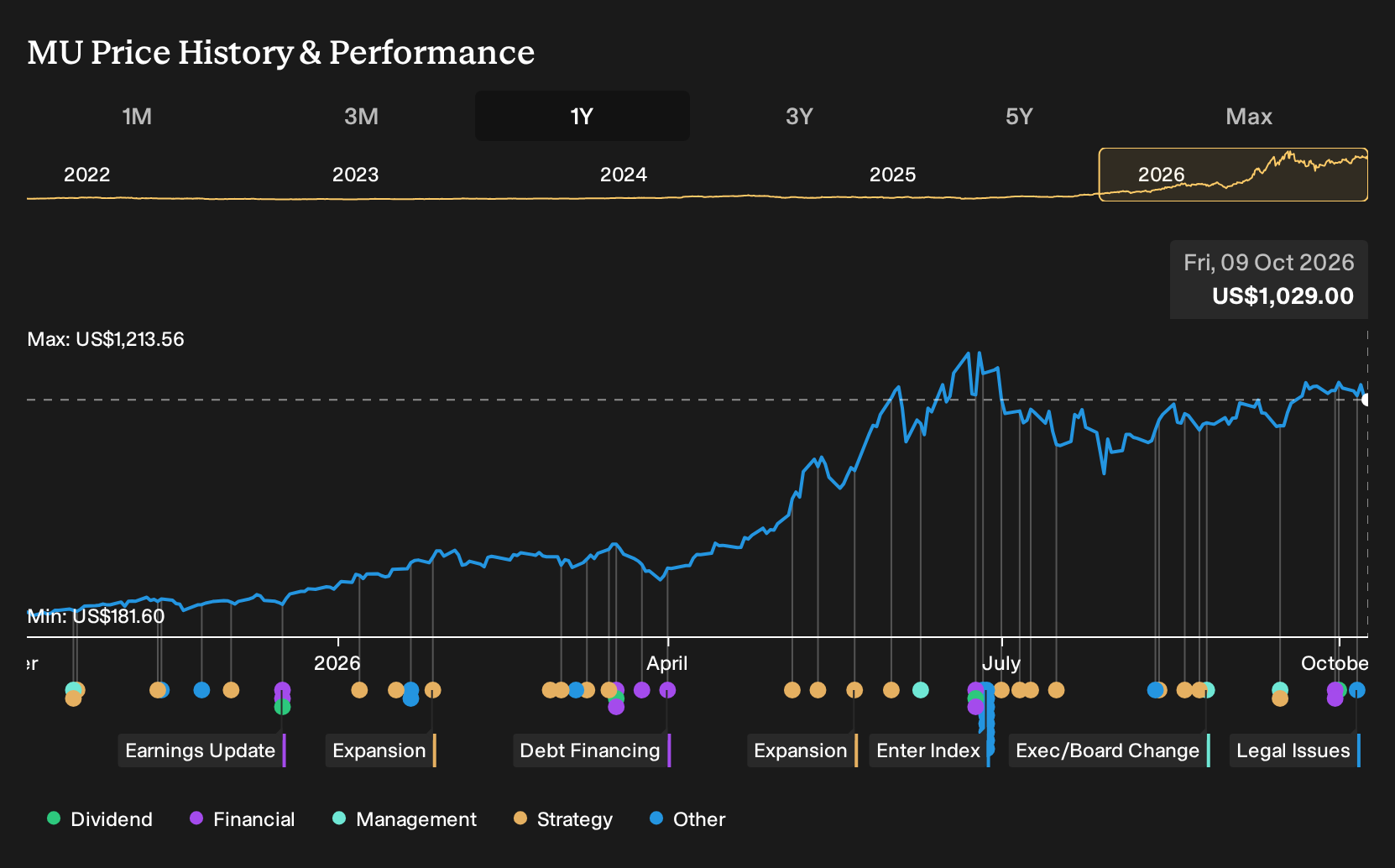
- Micron Technology reported very strong Q4 and full year 2026 figures, issued revenue and EPS guidance for early 2027, affirmed its dividend, and settled all pending litigation with Netlist through a five year, US$600m patent license covering key server DIMM and high bandwidth memory technologies.
- The US$30m quarterly cash obligation to Netlist through 2031 adds a new fixed outflow for Micron Technology. At the same time, it removes legal uncertainty around core AI data center products that sit at the center of its recent earnings strength.
- We will now see how Micron Technology's litigation settlement and patent license could reshape the investment narrative around AI driven memory demand.
Scan how other AI memory and infrastructure players are reacting to similar demand and legal shifts by reviewing the 92 AI infrastructure stocks.
Micron Technology Investment Narrative Recap
To own Micron Technology today, you need to believe the surge in AI and data center memory demand can translate into sustained, high quality cash generation, not just a one off earnings spike. The key near term swing factor remains how well Micron converts tight DRAM and HBM supply into consistent shipments under its long term customer contracts.
The Netlist settlement slightly increases fixed costs but removes a legal risk around high bandwidth memory and server DIMMs that matter most to that AI thesis. Right now the bigger watchpoint is operational. The Taiwan Taoyuan strike authorization introduces a real supply chain risk if talks break down and disruption hits during heavy capex and tight industry capacity.
Among the recent news, the five year, US$600m patent license and settlement with Netlist is most relevant. The US$30m quarterly payments from Q4 2026 through Q3 2031 are meaningful but manageable against Micron Technology’s current scale. The bigger change is that key server DIMM and HBM products now sit under a defined license rather than open disputes.
For you as a shareholder, that clarity feeds directly into the main catalyst, which is Micron’s ability to keep supplying AI data center customers without interruption. The settlement reduces the chance of injunctions or sudden product constraints tied to Netlist claims. Attention now shifts to execution on capacity ramps and resolving the Taiwan labor dispute before it affects that supply story.
Micron Technology Forecasts Through the AI Memory Lens
Analysts are effectively betting that Micron Technology turns today’s AI memory boom into much bigger financial muscle over the next few years. The projections tie that view to hard numbers on revenue, profit margins and earnings, which gives you a clearer sense of what needs to happen for the current story to hold together.
On the top line, the consensus assumes Micron Technology can compound revenue at 48.9% a year over the next 3 years. That is an aggressive glide path that leans heavily on AI servers, high bandwidth memory and related data center products to keep absorbing capacity at high pricing. Any slowdown in those AI build outs, or a period where customers pause orders to digest existing inventory, would make that trajectory harder to hit.
Earnings expectations are even more ambitious. Analysts see profit reaching US$184.0b by 2029, compared with US$50.5b today, with margins moving from 55.9% to 61.8% over roughly the same window. That implies earnings a little more than 3.5x higher than current levels, assuming Micron continues to push a richer product mix and keeps costs in check while funding very heavy capital spending.
Micron Technology's narrative projects US$297.7b revenue and US$184.0b earnings by 2029. This rests on 48.9% yearly revenue growth and an earnings increase of roughly US$133.5b from US$50.5b today.
These forecasts also assume a modest 0.62% annual increase in the share count for the next 3 years, which slightly dilutes each share’s claim on those future earnings. For you as an investor, that small drift in share count matters less than whether the projected profit pool actually materialises in the first place.
Uncover why Micron Technology's fair value indicates a 48% potential upside to its current price that may not last much longer.
Exploring Other Perspectives
One bullish twist you may want to stress test is how some analysts were pencilling in Micron Technology earnings of about US$232.3b by 2029, versus roughly US$184.0b in the baseline, even before this Netlist deal. Those optimistic views lean on AI demand and long term contracts. The new license and dividend affirmation could eventually push those narratives in a different direction, so it is worth comparing several viewpoints before deciding how much of that optimism you share.
Explore 24 other Micron Technology fair value estimates, including one that suggests potential upside of as much as 114% from the current price.
The Verdict Is Yours
Disagree with existing narratives? Extraordinary investment returns rarely come from following the herd, so consider conducting your own research.
- A great starting point for your Micron Technology research is our analysis highlighting 4 key rewards and 3 important warning signs that could impact your investment decision.
- See our latest analysis for Micron Technology. The report includes a comprehensive fundamental analysis summarized in a single visual, the Snowflake, making it easy to evaluate Micron Technology's overall financial health at a glance.
Looking for more investment ideas beyond Micron Technology?
If the Micron Technology story has sharpened your thinking about AI and memory, it can be useful to widen the lens and compare it with other opportunities. The Simply Wall St Screener lets you do that in a structured way so you can focus on companies that fit your risk profile and return goals.
- If you want income as well as potential capital gains, filter for businesses with robust payouts using a focused set of 8 dividend fortresses that can help you assess yield alongside balance sheet strength.
- If capital preservation comes first for you, narrow the field to companies with steadier fundamentals through a curated group of 31 resilient stocks with low risk scores that may better match a more cautious approach.
- If you prefer to hunt for opportunities that the broader market may be overlooking, scan a targeted pool of 20 high quality undiscovered gems and see which stories deserve a closer look based on their underlying numbers.
This article by Simply Wall St is general in nature. We provide commentary based on historical data and analyst forecasts only using an unbiased methodology and our articles are not intended to be financial advice. It does not constitute a recommendation to buy or sell any stock, and does not take account of your objectives, or your financial situation. We aim to bring you long-term focused analysis driven by fundamental data. Note that our analysis may not factor in the latest price-sensitive company announcements or qualitative material. Simply Wall St has no position in any stocks mentioned.
Have feedback on this article? Concerned about the content? Get in touch with us directly. Alternatively, email editorial-team@simplywallst.com