


3 US Retail Stocks That Could Benefit From Cheaper Gas Prices
Fuel prices are suddenly back in focus, with a Trump Putin diesel deal, G7 stockpile releases and talk of tax tweaks all pointing to cheaper fill ups that could reshape how households spend. When less cash disappears at the pump, more can flow into retailers and service providers that live or die by everyday budgets. This piece unpacks that shift and reveals 3 US consumer and retail stocks most exposed to the news.
The three stocks below are just a starting sample from this theme, and the full screen surfaced 15 more US fuel sensitive consumer and retail companies with equally compelling stories that are not covered here. To go deeper into the idea, head straight into the US Fuel-Sensitive Consumer & Retail Stocks screener to identify, analyze, and focus on the setups that best fit your own view of the opportunity.
Valvoline (VVV)
Valvoline plugs straight into the fuel sensitive theme, since cheaper fill ups often mean more miles driven and more quick stop maintenance visits across its store network.
Valvoline runs automotive preventive maintenance centers across the US and Canada, offering oil changes and related services tied closely to how much consumers drive. Retail Services generated about US$2.0b in revenue, and the stock carries a market value near US$3.9b.
"Aggressive store expansion through both company-owned and franchise models continues, with the network at 2,456 locations and franchise partners committing over US$1b to roughly 650 additional units."
What happens to Valvoline’s earnings power if a single key assumption about future service profitability and cost pressures changes.
If that single assumption matters to you, read the full narrative for Valvoline to see how mileage trends, pricing power and capital intensity could be quietly reshaping Valvoline’s trajectory.

AutoZone (AZO)
AutoZone plugs into the fuel sensitive theme because when fuel costs ease, households often keep cars longer, which can support repair and parts spending across its large retail and commercial network.
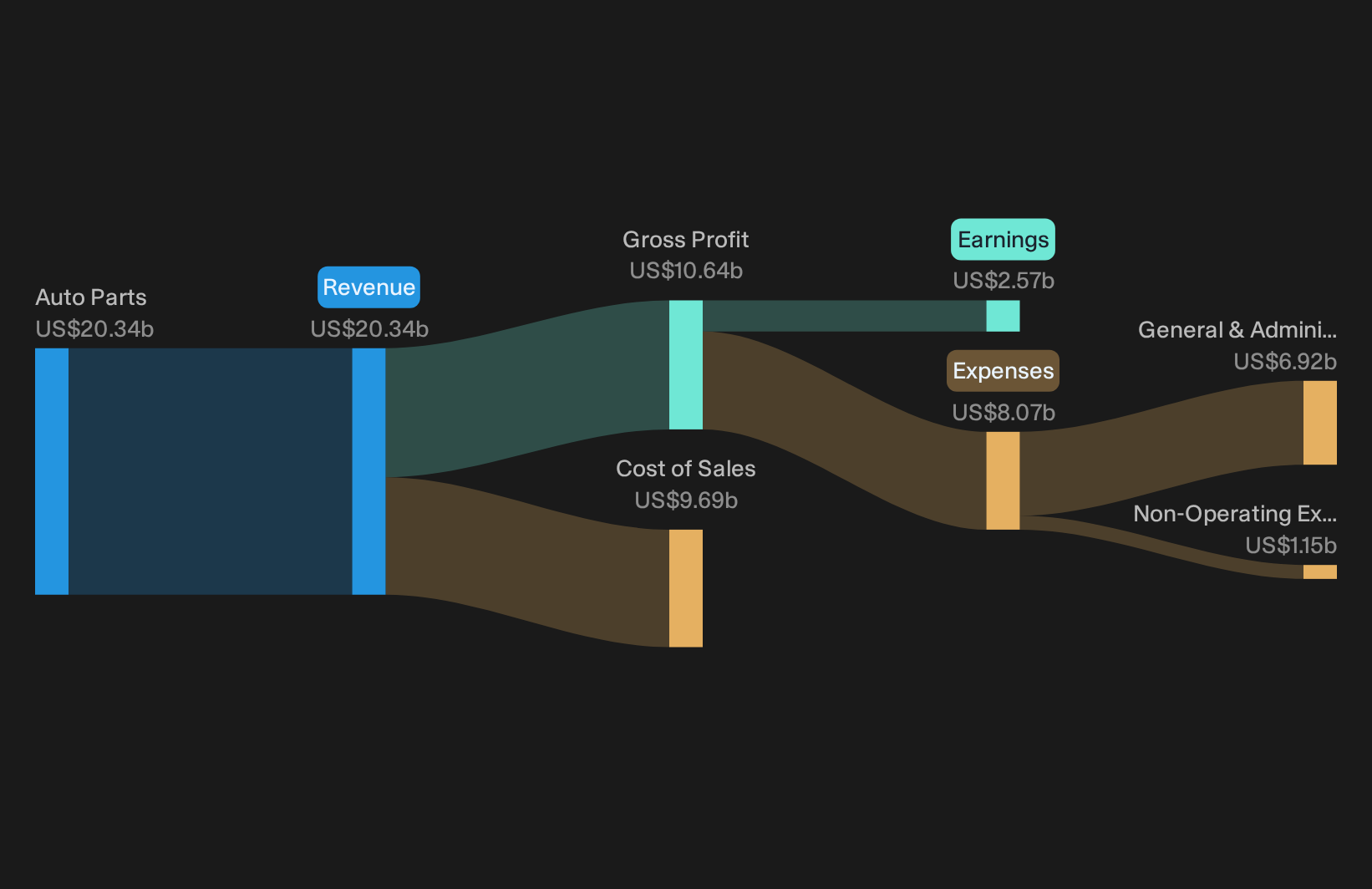
AutoZone runs a wide chain of stores selling replacement parts, maintenance items and accessories for everyday vehicles, serving both DIY drivers and repair shops. The business generated about US$20.3b in auto parts revenue and has a market value near US$47.1b.
That matters for this theme because AutoZone’s scale in core maintenance parts meets consumers right where freed up fuel dollars tend to get redirected when running older vehicles becomes more affordable.
"Domestic DIY sales turned negative, and the SG&A discipline management explicitly promised three months earlier gave way to the fastest per-store expense growth of the year."
What happens to AutoZone’s margin story if one unseen cost pressure tied to fuel and freight behaves differently than management expects?
When that risk starts to flip, read the full narrative for AutoZone to see whether AutoZone’s expense pressure is masking a stronger long term earnings engine.
O'Reilly Automotive (ORLY)
O'Reilly Automotive gives you direct exposure to fuel sensitive auto upkeep, as lower pump prices can support miles driven and keep both DIY motorists and repair shops spending on parts and accessories.
O'Reilly Automotive runs auto parts and accessories outlets focused on the US, generating about US$18.6b from automotive aftermarket products, with a market value near US$69.6b.
"O'Reilly Automotive continues to lean on its inventory and distribution capabilities, with inventory per store at about US$892,000 and a target of around 5% inventory growth per store by year end, which is intended to support product availability and comparable store revenue."
The key variable now is how one pending move in its growth plan affects margins, pricing power and long term demand.
If that shift is what you are watching, read the full narrative for O'Reilly Automotive to see whether O'Reilly Automotive's inventory engine is quietly setting up accelerating earnings power ahead.

Seeking Fresh Alternatives Before They Fly
Fresh setups can move from quiet to breakout quickly, and once momentum builds you risk getting caught chasing. Scan under the radar for now and act now.
- Target reliable income streams while rates chop around by reviewing a curated basket of higher yield opportunities through the 8 dividend fortresses.
- Spot early movers at the edge of AI hardware and data centers by scanning hand picked enablers inside the 92 AI infrastructure stocks.
- Track potential beneficiaries of the next electrification and infrastructure wave by filtering focused operators through the 43 power grid technology and infrastructure stocks.
This article by Simply Wall St is general in nature. We provide commentary based on historical data and analyst forecasts only using an unbiased methodology and our articles are not intended to be financial advice. It does not constitute a recommendation to buy or sell any stock, and does not take account of your objectives, or your financial situation. We aim to bring you long-term focused analysis driven by fundamental data. Note that our analysis may not factor in the latest price-sensitive company announcements or qualitative material. Simply Wall St has no position in any stocks mentioned.
Have feedback on this article? Concerned about the content? Get in touch with us directly. Alternatively, email editorial-team@simplywallst.com