


Intel (INTC) Back In Terafab Focus As The Bull Case Turns To Valuation
Intel (INTC) is back in focus after Elon Musk confirmed that the Terafab AI chip complex will be built and operated by his own companies, with Intel remaining a core technology partner.
Recent trading shows how quickly sentiment around Intel can shift. After a sharp drop when investors first worried about Terafab being shared with TSMC, the clarification of Intel’s role helped support a 30-day share price return of 8.3% and contributed to a 1-year total shareholder return of 199.3%. This indicates that momentum has been building rather than fading this year.
Scan how Intel’s Terafab partnership compares with other potential AI infrastructure beneficiaries by reviewing a curated group of 92 AI infrastructure stocks in one place.
Intel now trades with a 1 year total return near 200% and has a fresh Terafab reset in its corner. Is the real upside still ahead, or has most of it already shown up in the share price?
Most Popular Narrative: 77.4% Undervalued
Against Intel’s last close at $113.12, the most followed narrative anchors fair value at $500.93, which paints a very different picture of what the stock might be worth than the current market quote suggests.
Reasons I bought Intel:
• x86 software. a lot of existing software has been created for the x86 architecture and additionally has likely been optimized to run on intel cpus due to them having been the consistent market leader for so long giving them an advantage over AMD.
• This is most noticed when comparing applications using IBOT or Intel Compiler
See why 85 investors see Intel as 77% undervalued.
According to Suen, the narrative applies a discount rate of 11.31% and still lands at a fair value of $500.93, which implies the market price is far below that estimate. The argument leans heavily on Intel’s entrenched x86 software ecosystem and its position as a large US based foundry rather than on recent share price moves.
The same storyline also frames Intel’s manufacturing footprint as a potential advantage relative to overseas rivals, pointing to domestic supply chains and engineering talent as key supports for that valuation stance. These factors sit alongside forecasts that revenue could grow 14.4% per year and that earnings are expected to shift from loss making to profitable within the next three years.
Against those assumptions, it is worth noting that Intel currently reports revenue of $57,032.0m and a loss of $11,289.0m, with a value score of 2 on Simply Wall St’s framework. That gap between present day profitability and the narrative’s fair value is where investor conviction and risk tolerance really get tested.
Result: Fair Value of $500.93 (UNDERVALUED)
Still, Intel’s narrative could be shaken if x86 demand weakens faster than expected or if US based foundry costs erode the assumed profitability shift.
Find out about the key risks to this Intel narrative.
Another View: Intel Through a Market Lens
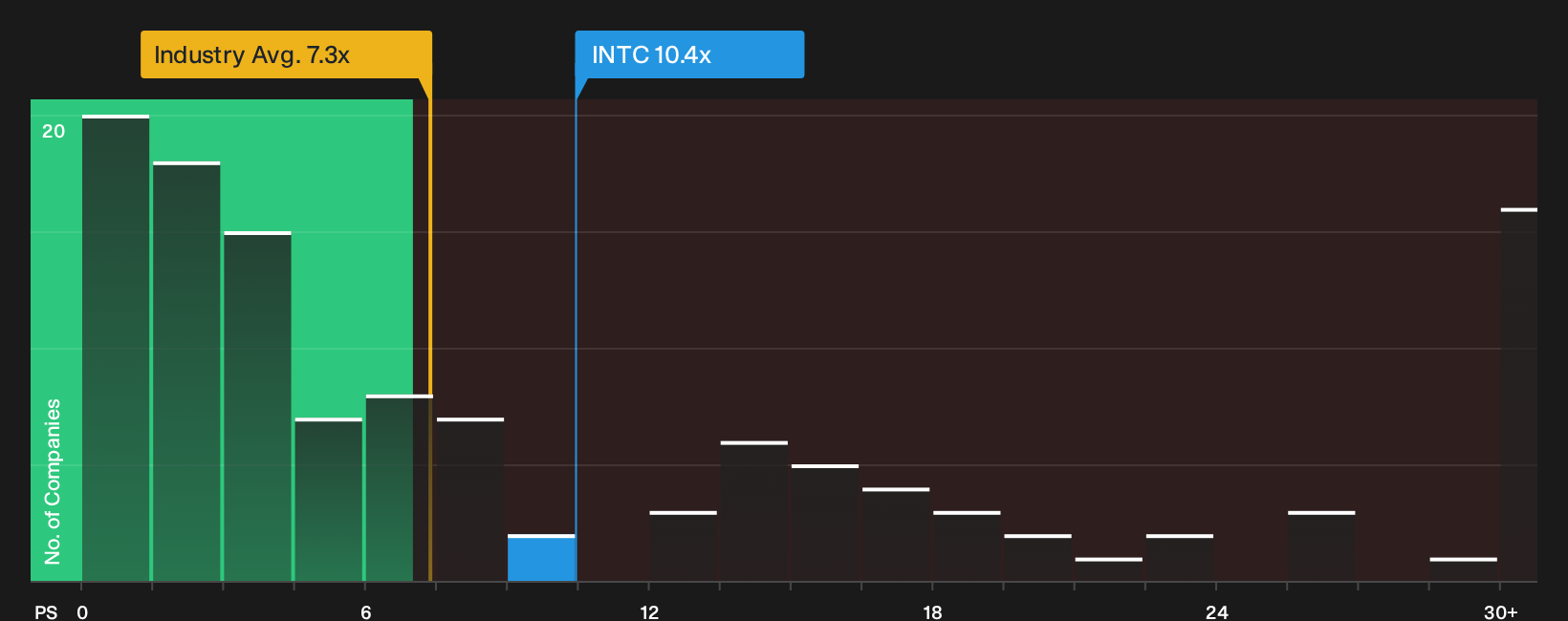
That $500.93 fair value from the Intel narrative leans on discounted cash flows. The market is telling a different story through sales based pricing. Intel trades on a P/S of 10.4x compared with 7.3x for the US Semiconductor group, yet still sits below an estimated fair ratio of 12.5x.
This mix of richer pricing than the broader industry, cheaper terms than peers on 28.6x, and a fair ratio that points higher leaves investors weighing whether they are paying up for quality or simply accepting more valuation risk if sentiment cools.
See what the numbers say about this price — find out in our valuation breakdown.
Next Steps
Sentiment across Intel’s story is strong right now, so move quickly, pull up the numbers, and pressure test whether the optimism holds for you. To see which potential upside drivers others are focused on, review the 1 key reward.
Looking for more Intel sized ideas?
If Intel has you thinking about what you might be missing elsewhere, use this moment to scan other opportunities before the next wave of moves hits.
- Target potential mispriced opportunities early by reviewing a curated set of 29 high quality undervalued stocks that pair quality fundamentals with compressed expectations.
- Prioritise resilience in choppy conditions by checking companies on the 31 resilient stocks with low risk scores that combine sturdier financial profiles with lower flagged risk scores.
- Hunt for tomorrow’s potential leaders before the crowd notices by scanning the 20 high quality undiscovered gems with stronger fundamentals and limited market attention.
This article by Simply Wall St is general in nature. We provide commentary based on historical data and analyst forecasts only using an unbiased methodology and our articles are not intended to be financial advice. It does not constitute a recommendation to buy or sell any stock, and does not take account of your objectives, or your financial situation. We aim to bring you long-term focused analysis driven by fundamental data. Note that our analysis may not factor in the latest price-sensitive company announcements or qualitative material. Simply Wall St has no position in any stocks mentioned.
Have feedback on this article? Concerned about the content? Get in touch with us directly. Alternatively, email editorial-team@simplywallst.com