


3 Media Stocks Investors Are Watching After The Skydance Merger
The Paramount and Warner Bros Discovery merger into Skydance has jolted Hollywood and streaming economics, with US$110b of deal value and about US$80b of debt now resting on one enlarged group. That kind of scale can shift pricing power, reshape content spend, and ripple across every rival stock on your watchlist. This article unpacks how that shockwave might affect three large cap media and entertainment stocks exposed to the same news, and why missing those shifts could mean missing the next phase of returns in this corner of the market.
The stocks covered below are only a sample of what this consolidation theme touches, and the full screen surfaced 9 more large cap media and entertainment companies with equally compelling narratives that are not covered in this article. To identify and analyze the highest conviction potential beneficiaries of Hollywood dealmaking, head straight into the US Media & Entertainment Consolidation Winners screener.
Lionsgate Studios (LION)
Lionsgate Studios plugs straight into the consolidation theme as a pure-play content producer, with a film and TV engine that larger streamers and media groups increasingly rely on for fresh franchises and library depth.
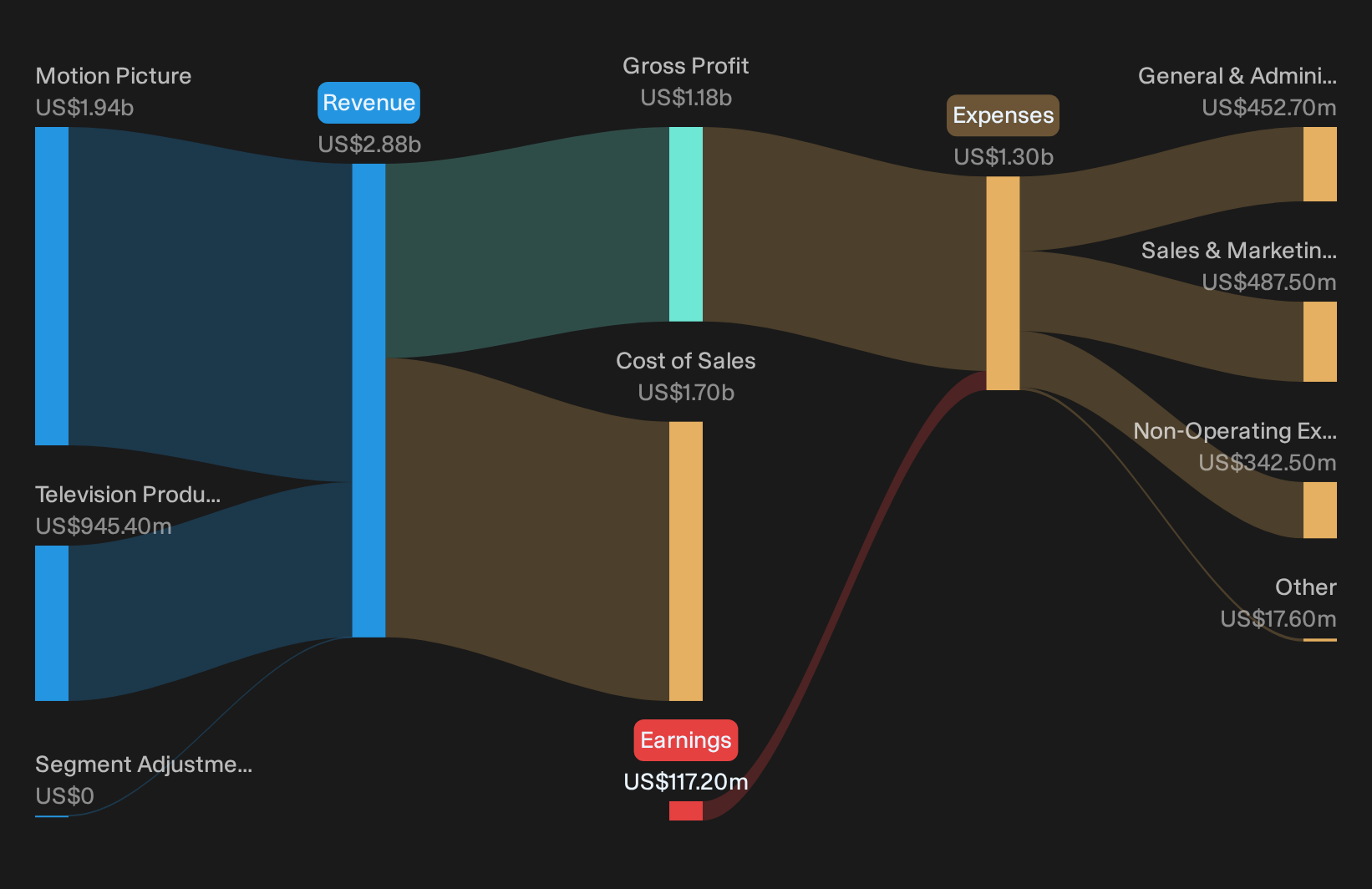
Lionsgate Studios runs two main lines of business, Motion Picture and Television Production, generating about US$1.94b and US$945 million respectively, and with a market value of roughly US$3.32b it sits in the large cap bracket that the screener targets.
While the company expects to return to positive free cash flow and OIBDA growth in fiscal 2027, anchored by major tentpole releases and an uptick in episodic TV deliveries, high debt levels and elevated interest expenses remain a persistent overhang, constraining capital available for reinvestment and potentially limiting net margin improvement if operating results fall short of targets.
What happens to Lionsgate Studios’ appeal in future consolidation talks may hinge on how one quiet pressure shapes those margin ambitions.
If that pressure point matters to you, read the full narrative for Lionsgate Studios to see whether Lionsgate Studios’ content engine can outpace its funding strain.
New York Times (NYT)
New York Times brings a premium news and content subscription model to this consolidation screen, with a bundle that can slot naturally into larger media packages while still standing on its own as a paid destination for engaged readers.
The New York Times generates about US$3b in diversified media and entertainment revenue, almost all from the United States, and has a market value of roughly US$10.1b.
The growing gap between the large base of registered and weekly users and the 13.4 million current subscribers, combined with successful ARPU step-ups and a bundle price move from US$25 to US$30 for tenured subscribers, gives New York Times room to test new bundle architectures and targeted pricing.
One question for investors is what happens if a relatively quiet shift in how New York Times mixes pricing, bundles and video changes the margin profile more than subscriber counts themselves.
That bundle mix is only half the story, and the full narrative for New York Times shows how pricing power, product depth and video ambitions could be quietly decoupling New York Times from the pack.

IMAX (IMAX)
IMAX links directly into the consolidation story as the big screen partner studios turn to when they want premium formats for blockbuster IP, with a technology platform that stretches from remastered films to streaming tools and a US$2.9b market value anchoring it in large cap territory.
Rapid acceleration of new system installations and a replenishing, geographically diverse backlog, driven by consumer demand for premium, differentiated out-of-home entertainment, positions IMAX for continued growth in both top-line revenue and recurring cash flows as its global footprint expands, especially in high-per-screen-average markets like North America, Japan, and Australia.
What happens if the next round of studio dealmaking subtly shifts how much of that premium demand translates into pricing power and margins for IMAX?
That pricing shift is exactly what the full narrative for IMAX unpacks, showing how IMAX’s premium footprint, backlog and deal exposure could turn today’s leverage into tomorrow’s opportunity.

Seeking Alternatives Before Momentum Flies
Fresh ideas move first. By the time every chart lights up, early entries are gone and spreads widen fast. Scan these under-the-radar lists now and get in early.
- Spot cash-flow strength before it hits headlines by running the list of solid balance sheet and fundamentals (25 results) and focusing on businesses built to absorb shocks while weaker peers are still dropping.
- Ride the next demand upswing in critical materials with the 33 best rare earth metal stocks and track producers positioned for supply crunches while they are under the radar for now.
- Catch structural tailwinds in power demand using the 39 power grid technology and infrastructure stocks and follow companies tied to grid upgrades before capital floods in and compresses the easy breakout moves.
This article by Simply Wall St is general in nature. We provide commentary based on historical data and analyst forecasts only using an unbiased methodology and our articles are not intended to be financial advice. It does not constitute a recommendation to buy or sell any stock, and does not take account of your objectives, or your financial situation. We aim to bring you long-term focused analysis driven by fundamental data. Note that our analysis may not factor in the latest price-sensitive company announcements or qualitative material. Simply Wall St has no position in any stocks mentioned.
Have feedback on this article? Concerned about the content? Get in touch with us directly. Alternatively, email editorial-team@simplywallst.com