


3 Canadian Penny Stocks With P E Under 13
With the Federal Reserve lifting interest rates again to keep inflation in check, money has become more expensive and investors are paying closer attention to balance sheets. That puts financially solid Canadian penny stocks in a different category from many speculative small caps. Careful stock pickers now have a window to look for low-priced businesses with stronger finances. This article highlights three such options from our screener.
The stocks covered below are just a small sample, and the full screen surfaced 337 more financially fit penny stocks with equally compelling stories that are not included here. To identify and analyze the ideas that best match your risk tolerance and time horizon, head straight into the Financially Fit Penny Stocks screener.
Thor Explorations (TSXV:THX)
Thor Explorations anchors this financially fit penny stock theme because its flagship Segilola Gold Project is already a producing mine. This gives the under $5 stock real cash flow support rather than relying solely on drilling prospects.
Thor Explorations is a West African focused gold producer and explorer whose business revolves around the Segilola Mine Project, which generated about $331 million of revenue, and the company’s market cap is roughly $787 million.
"The most important question for Segilola is whether it can transition from the open pit and stockpile-processing phase into an underground operation."
What happens when one unresolved piece of this production plan shifts will likely matter far more to investors than any headline metric today.
That unresolved pivot is exactly what the full narrative for Thor Explorations unpacks, mapping how Segilola’s next phase could reshape risk, cash flow quality and Thor Explorations’ trajectory.

CEMATRIX (TSX:CEMX)
CEMATRIX is another candidate from the Financially Fit Penny Stocks group. Its onsite cellular concrete work gives you exposure to infrastructure projects that lean on specialized, lighter-weight materials rather than more speculative early-stage concepts.
CEMATRIX generates about CA$53.8 million from supplying and placing cellular concrete for infrastructure projects across North America, with a CA$72.6 million market cap that keeps it firmly in penny stock territory.
"Rising demand for sustainable, low-carbon construction materials, driven by both regulatory pressure and ESG-conscious customers, favors CEMATRIX's environmentally friendly product, increasing its addressable market and supporting future revenue expansion and margin improvement."
What happens if a single unseen pressure in future project funding or bidding starts to pull those expected margins in the opposite direction?
If that pressure is already building under the surface, the full narrative for CEMATRIX shows how CEMATRIX's order book, pricing power and balance sheet risk are really interacting.

McChip Resources (TSXV:MCS)
McChip Resources is a Canadian natural resources investor with petroleum interests and a Saskatchewan potash project that ties directly into the Financially Fit Penny Stocks theme. It generated about CA$3.6 million from oil and gas exploration and production in Canada and has a market cap of roughly CA$4.3 million.
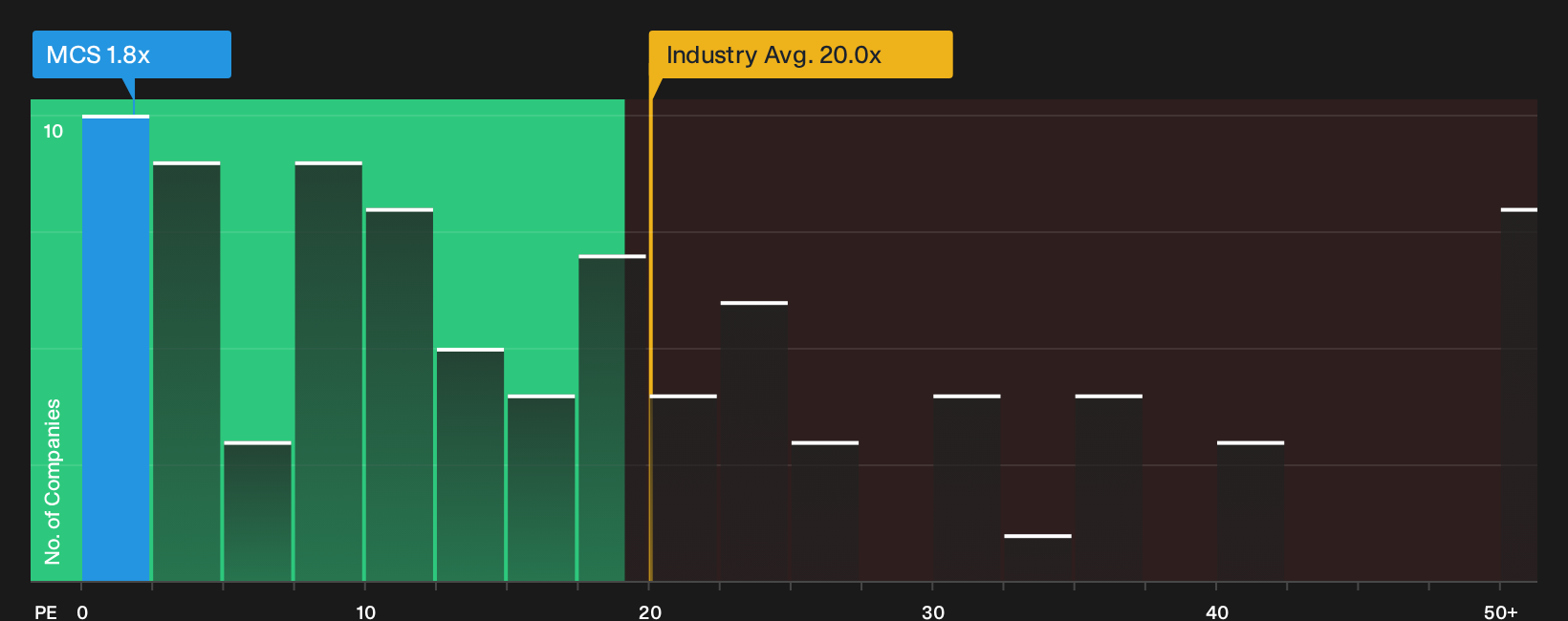
McChip Resources combines small-cap size and resource exposure with profitability indicators such as a 67.2% ROE and a P/E of 1.8x versus an industry average near 19.5x. That mix of value and earnings strength comes with higher volatility and potential funding challenges if a single key assumption in its commodity exposure changes.
When those commodity assumptions start to shift, the 2 key rewards and 3 important warning signs reveals whether McChip Resources' valuation is masking resilience or signalling something investors should not ignore.
Seeking Fresh Alternatives Beyond These Picks?
Fresh breakout stories do not stay under the radar for long. Momentum can shift quickly, prices can move sharply, and late entries may end up chasing. Review the following ideas while they are timely.
- Look for potential early leaders in digital assets by scanning the curated 18 cryptocurrency and blockchain stocks while it is still attracting limited attention.
- Track real-world automation developments, not just hype, by focusing on the hand picked 90 robotics and automation stocks that may be gaining momentum.
- Consider the next grid upgrade cycle by reviewing the focused 40 power grid technology and infrastructure stocks while these opportunities are still drawing targeted investor interest.
This article by Simply Wall St is general in nature. We provide commentary based on historical data and analyst forecasts only using an unbiased methodology and our articles are not intended to be financial advice. It does not constitute a recommendation to buy or sell any stock, and does not take account of your objectives, or your financial situation. We aim to bring you long-term focused analysis driven by fundamental data. Note that our analysis may not factor in the latest price-sensitive company announcements or qualitative material. Simply Wall St has no position in any stocks mentioned.
Have feedback on this article? Concerned about the content? Get in touch with us directly. Alternatively, email editorial-team@simplywallst.com