


Teradyne Stock In Focus After New Memory And MicroLED Test Platform Launches
- Teradyne recently launched the Magnum E2 high speed memory tester and the Iris 100 microLED optical test platform, both aimed at complex AI data center and advanced display workloads.
- These platforms extend Teradyne's test coverage into high speed DRAM, NAND and microLED arrays, which could influence product mix, R&D payback and long term demand visibility.
- We will look at how Teradyne's investment narrative is shaped by Magnum E2's focus on AI driven high speed memory testing.
Scan beyond Teradyne and line up other potential AI hardware beneficiaries by reviewing our curated 90 AI infrastructure stocks while this buildout of compute and memory capacity is front of mind.
Teradyne Investment Narrative Recap
To own Teradyne, you need to believe its heavy exposure to AI centric test demand can offset swings in product mix, memory pricing pressure and the higher cost of rolling out new platforms like Magnum E2 and Iris 100. The near term swing factor is whether AI related capital spending actually flows into Semi Test and memory orders at the pace management has been pointing to.
The biggest current risk is clear. If AI data center and advanced packaging CapEx pauses or slips, order intake across Semi Test, Product Test and Robotics could soften just as Teradyne is leaning into higher R&D and go to market spending. That would make the guided gross margin pressure more painful.
The Magnum E2 launch matters most right now. It squarely targets high speed DRAM and NAND test tied to AI data centers, an area management has already framed as a major opportunity with memory revenue above US$200m for three straight quarters and a 2026 memory TAM that is expected to be materially larger than 2025.
If Magnum E2 is adopted into qualification and high volume manufacturing flows, it can support that memory test narrative and help Teradyne lean against product mix pressure. The execution watchpoint for investors is whether this platform, alongside compute and robotics spend, converts into stable gross margins and enough volume to justify the higher operating expense base.
What The Current Teradyne Forecasts Assume
Analysts sketch a Teradyne path that leans heavily on AI centric testing and robotics, then attach some fairly specific numbers to that story. The forecast pencils in revenue growth of 22.7% a year over the next three years, which is a brisk pace for an automated test equipment specialist already tied closely to large data center and memory customers.
On earnings, the consensus view points to profit of US$1.2b today rising to US$2.6b by 2029, with margins moving from 25.8% to 31.4% over the same period. That implies earnings a little more than doubling, even before considering the small projected decline in share count of 0.17% a year, although there is a wide spread between the most bullish and most cautious analyst estimates. For you as an investor, the key question is how comfortable you are anchoring on a 2029 earnings figure when so much of the current demand is tied to AI buildouts and advanced memory cycles that can ebb and flow.
Those profit and margin paths also feed directly into how the Teradyne stock is valued. Analysts are working with a future P/E of 37x on the 2029 earnings estimate, down from 54.5x today and below the current 46.9x multiple for the wider US semiconductor group. That lower assumed multiple matters because it shows the current story is not just about higher earnings; it also leans on the market being willing to pay less for each dollar of projected profit than it does right now.
The revenue side of the equation carries its own hurdle. To line up with the consensus price target, the model expects Teradyne to reach US$8.2b of sales by 2029 alongside the US$2.6b earnings figure. That top line track effectively ties the company to sustained AI related capital spending, higher test intensity in advanced packaging and continued traction in robotics, all of which could influence how Magnum E2 and Iris 100 adoption translates into order flow and product mix.
Teradyne's narrative projects US$8.2b revenue and US$2.6b earnings by 2029. This assumes 22.7% yearly revenue growth and earnings rising a little more than 2x from US$1.2b today.
Uncover why Teradyne's fair value aligns with its current price.
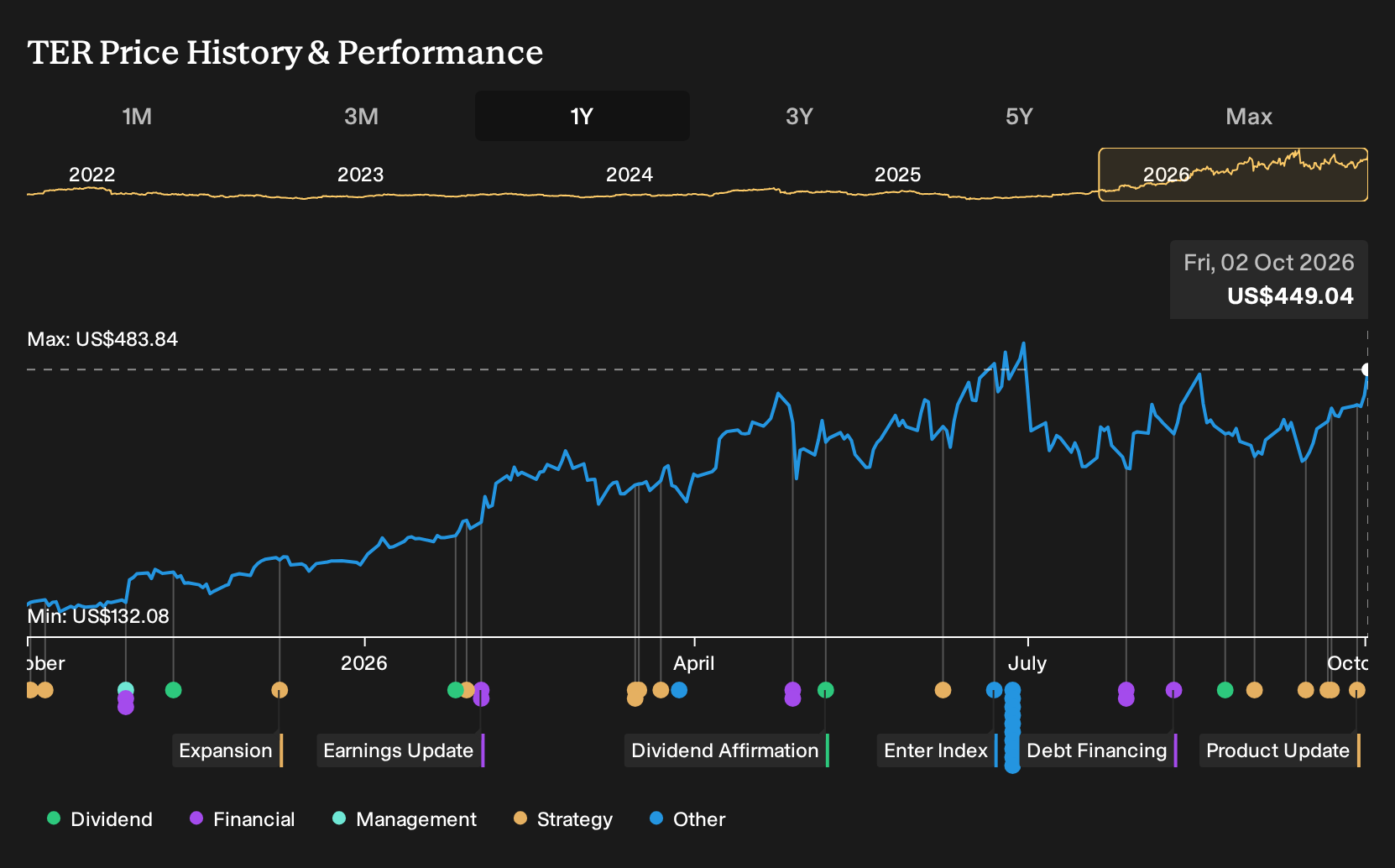
Exploring Other Perspectives
You also have a much more cautious Teradyne story on the table. The more pessimistic analysts worry that AI orders bunch up, then cool, which could strain Magnum E2 payback. They were only penciling in roughly US$6.8b revenue and US$1.9b earnings by 2029 before this news. That gap shows how widely opinions can differ, so explore multiple viewpoints before you commit capital.
Explore 4 other Teradyne fair value estimates, including one that suggests there could be as much as 47% downside from the current price.
Decide For Yourself
Disagree with existing narratives? Extraordinary investment returns rarely come from following the herd, so consider trusting your own research and judgment.
- A great starting point for your Teradyne research is our analysis highlighting 2 key rewards and 2 important warning signs that could impact your investment decision.
- See our latest analysis for Teradyne. The report includes a comprehensive fundamental analysis summarized in a single visual, the Snowflake, making it easy to evaluate Teradyne's overall financial health at a glance.
Looking For More Investment Ideas Beyond Teradyne?
If the Teradyne story leaves you wanting a broader watchlist, use the Simply Wall St Screener to line up other stocks that fit your style and risk tolerance.
- For investors who want potential mispricing on their side, review a curated 31 high quality undervalued stocks that pair solid fundamentals with attractive valuations.
- If capital preservation ranks high on your list, filter for balance sheets that look resilient by scanning our list of solid balance sheet and fundamentals (26 results).
- For those hunting for future leaders before they are widely followed, consider building a watchlist from a focused 19 high quality undiscovered gems that combines quality metrics with lower market attention.
This article by Simply Wall St is general in nature. We provide commentary based on historical data and analyst forecasts only using an unbiased methodology and our articles are not intended to be financial advice. It does not constitute a recommendation to buy or sell any stock, and does not take account of your objectives, or your financial situation. We aim to bring you long-term focused analysis driven by fundamental data. Note that our analysis may not factor in the latest price-sensitive company announcements or qualitative material. Simply Wall St has no position in any stocks mentioned.
Have feedback on this article? Concerned about the content? Get in touch with us directly. Alternatively, email editorial-team@simplywallst.com