


Target Is Cutting Prices on Thousands of Products Amid a ‘Value War.’ What This Means for TGT Stock.
Holiday shopping is approaching, but shoppers are in no mood to pay more. U.S. consumer confidence fell to 81.9 in September from 88.6 in August, its lowest reading since April 2014.
Target (TGT) is joining that push. The company announced lower prices on nearly 2,000 home, apparel, and accessory items. Some clothing now costs at least 20% less than it did a year ago.
It is the latest escalation in a broader retail “value war,” where Target, Walmart (WMT), and Amazon (AMZN) are competing aggressively on price to win traffic and market share.
The cuts may help Target draw shoppers, but they also put a familiar question in sharper focus for TGT stock. Will higher sales make up for what Target gives away on price? Let’s dive in.
Why Target Is Cutting Prices
Target sells groceries, apparel, home goods, and other everyday products through its stores and digital channels. Based in Minneapolis, the retailer has a market capitalization of about $71.97B.
Target is trying to make its value message harder to miss as holiday shopping begins. On Sept. 29, it announced lower prices on nearly 2,000 household, apparel, and accessory items. This is a fresh round of cuts, not the total for the year. The retailer says it has lowered more than 10,000 prices over the past 12 months. It aims to offer families more affordable options without giving up the style and design that set its merchandise apart.
The changes are specific enough for shoppers to notice. Women’s long-sleeve tees now cost $12 instead of $15, and Threshold queen comforters are $69 instead of $89. Target says prices across its refreshed bedding assortment are 15% lower on average, while select clothing and shoes cost at least 20% less than last year.
The timing puts the cuts in the middle of a fight for early holiday spending. Target’s Circle Deal Days run Oct. 6–7, the same dates as Amazon’s Prime Big Deal Days. By lowering prices before its sale event, Target gives customers a reason to consider it for more than a brief promotion.
That is the bet in this value war. Target needs shoppers drawn in by lower prices to buy enough to make the cuts worthwhile. If the added sales cannot protect margins, winning shoppers may not translate into a win for TGT stock.
What Target’s Results Reveal
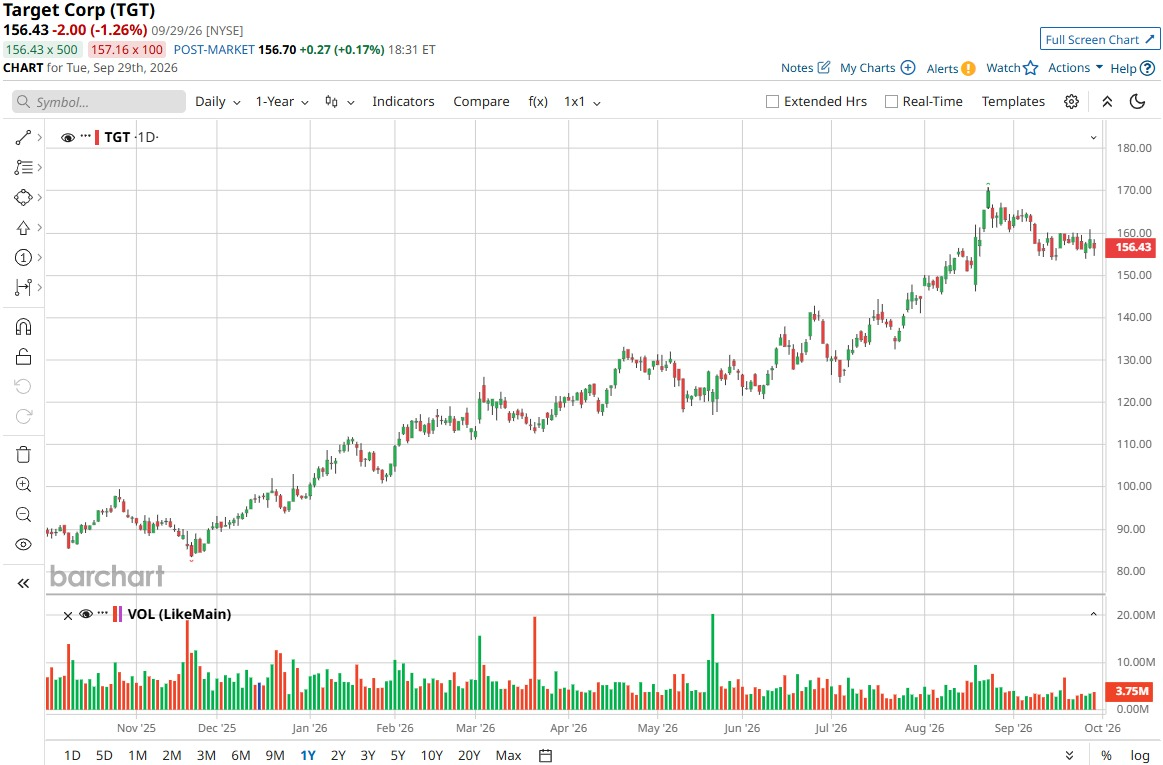
TGT closed at $156.43 on Sept. 29, up 60.03% year to date and 76.10% over 52 weeks. Even after that rally, its trailing price-to-earnings ratio of 18.77 and price-to-sales ratio of 0.68 sit below sector medians of 19.72 and 0.92. Target also lists a $4.64 forward annual dividend and a 2.95% forward yield.
Its sales recovery gives some context to the stock’s climb. In results released on August 19, Target reported second-quarter revenue of $26.54B, up 5.3% year over year. That beat the $26.15 billion analyst estimate by 1.5%. Same-store sales grew 3.8%, reversing a 1.9% decline a year earlier, while its store count rose to 2,019 from 1,981.
Target also appointed Mark Weinstein as chief marketing and guest experience officer in September. His role puts the customer experience alongside lower prices in Target’s effort to keep shoppers coming back.
The profit figures look stronger still, but need context. Adjusted earnings of $4.11 per share beat the $2.34 estimate by 75.8%. Operating margin rose to 9.6% from 5.2%, and free-cash-flow margin increased to 9.2% from 4%. Target’s full-year adjusted EPS guidance midpoint of $10.40 was 22.8% above the analyst estimate.
What Wall Street Is Watching
Target’s Nov. 18 earnings report will offer an early test of its lower price strategy, with analysts expecting $2.05 per share for the quarter ending in October. That compares with $1.78 a year earlier, or estimated growth of 15.17%.
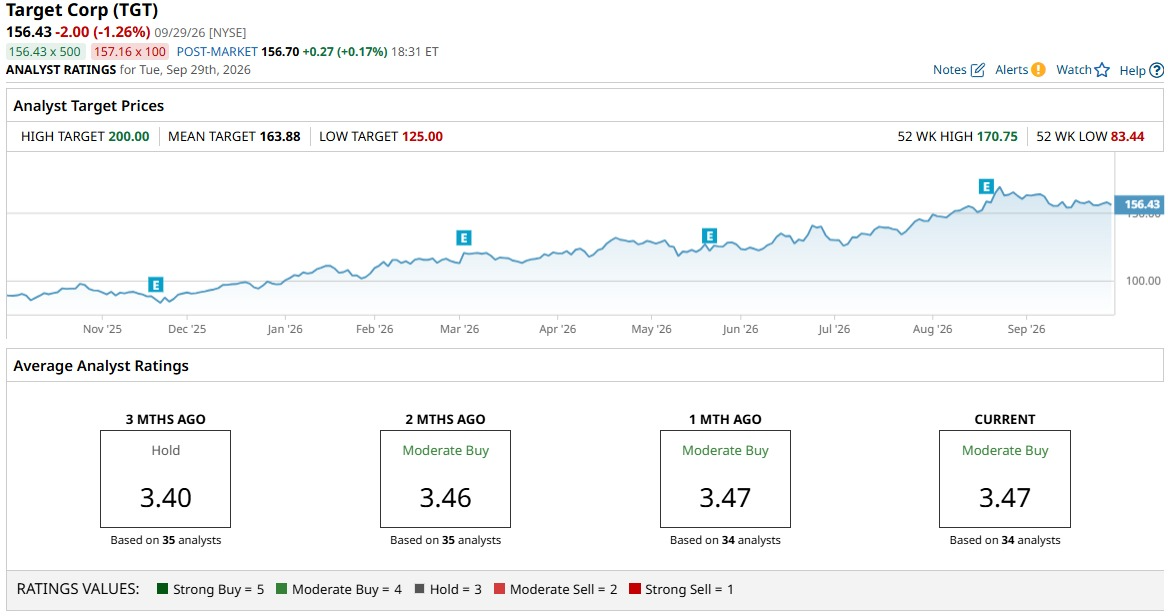
That helps explain the range of views on TGT. Evercore ISI analyst Greg Melich maintained an “In Line” rating on August 4 while raising his price target from $135 to $150. It was a more favorable target, but it now sits about 4.1% below TGT’s Sept. 29 close.
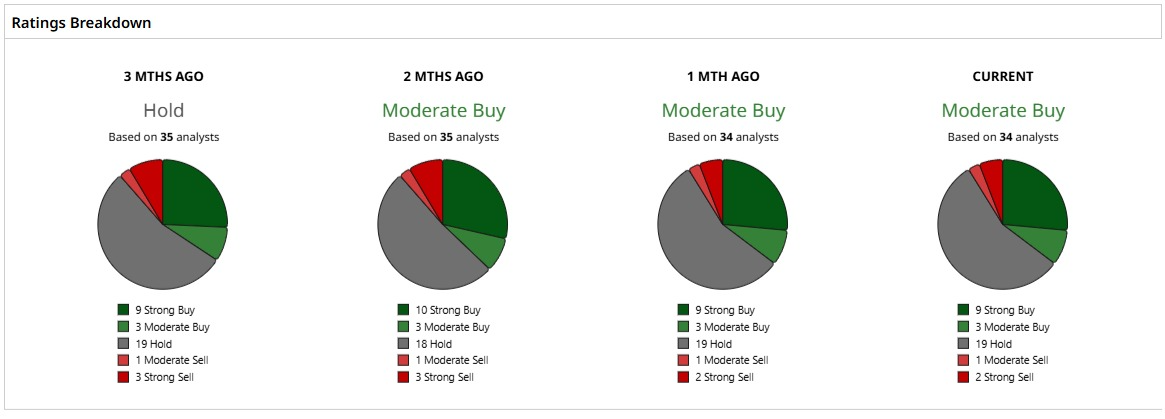
The broader outlook has a more upbeat consensus rating at “Moderate Buy” across 34 analysts, with the average price target at $163.88. Relative to the Sept. 29 price, that target implies about 4.8% upside.
Conclusion
Target’s price cuts should help bring shoppers in, and its recent sales growth suggests the strategy has a chance. But TGT stock has already climbed sharply, while a tariff refund boosted the latest earnings. That makes a big near-term jump less likely than a period of steadier trading. If holiday sales grow without squeezing margins, shares could move higher. If discounts eat into profits, the rally may stall. What matters now is not how many prices Target cuts, but what it earns afterward.
On the date of publication, Ebube Jones did not have (either directly or indirectly) positions in any of the securities mentioned in this article. All information and data in this article is solely for informational purposes. For more information please view the Barchart Disclosure Policy here.