


Chevron And 2 Other Top Pipeline Stocks
Trump’s early 2025 push to “unleash American energy” through faster approvals for pipelines and related projects has put hard energy infrastructure back in the spotlight. Policy is suddenly tilting toward moving more molecules, not just talking about them. That opens the door for investors who want exposure to fee-based assets tied to volume. This article walks through three pipeline operators from the midstream universe that may merit a closer look.
The stocks covered below are just a first sample, and the full screen surfaced 20 more midstream operators with equally compelling stories that are not included here. Head straight into the US Midstream Oil and Gas Pipeline Operators screener to identify, filter, and analyze the pipeline operators that best fit your own conviction and risk profile.
Chevron (CVX)
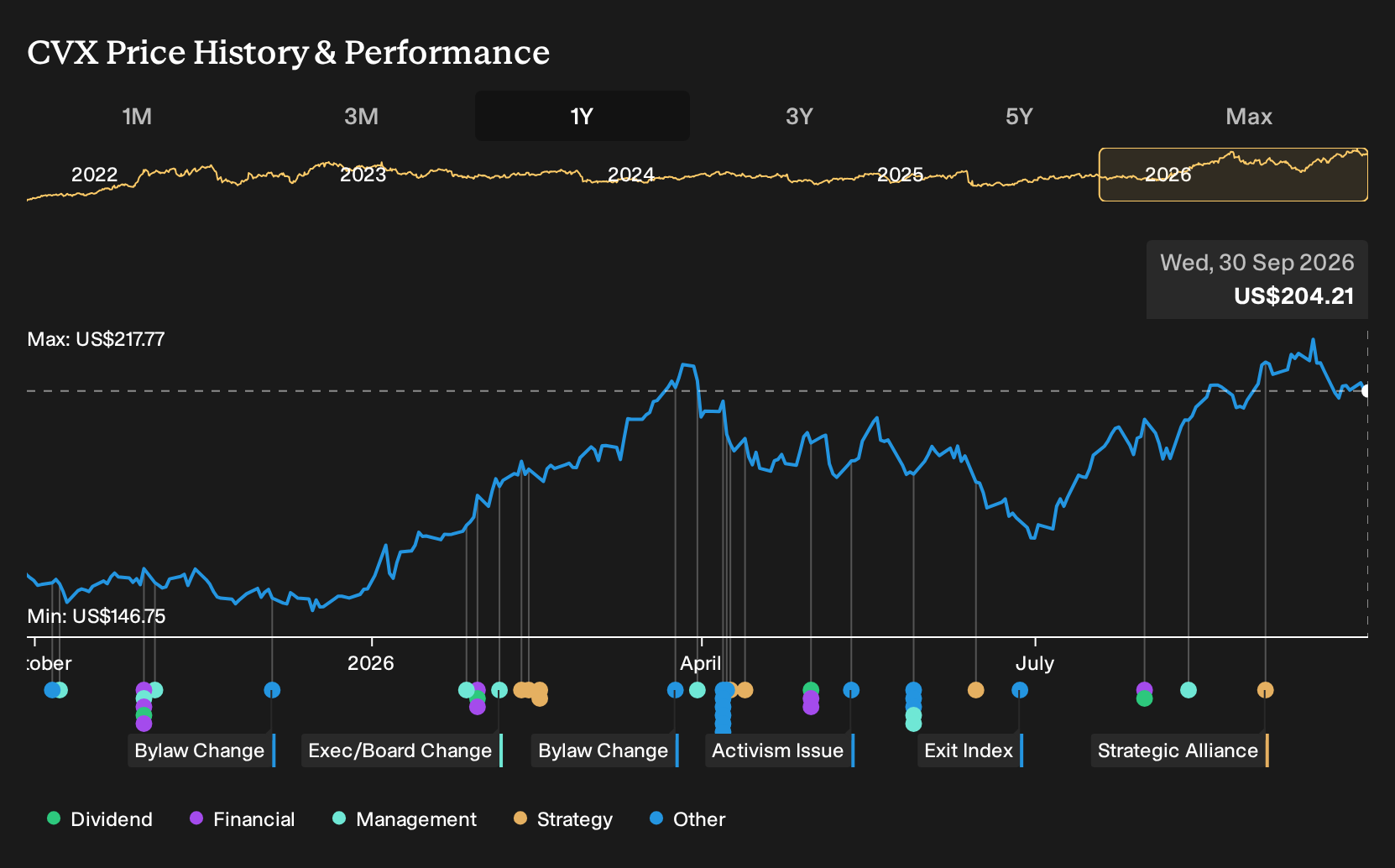
Chevron plugs directly into the screener theme through its integrated role in producing, transporting, and storing hydrocarbons, with a sizeable owned pipeline and storage network that links upstream barrels to refineries and LNG export routes under the new fast track permitting push.
Chevron runs a global energy and chemicals business across Upstream and Downstream operations, with about US$55.1b from International Upstream, US$52.6b from US Upstream, US$78.8b from International Downstream, and US$82.5b from US Downstream, and carries a market value near US$400.9b.
"The push to "unleash American energy" also amplifies demand for midstream services as upstream production ramps up, particularly in regions like Alaska and offshore areas reopened for drilling."
The real swing factor is how one large, low cost growth leg ultimately feeds through to throughput pricing, margins, and cash returns.
That throughput puzzle is exactly what the full narrative for Chevron unpacks, showing where Chevron’s cash engine could accelerate, where it might stall, and how policy could tilt the balance.
Kinder Morgan (KMI)
Kinder Morgan is one of the purest midstream plays in this screen, with its vast natural gas pipeline and storage network directly tied to moving higher volumes from US production zones to utilities, LNG export facilities, and industrial users as permitting timelines compress.
"The large opportunity set of roughly $10b in natural gas projects that are not yet in Kinder Morgan's sanctioned backlog, including power, LNG and industrial demand across the Southern United States, gives the company multiple avenues to add contracted volumes that can support future revenue and EBITDA growth if converted into projects."
The real swing factor now is how that pipeline of potential projects intersects with Kinder Morgan’s balance sheet limits and appetite to keep spending.
Kinder Morgan runs a large North American energy infrastructure platform that transports, stores, and handles natural gas, refined products, crude, CO2, and other commodities. Its Natural Gas Pipelines unit generates about US$11.7b of revenue out of roughly US$17.9b total, and the stock is valued near US$67.8b.
That spending question is exactly where the story gets interesting, and the full narrative for Kinder Morgan shows how Kinder Morgan’s growth projects, balance sheet, and income ambitions could be accelerating together.

Williams Companies (WMB)
Williams Companies plays directly into the US midstream pipeline theme through its Transco interstate gas network and storage assets, which help move molecules from shale basins to power plants and LNG docks as permitting speeds up under the national energy emergency push.
Williams Companies runs an energy infrastructure platform focused on natural gas, with Transmission, Power & Gulf generating about US$5.7b of its US$12.1b segment revenue, West US$2.9b, Gas & NGL Marketing Services US$2.2b, Northeast G&P US$2.2b, and a market value near US$83.9b.
For investors scanning the screener for pipeline leverage to US policy shifts, Williams Companies offers a mix of long-haul pipes, gathering systems, and gas marketing that links production regions, storage hubs, and export outlets in one integrated network.
"Large-scale expansions of Williams' pipeline network, particularly in high-growth regions like the Haynesville, Gulf Coast, and Transco corridor, are underway or recently placed in service to meet surging power, LNG export, and data center demand, indicating significant volume and revenue growth is expected to accelerate in 2025 and beyond."
What really matters next is how one less obvious funding and payout tension shapes the balance between future capacity, pricing, and investor income.
That trade off between future capacity and payouts is exactly what the full narrative for Williams Companies lays out, highlighting where accelerating projects could be masking both upside and risk.

Seeking Alternatives Before The Crowd?
New ideas move first. By the time most investors react, early momentum is already flying. Scan fresh stock sets under the radar for now and get in early.
- Target reliable income streams by zeroing in on companies in the 7 dividend fortresses that aim to keep payouts flowing while prices are still catching up.
- Ride structural demand shifts by reviewing infrastructure players in the 39 power grid technology and infrastructure stocks before grid spending headlines pull these tickers out of obscurity.
- Position ahead of specialized materials demand by tracking miners in the 35 best rare earth metal stocks while valuations still reflect yesterday’s expectations rather than potential future supply pressure.
This article by Simply Wall St is general in nature. We provide commentary based on historical data and analyst forecasts only using an unbiased methodology and our articles are not intended to be financial advice. It does not constitute a recommendation to buy or sell any stock, and does not take account of your objectives, or your financial situation. We aim to bring you long-term focused analysis driven by fundamental data. Note that our analysis may not factor in the latest price-sensitive company announcements or qualitative material. Simply Wall St has no position in any stocks mentioned.
Have feedback on this article? Concerned about the content? Get in touch with us directly. Alternatively, email editorial-team@simplywallst.com