


3 Great Automation Stocks To Own In September 2026
Rising US Treasury yields are pressuring richly priced growth stocks, which puts fresh attention on businesses that can lift productivity rather than just ride cheap money. Automation leaders fit that bill. They sell tools that help factories, warehouses, and data centers do more with the same people. This article walks through three robotics and automation stocks from our screener that show how that story looks in practice.
The three companies that follow are only a sample, and the full Robotics and Automation Stocks screen surfaced 90 more businesses with equally compelling automation stories that are not covered here. To size up that broader field and identify your highest conviction ideas directly, head into the Robotics and Automation Stocks screener
Ouster (OUST)
Overview: Ouster sells digital lidar sensors and perception platforms that give robots, vehicles, and smart infrastructure the 3D vision needed for automation.
Operations: Ouster generated about US$205 million from selling lidar sensor kits, primarily across the United States and wider Americas region.
Market Cap: US$2.9b
Ouster matters for this robotics and automation screen because its lidar and perception stack sits directly in the path of physical AI moving from test projects into everyday infrastructure and machines. This is exactly where investors are looking for real productivity gains rather than hype.
"Ouster is tapping into the massive Intelligent Transportation Systems (ITS) market with their Blue City traffic management solution, which could drive significant revenue growth as they expand deployments across the US, Europe, and Asia."
What happens to Ouster’s margins and pricing power will hinge on how one unresolved competitive pressure in lidar hardware ultimately plays out.
That unresolved pressure is exactly what makes the full narrative for Ouster so useful for weighing how Ouster could scale, defend pricing, and handle any abrupt lidar shakeout.

ON Semiconductor (ON)
Overview: ON Semiconductor supplies power, analog, and intelligent sensing chips that give industrial robots and factory automation systems the vision and energy efficiency they need.
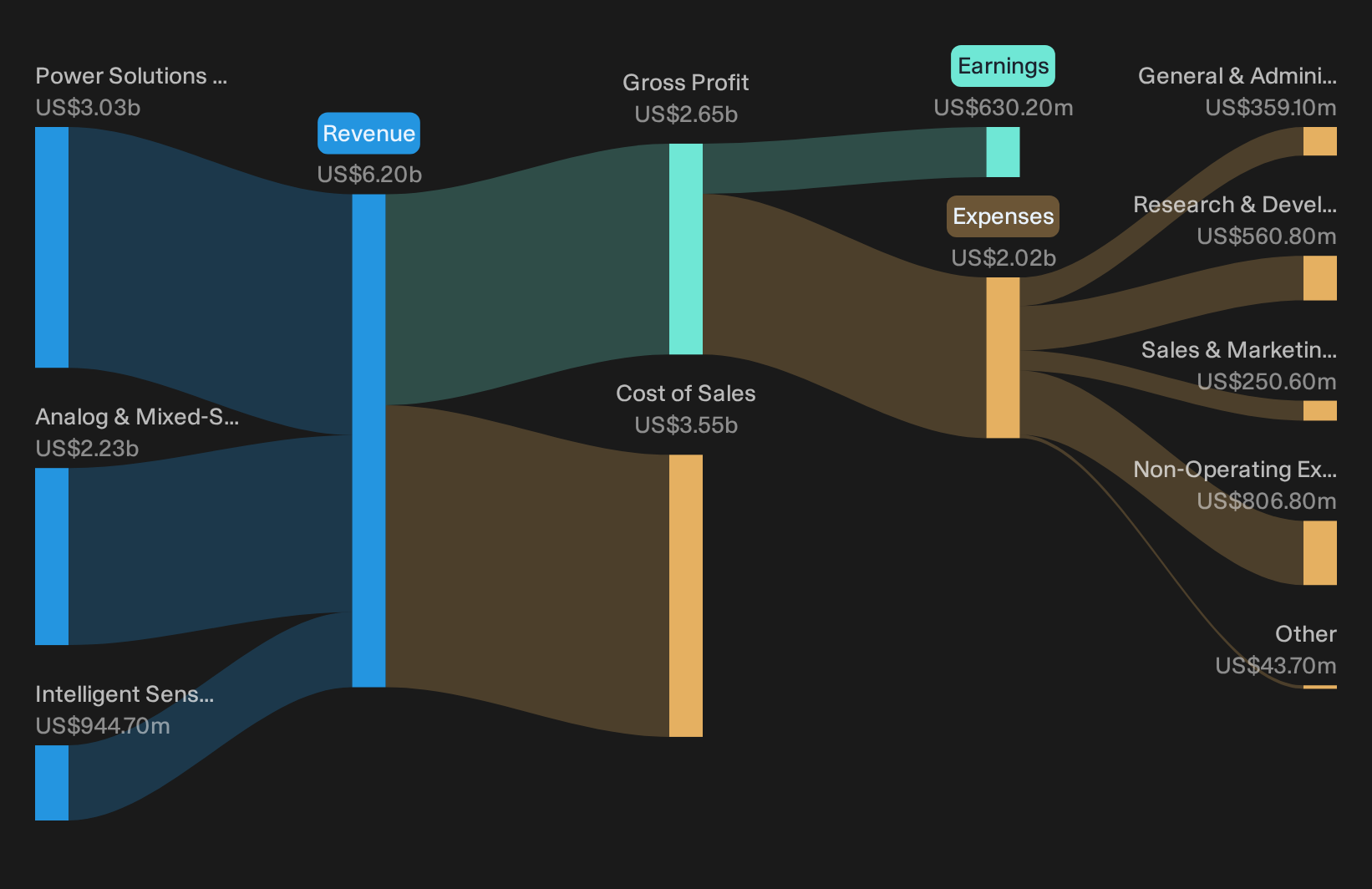
Operations: ON Semiconductor generates about US$3.0b from Power Solutions, US$2.2b from Analog and Mixed-Signal, and US$945 million from Intelligent Sensing.
Market Cap: US$29.5b
ON Semiconductor matters for this robotics and automation screen because its Intelligent Sensing Group feeds the cameras and depth sensors that let machines safely see, and its power chips help those same systems run efficiently as workloads move from pilot projects to heavier use on factory floors and in AI-heavy infrastructure.
"The company's strategic investments in silicon carbide (SiC), wide bandgap technologies, and advanced power management solutions for both automotive and AI data centers place it in an important position within key structural growth markets; as these high-value products ramp, they are expected to enhance margins and influence long-term earnings potential.
What happens to ON Semiconductor’s automation story will hinge on whether this push into higher value sensing and power products really rewires margin potential.
If that margin reset is what you care about, the full narrative for ON Semiconductor outlines how ON Semiconductor’s automation story could accelerate or stall from here.
Thales (ENXTPA:HO)
Overview: Thales is a French defence and technology group that supplies unmanned systems, robotics platforms and mission software alongside aerospace and cybersecurity solutions.
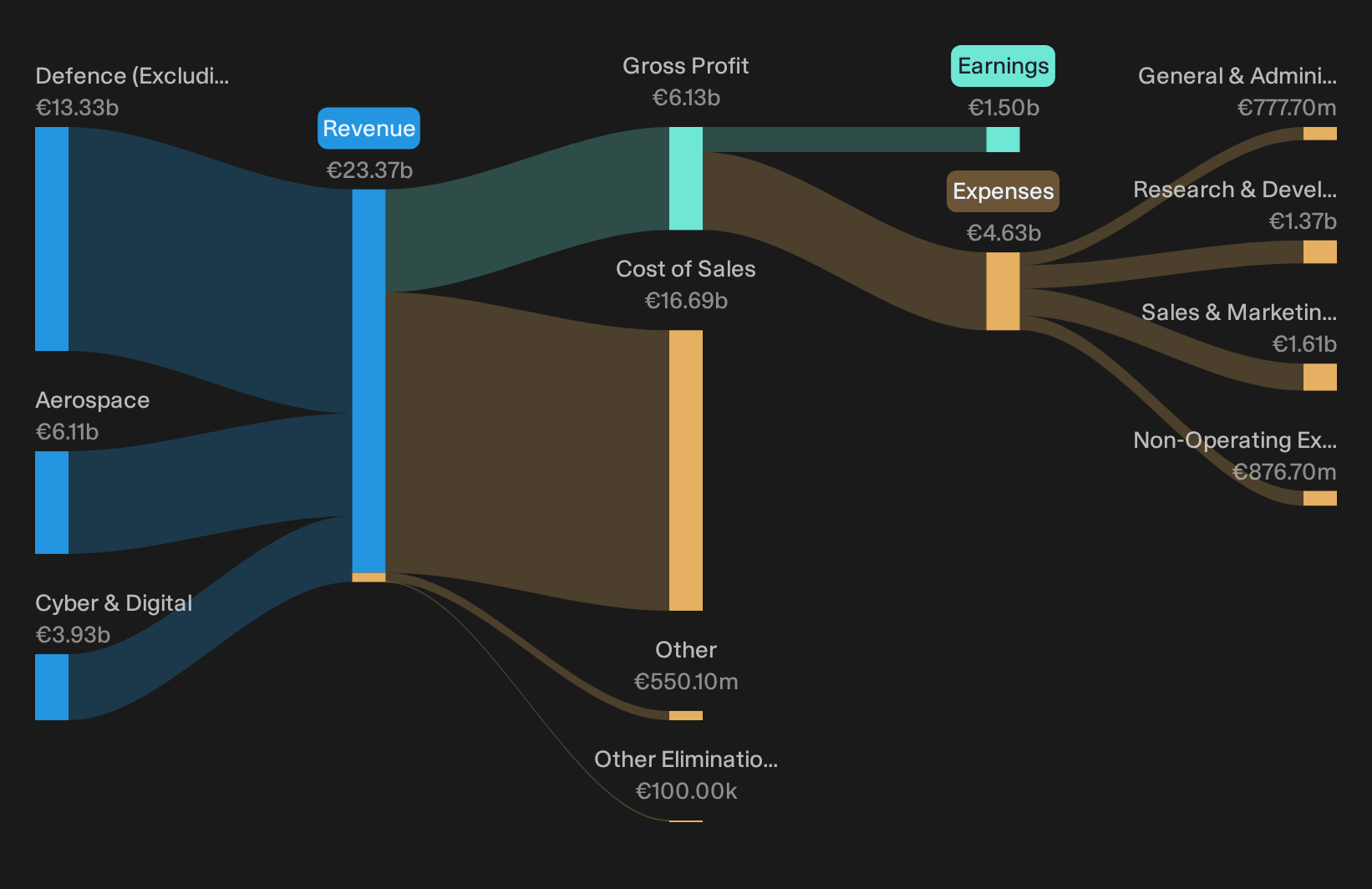
Operations: Thales generates about €13.3b from Defence excluding Digital Identity and Security, €6.1b from Aerospace, and €3.9b from Cyber & Digital.
Market Cap: €46.6b
Thales matters for this robotics and automation screen because its unmanned air, sea, and underwater systems combine sensors, autonomy software, and secure command networks to push physical AI into complex defence missions where reliability and secure data handling are non negotiable.
"Acceleration of defense spending in France and across Europe (for example, France raising its defense budget from €50 billion in 2025 to €64 billion by 2027, earlier than previously planned) is set to significantly boost order intake and revenue for Thales' defense segment, supporting multi-year revenue growth visibility."
What happens when one large, high tech defence automation program shifts in scale or timing could meaningfully reshape how investors think about Thales’ margin potential.
That margin swing is exactly what the full narrative for Thales unpacks, separating temporary budget cycles from longer term defence automation trends that investors might be overlooking.
Seeking Fresh Alternatives Before They Fly
Markets move fast and the next breakout list does not stay quiet for long. Scan fresh ideas while they are still under the radar for now. Consider opportunities at an early stage.
- Target potential income streams and review payout durability with a curated set of high-yield opportunities through the 6 dividend fortresses.
- Look for strong balance sheets and steady fundamentals by running your filters over the pre-screened list of solid balance sheet and fundamentals (25 results).
- Explore the next phase of AI momentum with cash generative tech stories that already cover their costs inside the 37 profitable AI stocks that aren't just burning cash.
This article by Simply Wall St is general in nature. We provide commentary based on historical data and analyst forecasts only using an unbiased methodology and our articles are not intended to be financial advice. It does not constitute a recommendation to buy or sell any stock, and does not take account of your objectives, or your financial situation. We aim to bring you long-term focused analysis driven by fundamental data. Note that our analysis may not factor in the latest price-sensitive company announcements or qualitative material. Simply Wall St has no position in any stocks mentioned.
Have feedback on this article? Concerned about the content? Get in touch with us directly. Alternatively, email editorial-team@simplywallst.com