


In-depth report: The Automotive Data Alliance was formally established, and Yuanzheng Technology (02488) helped build a new infrastructure for post-market data circulation
A conference that could change the pattern of the automotive aftermarket came to a quiet end recently.
On September 22, the “1st Automotive Data Alliance Conference” was successfully held in Yangshuo with the theme of “Digital Intelligence Empowers the Future Market, Ecological Symbiosis Creates Win-Win”.
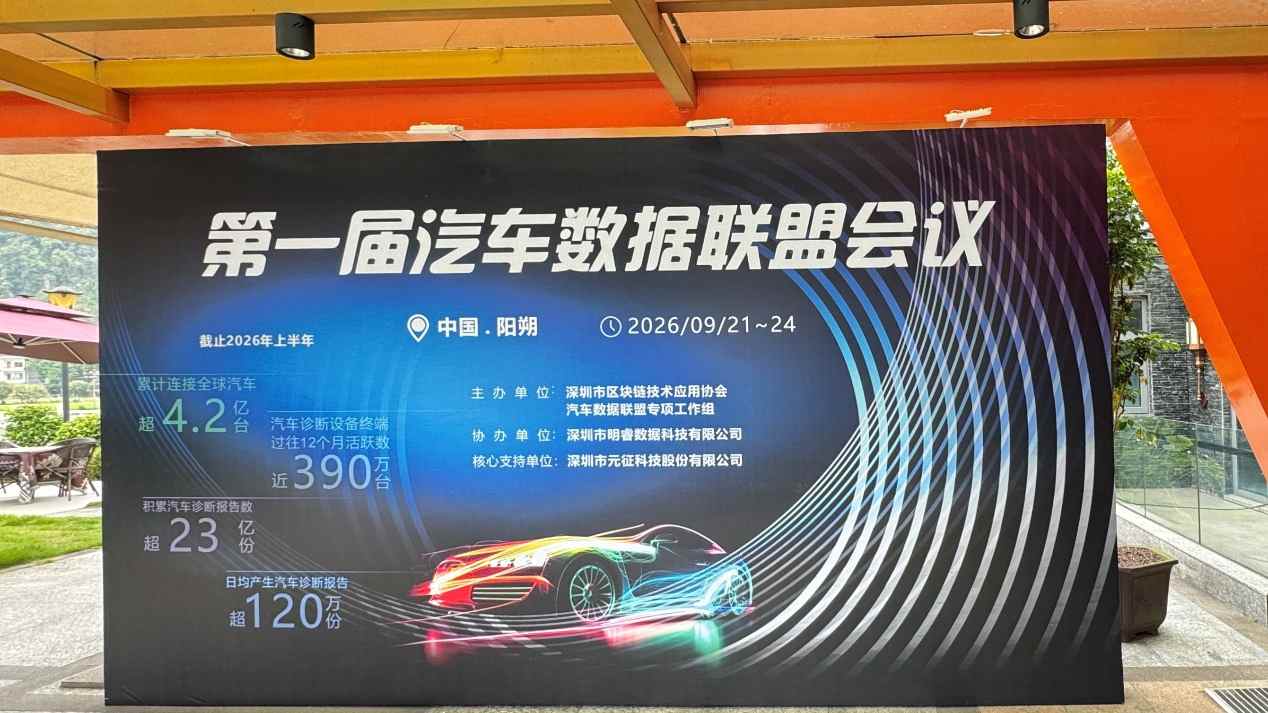
The conference was hosted by the Shenzhen Blockchain Technology Application Association Automotive Data Alliance Special Working Group, co-organized by Shenzhen Mingrui Data Technology Co., Ltd., and the core support unit was Shenzhen Yuanzheng Technology Co., Ltd. (02488), a company listed on the Hong Kong Stock Exchange.
The conference brought together 25 leading companies in the industry chain, including Mengshi, Wanji, Thai Case Association, F6, Dr. Cha, Lemon Search, Digital Auto Cloud, China Automobile Research, Shenzhen Longgang District Data Group Co., Ltd., spanning core tracks such as OEMs, diagnostic equipment, maintenance chains, accessories data, used car testing, insurance risk control, and government data groups — covering almost every key point in the automotive aftermarket data value chain. And these 25 companies were among the first founding members of the Automotive Data Alliance.

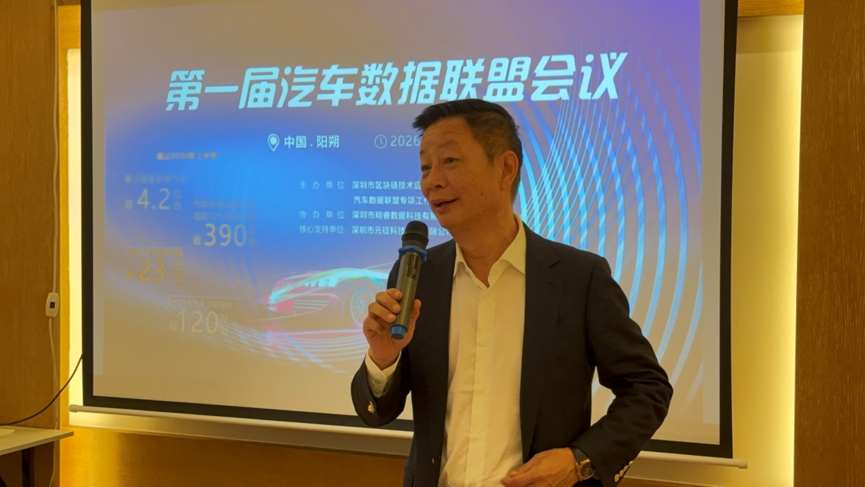
As a representative of the Association's president unit, Liu Yizhi, chairman of Yuanzheng Technology, welcomed the arrival of colleagues in the national industrial chain in his speech and pointed out the core proposition of the conference: breaking down silos through data exchange and building the future of the industry through alliances. He said bluntly that there is only one “way to break the game” in the industry: group development and open symbiosis.
Liu Yizhi said that the integration of automobile data and communication technology will achieve its commercial value through the blockchain model — this is the original purpose of the Automobile Data Alliance initiated by the Yuanzheng Science and Technology Joint Association: use data exchange to break down silos; use standards to co-build and standardize circulation; use compliance storage to protect applications; and use AI capabilities to release data value.
“Data is the fuel for AI, and alliances are gas stations. It all started here, and we never fought alone.” Liu Yi also issued an invitation to the entire industry: join the alliance, work together to build industry standards, share technological achievements, and develop a new AI circuit.
The successful holding of this conference is not only about “forming an alliance”, but also about implementing three things at the same time: using white papers to define standards, use end-side models to define products, and use blockchain+trusted space to allocate profit and compliance, providing a replicable industry infrastructure for the automotive aftermarket from the work order era to the model subscription era, and also opening a new stage of accelerated release of the intrinsic value of automotive data companies.
Vehicle data resources account for about 5%, and the huge circulation value potential has yet to be tapped
In the context of China's accelerated promotion of the construction of a national integrated data market, automobile data has become a scarce “high-value deposit” among new production factors. Its value is based on the huge scale of the industry.
From a macro perspective, the total output value of China's entire automobile industry chain will be about 11 trillion yuan in 2023. For the first time, it surpassed real estate to become the largest economic pillar in China, accounting for nearly 10% of GDP. The scale of such a large industry naturally nurtures rich data resources.
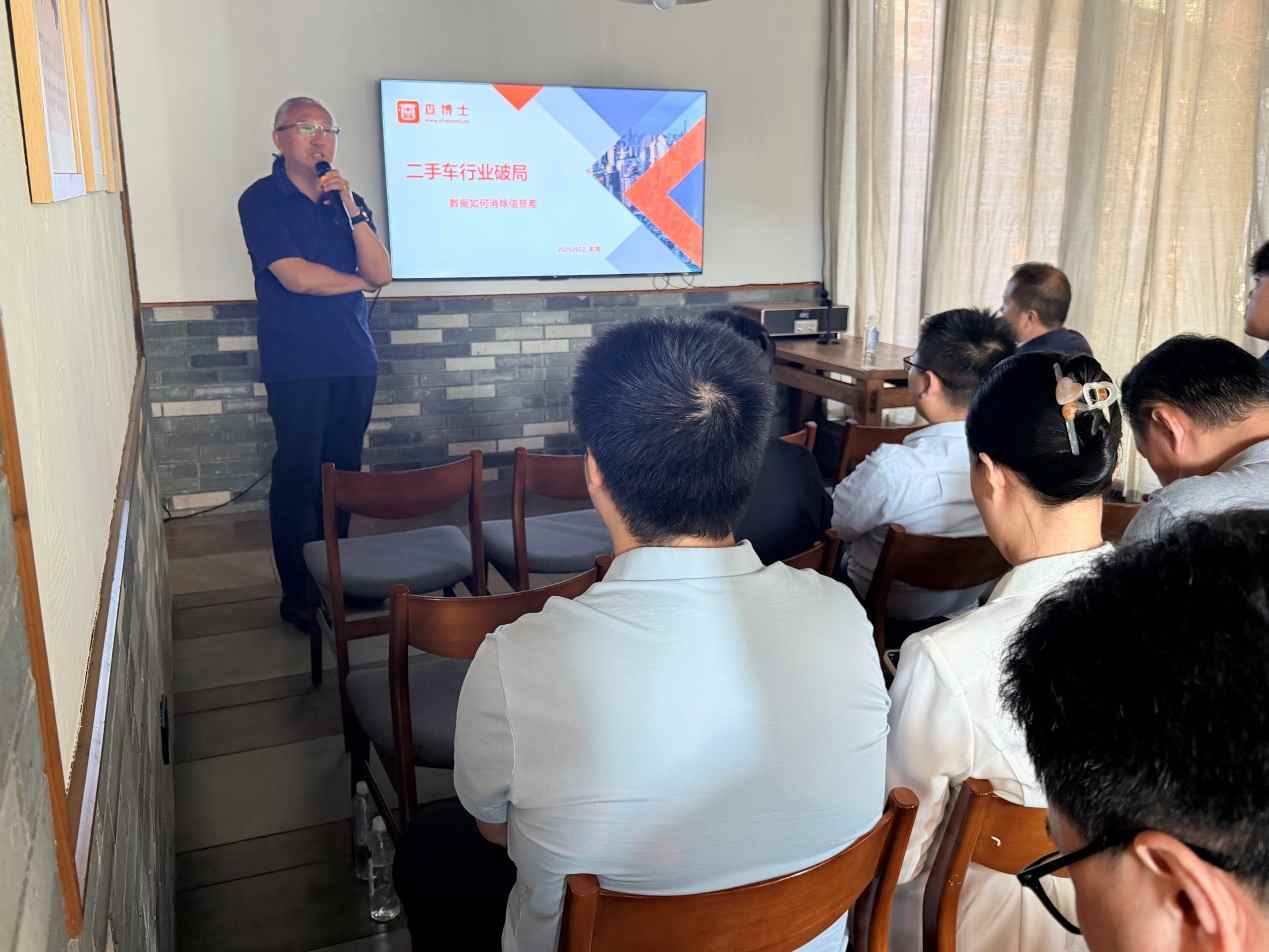
This can be seen from the data released by China Automobile Research at this conference: Among all types of data in the country, transportation data accounts for 8%, of which automobile data accounts for more than 70%, and corresponding automobile data accounts for about 5% of the total social data. This 5% share of data has huge potential for circulation value.
At the conference, Yuanzheng Technology used its own development as an example to confirm the potential of macro-data circulation, which is being realized at an accelerated pace through micro scenarios. As a global leader in automotive diagnostic equipment, Yuanzheng Technology's hardware equipment covers 234 countries and regions, is active in nearly 3.9 million units, and has connected more than 420 million vehicles, with an average of 1.2 million diagnostic reports per day. This massive diagnostic data has been deeply integrated into all aspects of the industrial chain such as R&D, maintenance, insurance, and used cars, and has become a vivid footnote to the transformation of automobile data from “resources” to “value.”
Specifically, on the R&D and quality side, Yuanzheng Technology has obtained detailed fault data for different car models based on the ECU-FDI fault density index and cross-statistics according to vehicle model, vehicle age, mileage, region, and climate, which can feed back OEMs to use the data to identify common faults in specific models or systems and improve product design and quality assurance strategies.

On the maintenance and parts side, Yuanzheng Technology forms a closed loop based on global diagnostic data. Repair shops directly spare parts according to diagnostic findings, and no longer rely on blind experience, which can directly reduce repair shop preparation costs.
On the insurance and anti-fraud side, Yuanzheng Technology's automobile diagnosis and maintenance data can establish a multi-dimensional inspection and early warning system. Relying on historical fault codes and maintenance records to identify intentional accident fraud, risk control is moved forward after being carried out; at the same time, accident and modification data can be integrated and connected to stolen warehouses, and the real identity of the vehicle can be verified.
On the used car and financial side, Yuanzheng Technology's data allows vehicle conditions, mileage, accidents, modifications and original parts records to directly anchor residual values, maintain the spatio-temporal trajectory to support dynamic vehicle search and long-term traceability of loan vehicles, and establish a strong line of defense for asset preservation after loans.
However, the data monetization of the automobile aftermarket scenario described above is only one facet of the value of automobile data elements. As China Automobile Research emphasized at the conference, cross-subject data integration can better support core scenarios such as intelligent connectivity and vehicle-road collaboration. The accelerated development of these scenarios will further unleash the value of data assets and promote the formation of new quality productivity.
In the field of autonomous driving, the return of perception and decision data during vehicle operation is becoming the core driving force for algorithm iteration; in the field of vehicle-road collaboration, the integration of vehicle-side and roadside data moves traffic systems from “single-point intelligence” to “global optimization”; in the field of energy interconnection, charging and discharging of new energy vehicles and battery data are supporting vehicle network interaction and virtual power plant scheduling.
From aftermarket maintenance, insurance, used cars and finance, to front-end autonomous driving training and vehicle road collaborative scheduling, the application scenarios of automobile data have covered the entire industry chain, forming a complete value map. And the radius of data circulation directly determines its value ceiling — the more data circulates, the more value fission. This is a “bonanza mine” that needs to be jointly developed by the entire industry.
Industry pain points are highlighted, and establishing automotive data alliances has become an inevitable trend
Although automotive data resources have huge potential for circulation value, in the past 20 years, automotive aftermarket data has been dormant in the company's internal BI reports for a long time, playing a supporting role in “auxiliary decision-making.” Service plant work orders, diagnostic equipment fault codes, insurance accident records, and used car inspection reports — these data are all fought separately. They have never actually entered the cross-subject circulation process, and the compound interest value of the data is locked within the firewall.
The sequelae of this “data slumber” were dramatically amplified during the transformation of the industry. As the automotive aftermarket leaves traditional expansive management and enters a new stage of data-driven, AI-enabled, and ecological symbiosis, the pain points of the industry are becoming more and more obvious, namely serious data silos, inconsistent standards, fragmented applications, and lack of fuel for AI models, which limit the high-quality development of the industry.
In particular, under data silos, AI models trained by a single enterprise have weak generalization capabilities and are difficult to actually implement. If this “no circulation of data, no fuel for models” dilemma cannot be solved within the window of industry transformation, it will evolve from an internal constraint to an existential crisis for the enterprise in the future.
More urgently, the window period is narrowing. Currently, we are in a period of technological transformation driven by AI. The wave of big models and end-side AI is sweeping the automotive industry. Whoever has high-quality, multi-dimensional data will take the next generation of competitive initiative.
If industry leaders stick to the “data moat” mentality and are satisfied with the one-time profit from hardware sales, they will face the risk of “boiling a frog in warm water.” The only way to break the game is to proactively innovate, open up cooperation, and import enterprise data into the industry base so that the foundation can stay strong.
This is also the core motive for the establishment of the Automotive Data Alliance. Through the alliance mechanism, data scattered across various aspects such as OEMs, diagnosticians, maintenance chains, insurance, and used cars will be gathered and distributed in a compliant manner to provide sufficient “fuel” for AI models and push the aftermarket from “fighting alone” to “ecological symbiosis.”
Alliance production-side/local small model capabilities to distribute revenue according to data contribution
When the establishment of an automotive data alliance becomes an inevitable trend in the development of the industry, a key question arises: how will the alliance be established, and in what form will it operate? As a global leader in automotive diagnostic equipment and the core supporter of this conference, Yuanzheng Technology has made significant progress in data value mining, and has provided sample answers to this question through its own practice.
The core of this questionnaire was fully demonstrated in this conference — by showing its advantages in data scale, compliance layout, and AI analysis capabilities, Yuanzheng Technology proved the feasibility of transforming automobile data from “raw materials” to commercial value, and disassembled the operating model of the “Automobile Data Alliance” in detail.
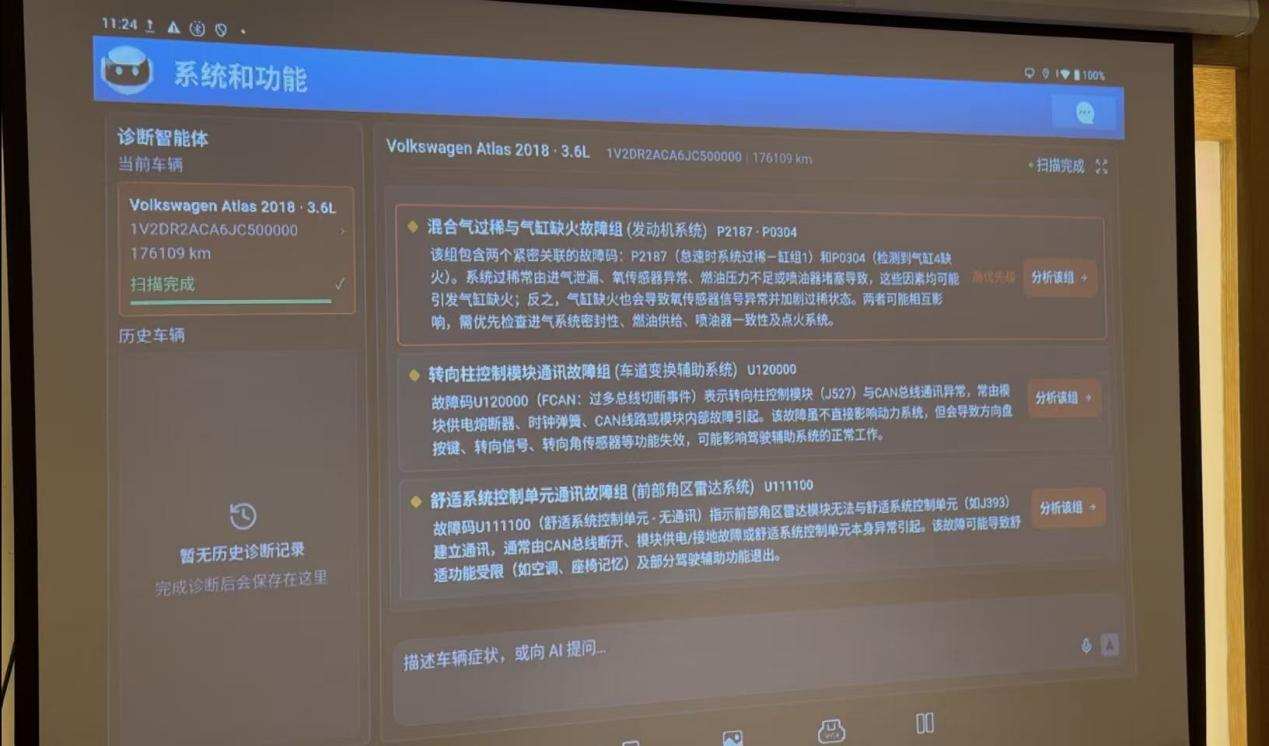
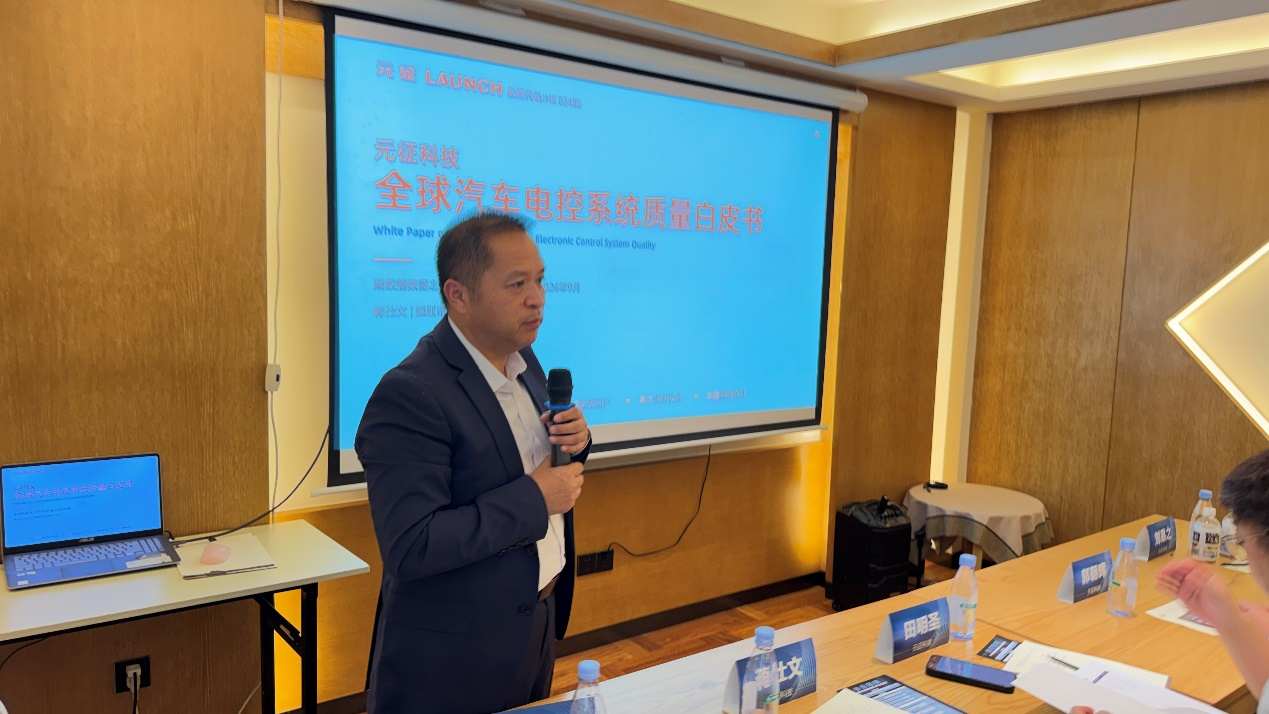
Relying on the hard power of connecting more than 420 million vehicles and an average of 1.2 million diagnostic reports per day, along with 250 million US maintenance orders and the compliance layout of the world's top three data centers, Yuanzheng Technology defined the industry's “ECU-FDI Fault Density Index” and released the “White Paper on the Quality of Automotive Electronic Control Systems” completed by AI in three days at this conference, laying the foundation of trust for the establishment of the alliance.
Yuanzheng Technology proposed that the Automotive Data Alliance is an ecological collaborative organization based on technical trust, rather than a simple data exchange pool. In terms of membership structure, industry leaders are strictly limited, and only the top 2 are invited in each segment. The first 25 companies attending the conference covered OEMs, insurance, parts platforms, and government data groups. At the data access level, “thematic data space” and blockchain technology are used to achieve “usable, invisible, controllable and measurable”, and the direct exchange of raw data is abandoned.
At the level of authorization and profit sharing, profits are distributed according to data contributions through automatic execution through smart contracts. Faced with the domestic legal framework prohibiting data trading, the alliance processes data into compliant products such as diagnostic reports and risk warnings to ensure that the monetization path is legal. In terms of the organizational mechanism, starting with the publication of the white paper, we regularly share PPTs and the list of participants, establish a high-level community, and promote specific cooperation through “throwing bricks and leading to in-depth discussions”.
Notably, the Alliance's core output is not raw data, but endside/local small model capabilities. The end-side model can generate diagnostic results locally within 15-20 seconds, without the need for networking, taking into account speed and privacy, and iteratively evolve through continuous data backflow. The blockchain profit sharing system automatically records the data source in the model call to ensure that all parties receive benefits according to their contributions, so that OEMs, repair shops, parts vendors, etc. can profit from “dormant data” and break the silos dilemma.
As Jiang Shiwen, senior vice president of Yuanzheng Technology, summed it up: “Everyone has a treasure map, but if you don't share it, you'll never find a treasure.” The establishment of the Automotive Data Alliance marks the industry's move from separate battles to ecological symbiosis. This is not only an upgrade of the Chinese automotive aftermarket business model, but also a key step for the industry to take control of global competition in the AI era.
In the future, the alliance will further resolve potential challenges such as traceability of rights, privacy protection, anti-monopoly, and corporate participation incentives, and continue to break through federal learning, transparent rules, and implemented cross-agent collaboration cases to promote industrial data from single-point application to cross-domain integration.
Promote the digital transformation of member companies and accelerate the revaluation of data assets
The deep meaning of data alliances is not only to allow enterprises to “add one more data channel”, but to recalculate data from cost items in internal statements as assets that can be circulated, billed, and compounded, thereby changing the enterprise's valuation logic.
Using Yuanzheng Technology as a sample, the growth path of its data revaluation has been clearly presented in the company's performance. In the past, Yuanzheng Technology mainly sold diagnostic equipment, and hardware delivery confirmed revenue. However, the life cycle of equipment was usually 3-5 years, and the repurchase cycle was long, making it difficult to generate continuous cash flow by selling equipment alone, but the company's current business structure has clearly changed.
In the first half of 2026, Yuanzheng Technology's software business revenue was about 120 million yuan, up 67.9% year on year, accounting for 11% of total revenue; data business revenue was about 15.4 million yuan, up 93.6% year on year, ranking first among all businesses; revenue from AI services such as remote diagnosis was about 16.1 million yuan, an increase of 45.7% year on year.
The difference between these types of business and hardware is that software subscriptions, diagnostic model calls, and data interfaces are all paid on a cyclical basis. After the equipment is sold once, it can continue to generate revenue such as upgrades, inquiries, reports, and agent calls. Customers use it frequently, and corporate revenue can be expected. The shift of the Alliance's core output products to end/local small models plus subscription licensing is an important step to upgrade a single sale to long-term service.
The key to supporting Yuanzheng Technology's revenue structure to accelerate its inclination towards software, data, and AI services is the integrity of the company's data source structure and dimensions. Yuanzheng Technology's diagnostic data runs through the entire life cycle of the vehicle — from factory entry fault codes, maintenance plans, and parts replacement to subsequent recalls and used residual values, forming a complete data chain. At the same time, it also covers different brands and new energy models, and can compare differences between systems; it also accumulates samples of work orders, climate, and road conditions in different regions at home and abroad; in addition to the time dimensions of 1.2 million daily diagnostic reports and nearly 3.9 million active devices, the model can be continuously iteratively optimized according to vehicle age, mileage, region, and season.
The ECU-FDI fault density index and the “Vehicle Electronic Control System Quality White Paper” released by Yuanzheng Technology at this conference are essentially to refine such complex data into reusable quality indicators, turning Yuanzheng Technology from “selling equipment with attached reports” to “selling diagnostic capabilities.”
After the establishment of the Data Alliance, the traditional ledger of enterprises with “data for internal use only” will be rewritten. In the past, data was more reflected in storage and maintenance costs in financial statements; under the alliance's blockchain smart contract system, multi-dimensional data such as diagnoses, work orders, claims, used cars, and accessories contributed by enterprises will be automatically distributed according to call frequency and model improvement effects, and directly converted into joint intellectual property rights for model calling rights, subscription sharing rights, and even industry white papers. Data is no longer a dormant cost item; it's a sustainable asset.
Once this profit sharing model runs through, it triggers a self-reinforcing growth flywheel: the larger the amount of data and the more complete the dimensions, the higher the accuracy of the trained end-side model, the more often it is used by repair shops, insurance, used cars, and accessories platforms, and the marginal revenue generated also rises exponentially. The data then changes from a “burden” to a “money printer.”
For companies in the alliance, it will usher in a deep restructuring of commercial valuation logic. The data assets of alliance member companies will be revalued from “numbers in personal statements” to “model assets that can be authorized and traded”. On this basis, as the weight of software, AI, and data businesses in financial statements continues to rise, the market valuation logic will also completely break away from the traditional hardware PE framework and move to a composite model of “equipment entrance+subscription revenue+data barriers”. When the compliance profit sharing mechanism is implemented, the share of AI output of leading companies will rapidly increase. A wave of data-driven revaluation is about to arrive at an accelerated pace.