


Earnings Beat Altering The Investment Case For Oshkosh (OSK)?
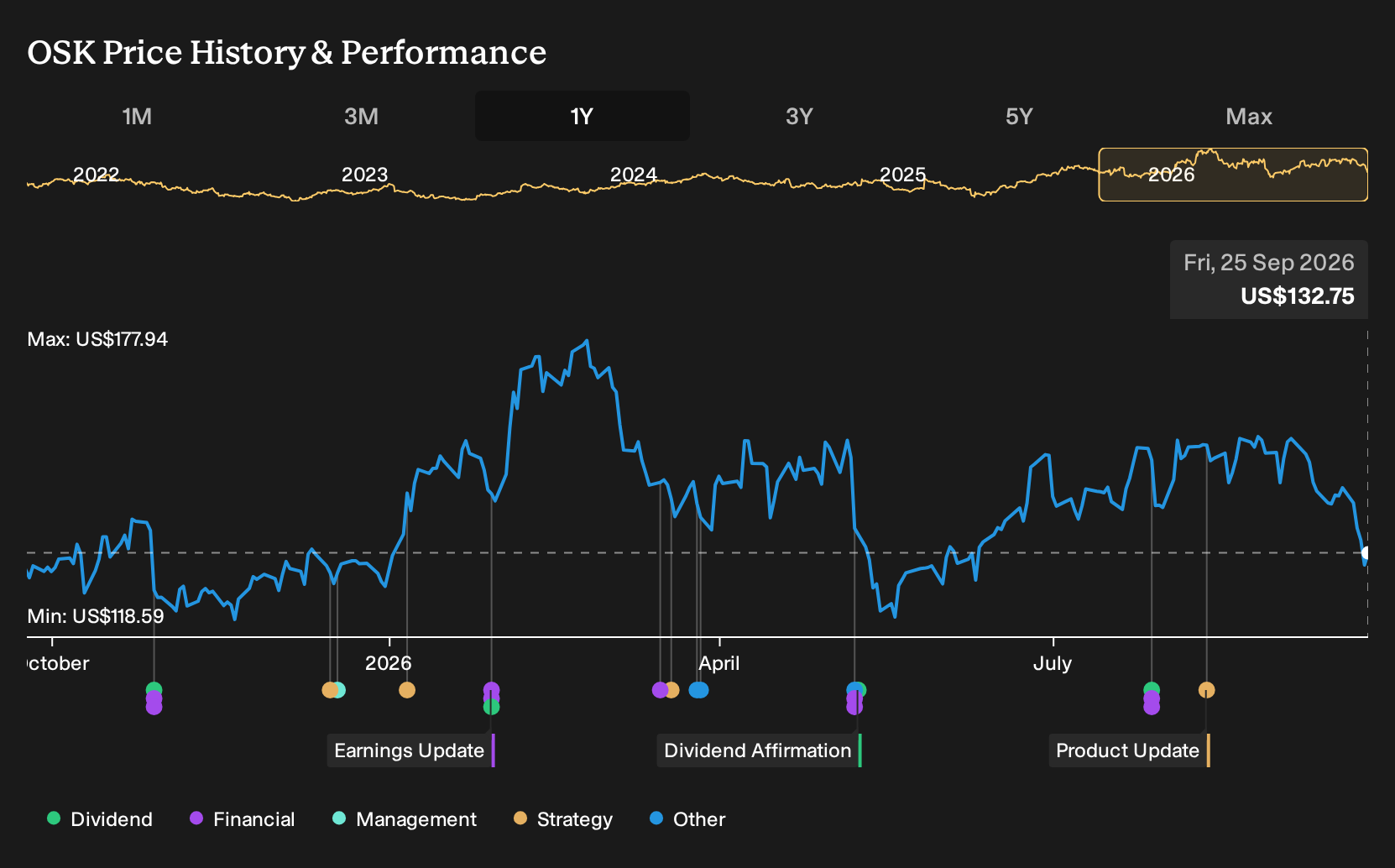
- Oshkosh reported Q2 FY26 results that beat earnings expectations, with management describing conditions across its Access, Vocational, and Transport segments as stable and supported by multi year government contracts.
- The company highlighted accelerating work on electric, hybrid, and autonomous vehicle platforms, signaling a push toward higher margin, technology rich vehicles tied to long term fleet and infrastructure needs.
- We will now assess how Oshkosh's earnings surprise and progress in electric and autonomous vehicles could influence its broader investment narrative.
Compare Oshkosh's push into electric, hybrid, and autonomous fleets with other potential beneficiaries of this shift by scanning the curated 92 robotics and automation stocks.
Oshkosh Investment Narrative Recap
To own Oshkosh, you need to believe the business can keep turning a very mixed set of end markets into reasonably steady cash generation. Construction, defense, and municipal spending all move on different cycles, so earnings stability rests on management using backlog, pricing, and cost control to offset weaker pockets. The latest earnings surprise supports that idea but does not radically change it.
Right now the key near term swing factor is execution on electric, hybrid, and autonomous programs while keeping margins from being diluted by upfront R&D and tooling costs. The biggest immediate risk feels more old fashioned. Any renewed tariff or input cost pressure in Access and Transport, or delays on major government contracts, could quickly pressure profitability even if orders hold up.
In the Q2 FY26 update, Oshkosh leaned into its work on electric, hybrid, and autonomous platforms across Access, Vocational, and Transport. That is the piece most tied to the current earnings story, because it helps explain management’s confidence in higher margin, technology rich vehicles aligned with long term fleet upgrades and infrastructure work.
This push matters for the catalyst playbook you are weighing. Progress on those vehicle programs gives the company a clearer path to win incremental government and commercial business and to defend pricing when steel, labor, or freight costs bite. It also sits right next to the main risk. Any execution slip or cost overrun on these programs would land directly on margins at the same time Oshkosh remains exposed to tariff swings and concentrated government contracts.
Oshkosh's analyst narrative points to US$12.8b in revenue and US$1.1b in earnings by 2029, based on assumed 6.5% yearly revenue growth and an earnings increase of about US$544m from current earnings of US$556.3m.
Uncover why Oshkosh's fair value indicates a 26% potential upside to its current price that could narrow quickly.
Exploring Other Perspectives
One alternative view focuses on Oshkosh’s Access segment as the weak link. The most cautious analysts were only modeling about 5.1% annual revenue growth and earnings of roughly US$880.6m by 2029, well below the US$1.1b consensus. With Q2’s electric and autonomous progress now on the table, those expectations could shift.
Explore 3 other Oshkosh fair value estimates, including one that suggests it could be worth just $167.25.
Decide For Yourself
Disagree with existing narratives? Extraordinary investment returns rarely come from following the herd, so go with your instincts.
- A great starting point for your Oshkosh research is our analysis highlighting 5 key rewards that could impact your investment decision.
- See our latest analysis for Oshkosh. The report includes a comprehensive fundamental analysis summarized in a single visual, the Snowflake, making it easy to evaluate Oshkosh's overall financial health at a glance.
Looking for more Oshkosh style investment ideas?
If Oshkosh has sharpened your interest in industrials, broaden your watchlist by using the Simply Wall St Screener to hunt for other opportunities that match your risk and return preferences.
- If capital preservation is high on your priority list, focus on sturdier balance sheets and steadier financial profiles through a 30 resilient stocks with low risk scores.
- For investors who want income on top of potential price moves, shortlist companies with stronger yields and payout track records using the 8 dividend fortresses.
- To search for future candidates before they hit the mainstream radar, scan a 16 high quality undiscovered gems that already show solid fundamentals and room for a wider re rating.
This article by Simply Wall St is general in nature. We provide commentary based on historical data and analyst forecasts only using an unbiased methodology and our articles are not intended to be financial advice. It does not constitute a recommendation to buy or sell any stock, and does not take account of your objectives, or your financial situation. We aim to bring you long-term focused analysis driven by fundamental data. Note that our analysis may not factor in the latest price-sensitive company announcements or qualitative material. Simply Wall St has no position in any stocks mentioned.
Have feedback on this article? Concerned about the content? Get in touch with us directly. Alternatively, email editorial-team@simplywallst.com