


Does First A321XLR Engine Delivery Change The Bull Case For RTX (RTX)?
- RTX, through Pratt & Whitney, has already delivered United Airlines its first Airbus A321XLR powered by GTF Advantage engines and completed a key F135 Engine Core Upgrade design review that advances the upgrade program toward production.
- The combination of longer duration GTF Advantage engines and a reduction in the F135 upgrade path highlights RTX’s focus on recurring aftermarket work and long program lifecycles.
- The next area of attention is how RTX’s investment narrative could be influenced by GTF Advantage’s durability and the upgrade path for existing engines.
Scan across aero and defense peers that are benefiting from similar long-cycle engine and upgrade stories by focusing on our curated list of 30 resilient stocks with low risk scores.
RTX Investment Narrative Recap
For RTX, the big belief is that long duration engine and defense programs can keep turning a US$289b backlog into revenue, higher margin aftermarket work and solid cash generation. The GTF Advantage rollout and F135 upgrade path both support that view. The key short term catalyst remains smooth backlog conversion as new aerospace and defense awards move into production.
The biggest near term risk still lies in execution. RTX is committing about US$10b to US$10.5b of 2026 engineering and capex while also managing supply constraints and tariff exposure. The latest GTF Advantage and F135 milestones support credibility on delivery, but they do not remove those pressure points.
The most relevant update is Pratt & Whitney completing the F135 Engine Core Upgrade risk reduction design review. That review validated the design maturity, integration plan and industrial base readiness for a drop in upgrade on Block 4 and later F 35 aircraft. For RTX, this connects directly to the view that existing hardware can support incremental capability without a clean sheet engine.
For investors, the ECU progress sits alongside GTF Advantage as an execution test on US$19.9b in quarterly Raytheon awards and multi year munitions and engine programs. If RTX converts these wins into timely production and retrofit work, the commercial aftermarket and defense upgrade activity could support the guidance framework already in place.
RTX's current analyst narrative points to US$112.3b in revenue and US$10.9b in earnings by 2029. This is based on forecasts that call for 6.3% yearly revenue growth and an earnings increase of about US$3.2b from US$7.7b today.
Uncover why RTX's fair value indicates a 24% potential upside to its current price before the gap starts to close.
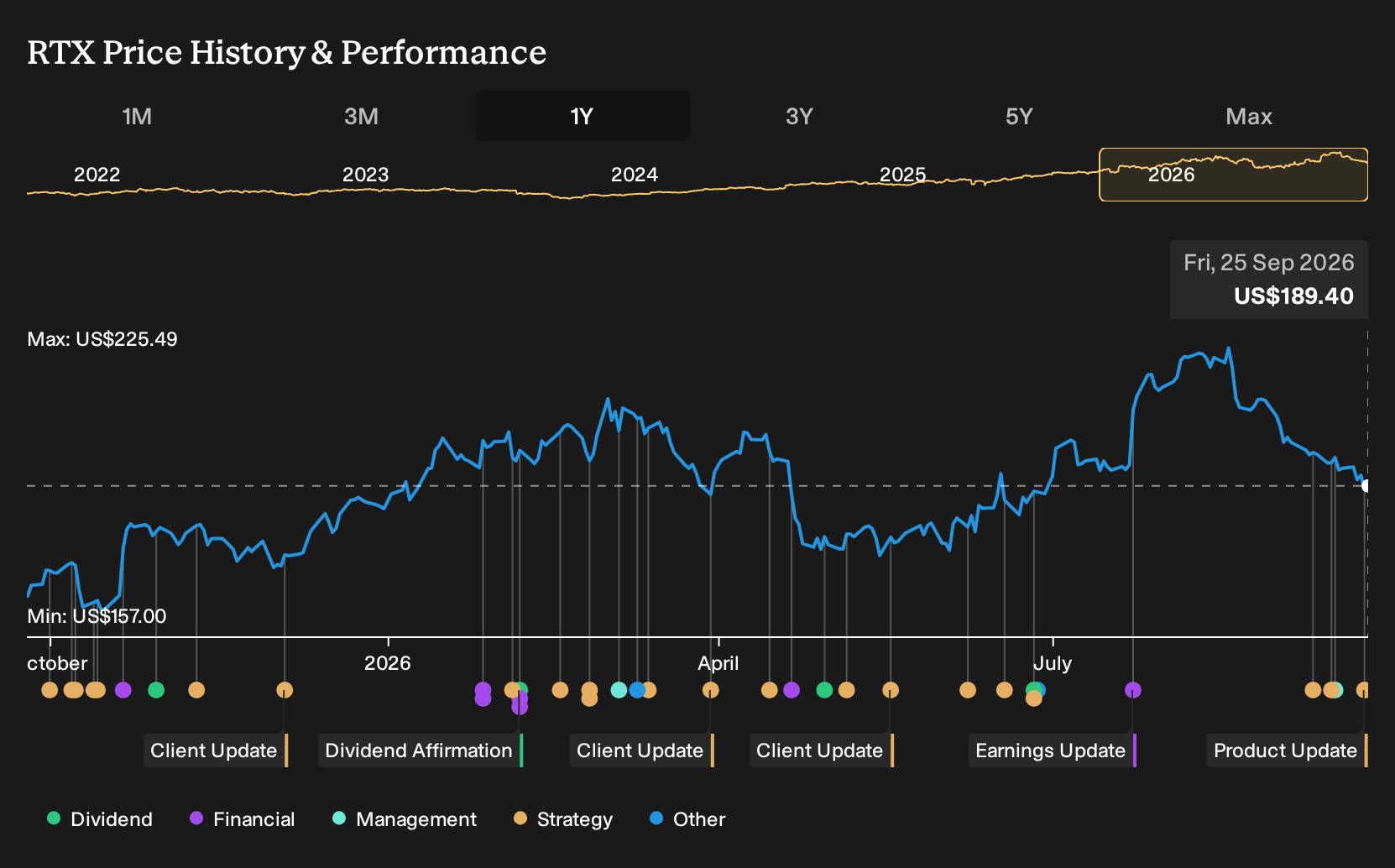
Exploring Other Perspectives
Three fair value estimates from the Simply Wall St Community cluster tightly between about US$233.6 and US$234.8 per share, which shows retail investors can agree on a narrow range yet still hold very different conviction levels. When you set that against RTX’s exposure to tariffs, defense budget swings and heavy 2026 investment, it becomes clearer why opinions can spread out fast. Use these contrasting views as a prompt to explore several alternative angles before forming your own stance.
Explore 2 other RTX fair value estimates, including one that suggests potential upside of up to 24% from the current price.
Decide For Yourself
Don't just follow the ticker. Dig into the data and build a conviction that's truly your own.
- A great starting point for your RTX research is our analysis highlighting 4 key rewards and 3 important warning signs that could impact your investment decision.
- See our latest analysis for RTX. The report includes a comprehensive fundamental analysis summarized in a single visual, the Snowflake, making it easy to evaluate RTX's overall financial health at a glance.
Looking For More Investment Ideas Beyond RTX?
Once you have a handle on RTX, it can help to compare it with other businesses that share some of the qualities you care about most, whether that is resilience, income, or long term upside potential. The Simply Wall St Screener gives you a structured way to do that by filtering for specific fundamentals rather than headlines.
- If you want potential upside with quality metrics behind it, start by scanning a curated set of 32 high quality undervalued stocks that pair supportive fundamentals with attractive pricing signals.
- For readers who care about balance sheet strength and the ability to absorb shocks, filter for companies using our focused list of solid balance sheet and fundamentals (24 results) to see which businesses carry the strongest financial foundations.
- Income focused investors can zero in on reliable payers by reviewing a hand picked group of 8 dividend fortresses that combine higher yields with an emphasis on resilience.
This article by Simply Wall St is general in nature. We provide commentary based on historical data and analyst forecasts only using an unbiased methodology and our articles are not intended to be financial advice. It does not constitute a recommendation to buy or sell any stock, and does not take account of your objectives, or your financial situation. We aim to bring you long-term focused analysis driven by fundamental data. Note that our analysis may not factor in the latest price-sensitive company announcements or qualitative material. Simply Wall St has no position in any stocks mentioned.
Have feedback on this article? Concerned about the content? Get in touch with us directly. Alternatively, email editorial-team@simplywallst.com