


3 Resale Stocks Investors Are Watching After The CPI Shift
Secondhand clothing just went from thrift-store niche to official inflation input, with the CPI now tracking resale prices more closely. That shift puts secondhand and resale platforms on a different kind of radar for markets that react to every inflation print. If you care about how policy, pricing and new shopping habits collide, the next sections walk through 3 stocks exposed to this CPI change and what that could mean for your portfolio decisions.
The stocks covered below are only a sample from this resale theme, and the full screen surfaced 15 more U.S.-listed companies with equally compelling narratives around secondhand and thrift-focused apparel. To go straight to the full list, identify your own filters and analyze the highest-conviction resale ideas, head into the Secondhand & Resale Apparel Platforms screener.
Winmark (WINA)
Overview: Winmark runs franchise chains of resale stores like Plato’s Closet and Once Upon A Child that focus on buying and selling secondhand apparel and goods.
Operations: The business generates virtually all of its US$86 million revenue from franchising fees and related segment items tied to its resale store network.
Market Cap: US$1.1b
Winmark is directly connected to the CPI-linked resale theme through its network of franchised thrift concepts. It also features a high P/E multiple, rich profit margins and a meaningful dividend. For investors who want exposure to secondhand apparel without running stores themselves, the franchise model places more emphasis on what happens when one unseen pressure shifts the balance between pricing power and payout ambitions.
That trade off between pricing power and shareholder cash returns is front and center in the DCF valuation analysis for Winmark, where payout ambitions meet what the market is actually pricing in.
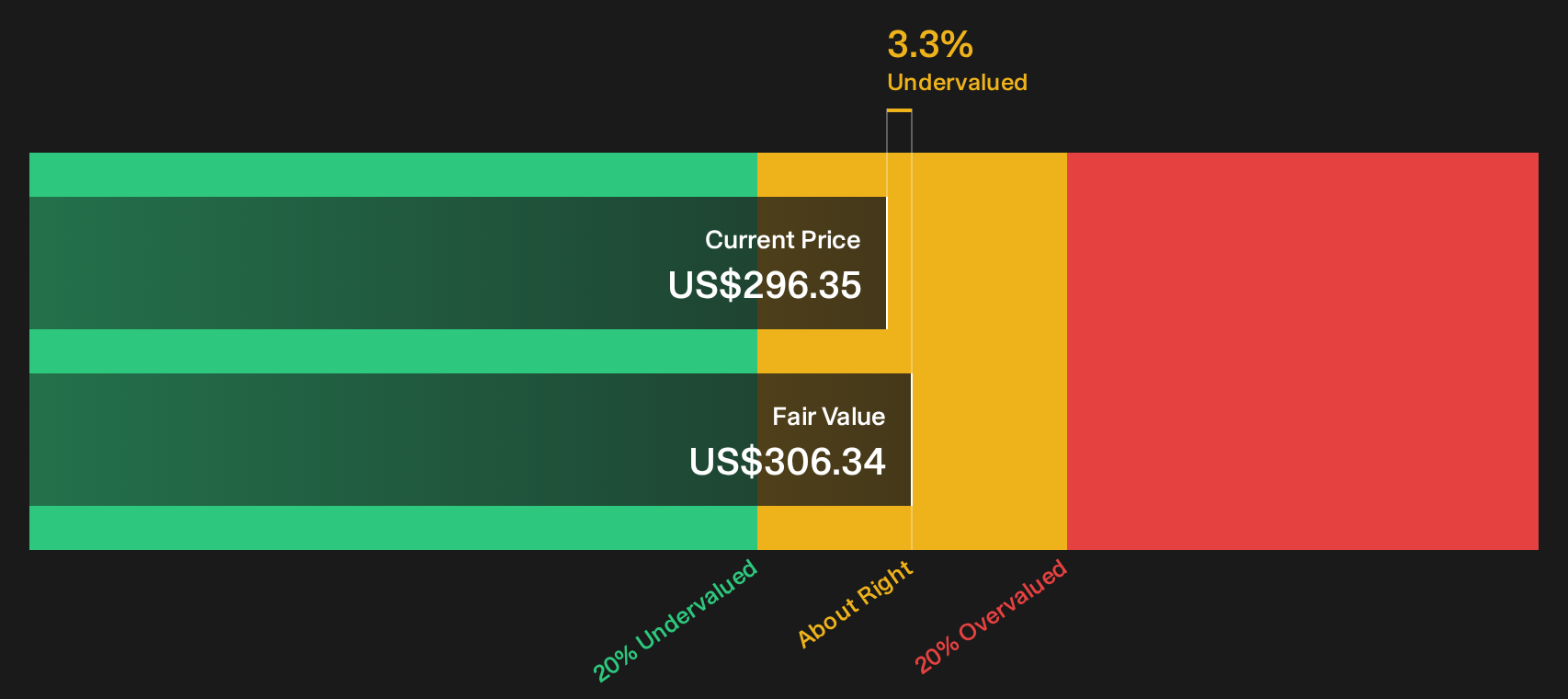
Savers Value Village (SVV)
Overview: Savers Value Village runs large thrift store chains that buy donated secondhand goods from non-profit partners, then process and resell them to budget-conscious shoppers.
Operations: Savers Value Village generates about US$1 billion from U.S. retail and US$620 million from Canada retail, plus a US$131 million segment adjustment.
Market Cap: US$1.4b
Where Winmark offers a franchised way into secondhand, Savers Value Village gives you pure thrift floors packed with donated apparel that now sits squarely inside the CPI spotlight.
"Although Savers Value Village is rolling out data and AI tools that management links to future EBITDA margin expansion, the recent 15% rise in SG&A and 150 basis point deleverage to 22.7% of net sales suggests these technologies may not scale fast enough to counter rising overhead, which could limit earnings."
What happens to Savers Value Village’s thrift-fueled upside if one unseen pressure quietly decides whether that CPI-aligned model actually fattens margins?
If that unseen pressure is what you care about, go straight to the full narrative for Savers Value Village to see how Savers Value Village’s model could still accelerate.

RealReal (REAL)
Overview: RealReal runs an online and in-store marketplace for authenticated secondhand luxury fashion, putting resale apparel at the center of its model.
Operations: RealReal generates about US$750 million from online retail, almost entirely in the United States, tying revenue directly to digital resale activity.
Market Cap: US$1.1b
Among resale-focused stocks, RealReal is where luxury pricing, authentication and shifting secondhand habits meet in one place. This makes its response to the CPI’s new attention on resale apparel especially important for anyone watching how inflation data interacts with consumer behavior.
"The RealReal rebuilds core operations around artificial intelligence, using an AI pricing algorithm that tracks more than 100 data points per item and the Athena intake system to automate authentication and cataloging, which the company reports is improving unit economics and processing speed."
The real swing factor for RealReal is what happens if a single efficiency lever quietly reshapes how much resale demand drops through to margins.
If that lever is what you care about, go straight to the full narrative for RealReal to see how RealReal’s resale engine could accelerate or stall from here.

Seeking Fresh Alternatives Beyond Resale?
Fresh breakout stories rarely stay under the radar for long. Some are already building momentum while others risk getting caught before the crowd arrives. Scan these picks and act now.
- Spot mature cash generators before yields start dropping by reviewing the curated 8 dividend fortresses that filter for income strength while it still matters for compounding investors.
- Track the real picks and shovels behind AI momentum through the hand-picked 85 AI infrastructure stocks that focus on the hardware and backbone driving demand before prices go flying.
- Catch early movers in automation while they are still under the radar for now by zeroing in on the curated 92 robotics and automation stocks screened for quality and resilience.
This article by Simply Wall St is general in nature. We provide commentary based on historical data and analyst forecasts only using an unbiased methodology and our articles are not intended to be financial advice. It does not constitute a recommendation to buy or sell any stock, and does not take account of your objectives, or your financial situation. We aim to bring you long-term focused analysis driven by fundamental data. Note that our analysis may not factor in the latest price-sensitive company announcements or qualitative material. Simply Wall St has no position in any stocks mentioned.
Have feedback on this article? Concerned about the content? Get in touch with us directly. Alternatively, email editorial-team@simplywallst.com