


Learn Why The Bull Case For Sonos Stock Could Change Following Earnings Beat
- Sonos recently reported Q2 results with revenue up 8.8% year over year, surpassing analyst estimates on both sales and earnings and indicating solid execution across its wireless and home theater audio portfolio.
- The quarter also delivered EBITDA performance ahead of expectations, and management described Sonos as being at an inflection point. This suggests that its ongoing business reinvention and product ecosystem strategy are starting to gain operational traction.
- We will now explore how this stronger than expected revenue and earnings performance may shape Sonos's existing investment narrative around efficiency and growth.
Scan how Sonos’ inflection-point quarter compares with other potential breakout stories by reviewing the hand-picked 16 high quality undiscovered gems in similar quality tiers.
Sonos Investment Narrative Recap
To own Sonos, you need to believe the audio ecosystem can keep pulling more spend from each household through new products and software features, even while the broader home electronics category stays choppy. The latest quarter, with revenue and EBITDA ahead of expectations, supports the idea that the cost reset and product focus are gaining some traction.
The key near term swing factor is whether Sonos can keep that operational discipline while tariffs, a hardware lull and intense competition from tech giants and low cost rivals all bite at once. The strong print helps sentiment but does not remove the risk of margin pressure or slower unit demand if pricing or marketing missteps occur.
With no fresh company announcements tied directly to this earnings release, the most relevant context is the earlier shift toward software centric improvements during a quieter hardware phase. Management has been leaning on updates and integrations to extend the life and usefulness of existing speakers and home theater products.
That approach matters for catalysts and risk. If Sonos continues to refine the platform and keep users engaged without heavy new hardware spend, the cost base benefits that helped Q2 could prove more durable. If the lull in major product launches drags on too long, the company stays exposed to tariff headwinds, competitive pressure and the chance that customers delay upgrades until the next big cycle.
Sonos Forecasts and Implied Earnings Shift
Sonos' current analyst story leans heavily on what its financials could look like a few years from now rather than what they show today. Forecasts point to revenue of US$1.6b and earnings of US$120.2m by 2028, built on an assumed 5.0% yearly revenue growth rate. That path would require earnings to move from a loss of US$76.4m today to a profit of US$120.2m, a swing of about US$196.6m in total.
Uncover how Sonos' fair value signals a 7% potential upside to its current price before the discount to Sonos closes.
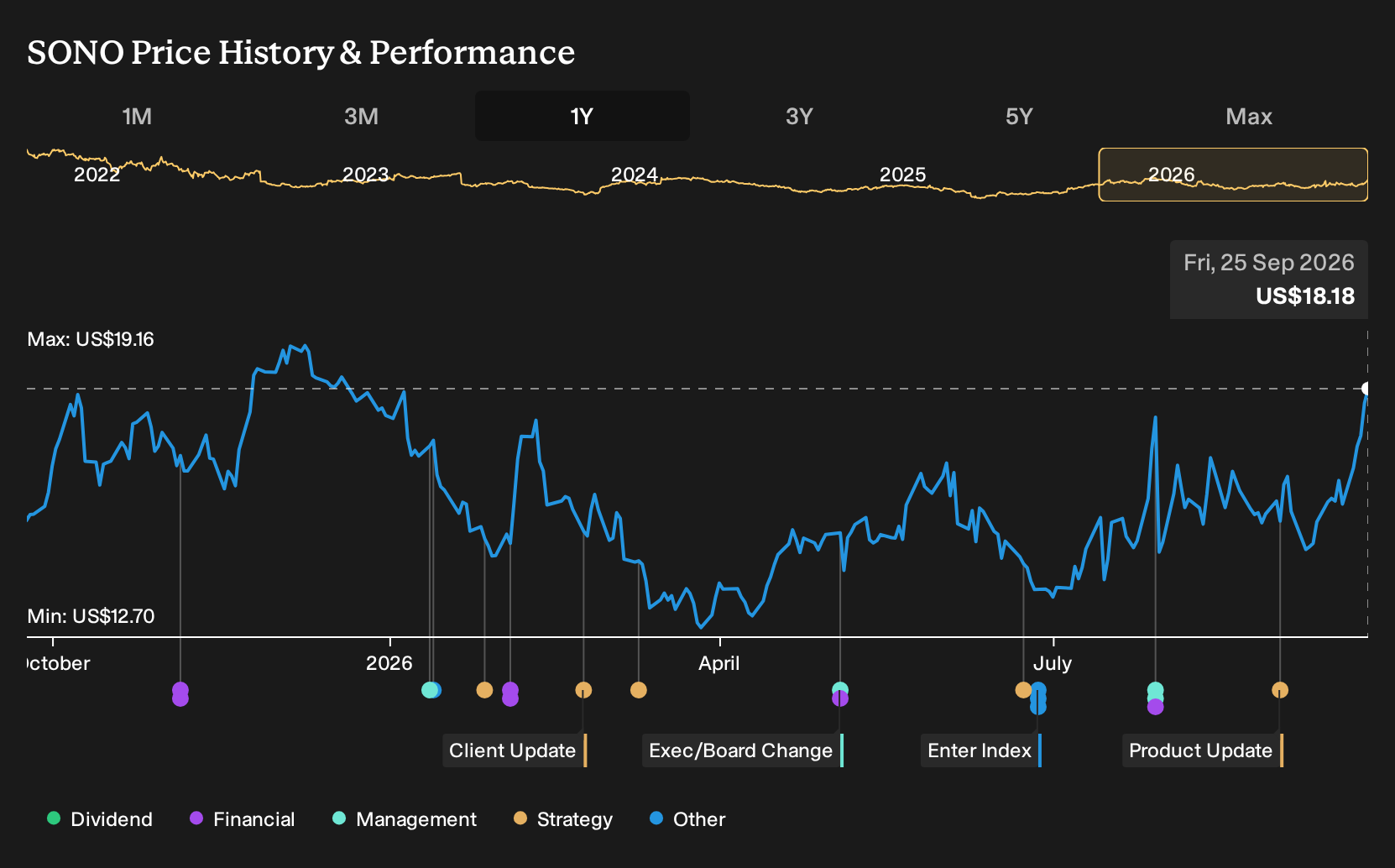
Exploring Other Perspectives
One alternate view leans hard into commoditization risk. It argues that rising competition and weaker pricing power could cap Sonos at about US$1.8b of revenue and US$88.5m of earnings by 2029, based on the lowest analyst forecasts. Those estimates were set before this Q2 beat. Treat them as a starting point and compare multiple angles.
Explore 4 other Sonos fair value estimates, including one that suggests there could be as much as 52% downside from the current price!
Reach Your Own Conclusion
Disagree with existing narratives? Extraordinary investment returns rarely come from following the herd, so consider your own analysis and judgment.
- A great starting point for your Sonos research is our analysis highlighting 2 key rewards that could impact your investment decision.
- See our latest analysis for Sonos. The report includes a comprehensive fundamental analysis summarized in a single visual, the Snowflake, making it easy to evaluate Sonos' overall financial health at a glance.
Looking For More Ideas Beyond Sonos?
Once you have weighed up Sonos, it can help to compare it with other stocks that fit different roles in your portfolio, from growth opportunities to balance sheet strength to income potential.
- For investors hunting for quality at a reasonable entry point, scan a curated set of potentially mispriced businesses in the 32 high quality undervalued stocks.
- If capital preservation and resilience matter most to you, focus on companies that show strong finances in the list of solid balance sheet and fundamentals (24 results).
- For those building a portfolio around regular cash payouts, filter for high-yield opportunities through the 8 dividend fortresses.
This article by Simply Wall St is general in nature. We provide commentary based on historical data and analyst forecasts only using an unbiased methodology and our articles are not intended to be financial advice. It does not constitute a recommendation to buy or sell any stock, and does not take account of your objectives, or your financial situation. We aim to bring you long-term focused analysis driven by fundamental data. Note that our analysis may not factor in the latest price-sensitive company announcements or qualitative material. Simply Wall St has no position in any stocks mentioned.
Have feedback on this article? Concerned about the content? Get in touch with us directly. Alternatively, email editorial-team@simplywallst.com