


Does Earnings And Google Cloud AI Deal Change The Bull Case For FactSet (FDS)?
- FactSet Research Systems recently released results for the August 2026 quarter, with earnings and revenue measured against earlier analyst expectations that had highlighted a negative Earnings ESP and a neutral outlook.
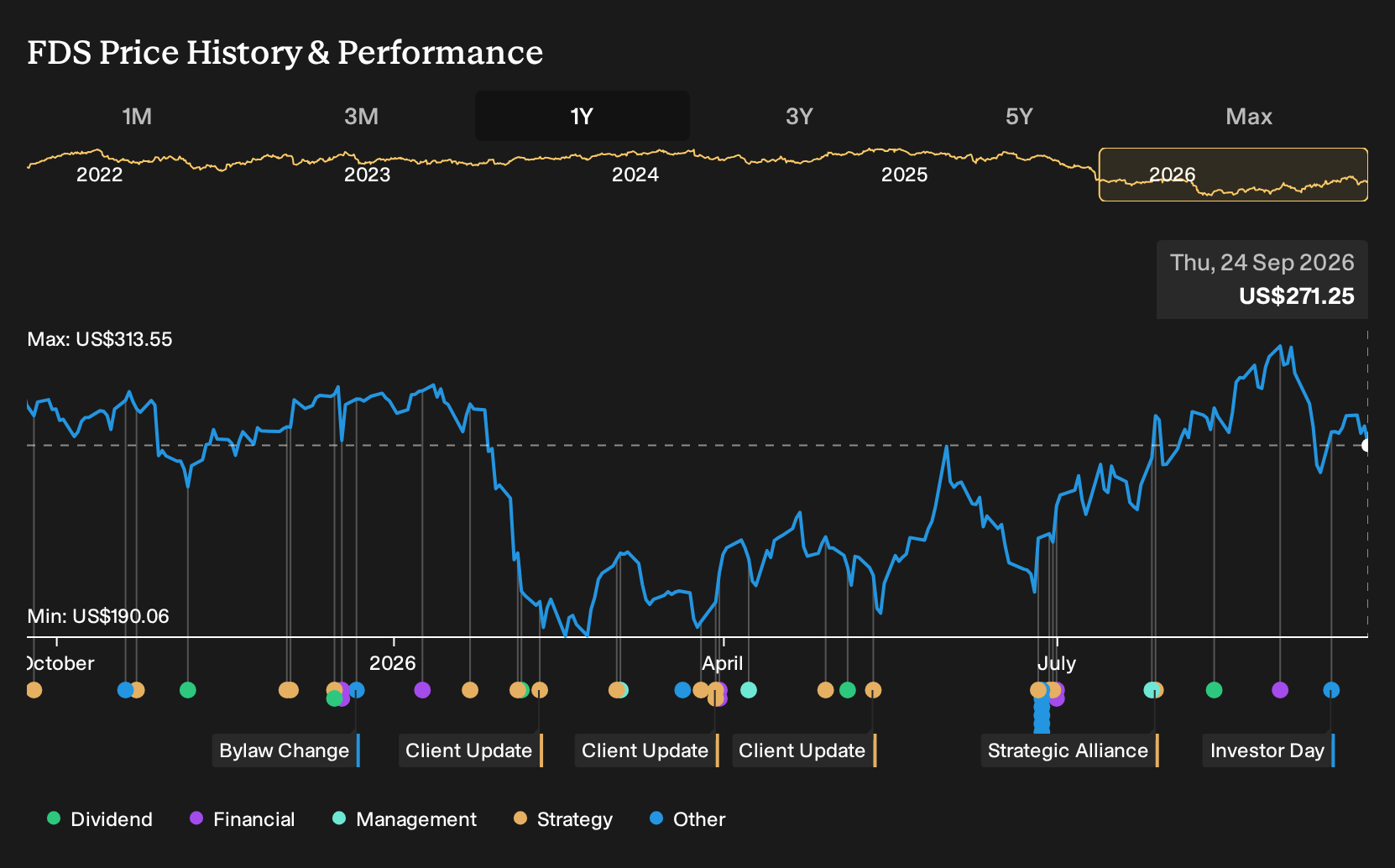
- The expanded Google Cloud partnership, announced in June and focused on bringing new AI tools into FactSet Research Systems' platform, now sits alongside fresh quarterly numbers and gives investors more detail on how the firm is executing on its AI and cloud roadmap.
- We will now look at how FactSet Research Systems' earnings print and new Google Cloud AI integration could reshape its investment narrative.
Scan how FactSet Research Systems' AI push compares with other data and analytics players by checking a curated set of 84 AI infrastructure stocks.
FactSet Research Systems Investment Narrative Recap
To own FactSet Research Systems, you need to believe its data, analytics and workflow tools can keep earning their place in client budgets even as asset managers and banks trim costs. The August 2026 quarter and recent stock move keep the near term focus on how well subscription growth and client retention hold up against slower price increases and softer end markets.
The main near term catalyst is execution on AI and productivity initiatives that can support revenue and protect margins despite higher cloud and software spending. The biggest risk remains that persistent pressure in asset management and banking, combined with elevated technology costs and debt levels, squeezes profitability more than expected.
The expanded Google Cloud partnership is the announcement that matters most around this earnings print. FactSet Research Systems is embedding new AI tools into its platform, which ties directly into the push to roll out GenAI products like Pitch Creator and conversational APIs and to sell more data feeds and enterprise solutions.
If the Google Cloud work leads to faster adoption of these AI features and smoother integration into client workflows, it could support the key catalysts around ASV growth, cross sell from acquisitions and operational efficiency. Execution risk sits on the other side. Large AI and cloud projects can keep technology expenses high and, if uptake is slower than hoped, margin pressure and payback periods become more of a concern.
FactSet Research Systems' analyst narrative points to revenues of US$2.9b and earnings of US$733.6m by 2029. This implies forecast revenue growth of 5.8% per year, and an earnings increase of about US$167.6m from current earnings of US$566.0m.
Uncover why FactSet Research Systems' fair value aligns with its current price.
Exploring Other Perspectives
Some of the lowest analysts focus less on AI upside and more on the risk that heavier cloud and AI spending drags on FactSet Research Systems' margins. Before this news, they were penciling in around US$2.9b of revenue and US$695.5m of earnings by 2029. That is a more cautious story than consensus, and the fresh quarter plus the Google Cloud work could push those views to shift. If you hold or watch FDS, it is worth comparing these more pessimistic assumptions with your own expectations.
Explore 4 other FactSet Research Systems fair value estimates, including one that suggests as much as 23% downside from the current price.
Decide For Yourself
Don't just follow the ticker; dig into the data and build a conviction that's truly your own.
- A great starting point for your FactSet Research Systems research is our analysis highlighting 4 key rewards and 1 important warning sign that could impact your investment decision.
- See our latest analysis for FactSet Research Systems. The report includes a comprehensive fundamental analysis summarized in a single visual, the Snowflake, making it easy to evaluate FactSet Research Systems' overall financial health at a glance.
Looking for more investment ideas beyond FactSet Research Systems?
Once you have a view on FactSet Research Systems, it helps to widen the lens and compare it with other businesses that fit different risk and return profiles. The Simply Wall St Screener can surface ideas that match your preferences on quality, balance sheet strength, income or valuation so you are not relying on a single stock to carry your whole thesis.
- If you want potential mispricing combined with strong fundamentals, scan a curated 30 high quality undervalued stocks that already clear quality and balance sheet checks.
- For investors who care most about resilience and capital preservation, filter for 31 resilient stocks with low risk scores that score well on volatility and fundamental risk metrics.
- If you prefer to hunt earlier in the cycle where analyst coverage is thinner, sort through 16 high quality undiscovered gems that still show solid financial profiles.
This article by Simply Wall St is general in nature. We provide commentary based on historical data and analyst forecasts only using an unbiased methodology and our articles are not intended to be financial advice. It does not constitute a recommendation to buy or sell any stock, and does not take account of your objectives, or your financial situation. We aim to bring you long-term focused analysis driven by fundamental data. Note that our analysis may not factor in the latest price-sensitive company announcements or qualitative material. Simply Wall St has no position in any stocks mentioned.
Have feedback on this article? Concerned about the content? Get in touch with us directly. Alternatively, email editorial-team@simplywallst.com