


Yartemlea Launch Progress May Change The Case For Omeros Stock
- Omeros reported stronger than expected Q2 sales of Yartemlea and early launch progress, supported by improving reimbursement and expanding prescription volumes.
- The business also repurchased debt, which reduces expected dilution for shareholders, while a supportive analyst review highlighted the commercial traction of Yartemlea.
- This article examines how Omeros's investment narrative is influenced by Yartemlea's early launch progress and the improving reimbursement environment.
Scan other potential Yartemlea-style breakout stories by reviewing companies on the 16 high quality undiscovered gems with improving fundamentals that may not be widely followed yet.
Omeros Investment Narrative Recap
For an investor to back Omeros, the core belief is that Yartemlea can grow into a meaningful commercial product while the broader pipeline steadily matures. The latest Q2 beat, early launch traction and improving reimbursement all speak to execution on that first part of the story. The key near term catalyst still sits with how quickly transplant centers embed Yartemlea into routine practice.
The biggest operational risk remains funding and concentration. Omeros is still working through losses and negative shareholders equity, with cash needs tied to deals like the Novo Nordisk transaction and to Yartemlea uptake. Debt repurchases and early sales progress help, but any slowdown in expected cash inflows would quickly refocus attention on liquidity.
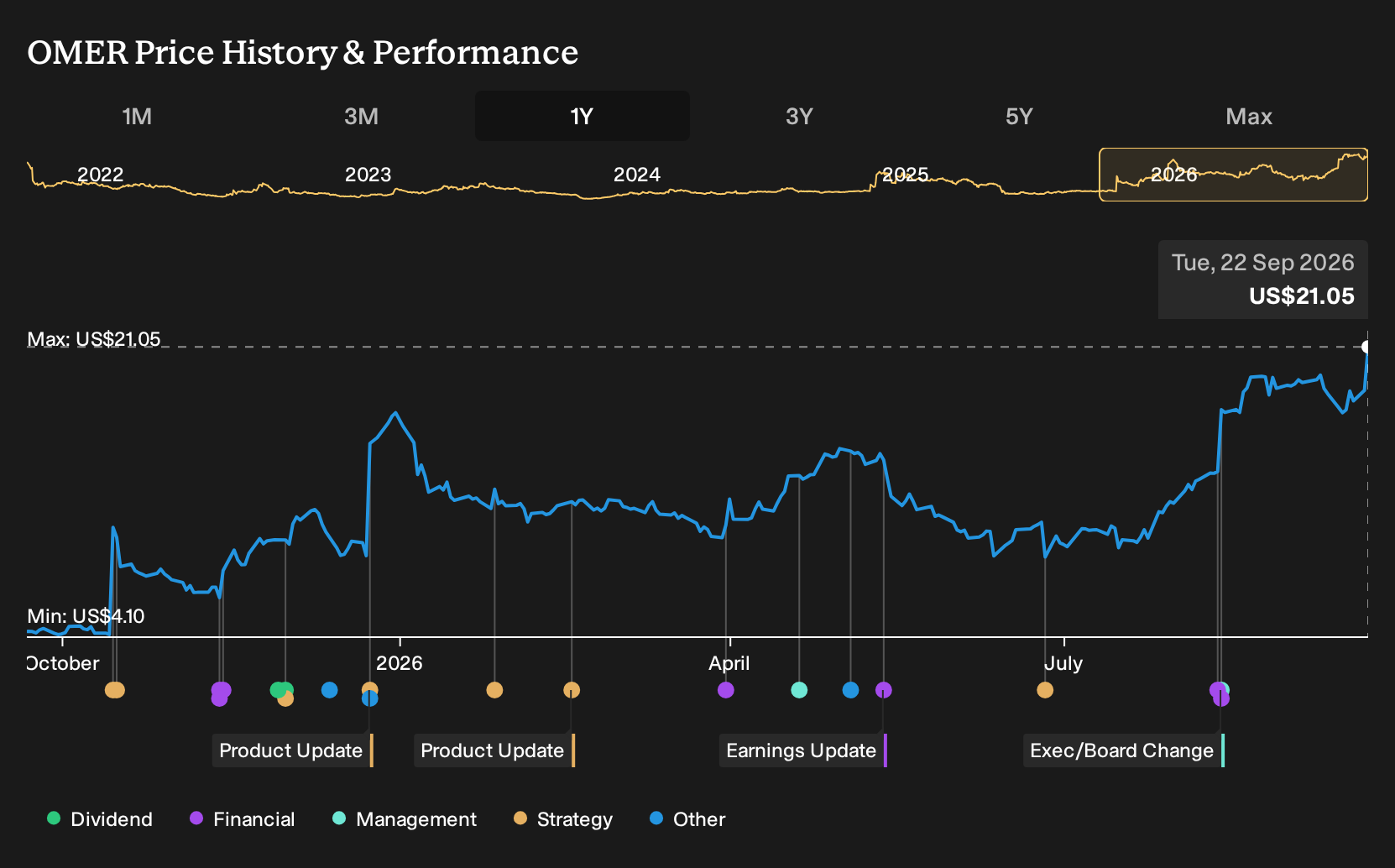
The most relevant development around this move in Omeros is the stronger than expected Yartemlea launch update in Q2. Rapid prescription growth, expanding reimbursement and rising sales provide hard data that supports the long running thesis that transplant associated TMA could sustain a commercial product, rather than remaining a mostly academic story.
Cantor Fitzgerald’s upgrade and new target price reflect that early traction. However, the core operational signal is still prescription behavior and payer coverage. For readers tracking catalysts, the combination of launch metrics, reimbursement progress and debt reduction sets the yardstick for upcoming quarters. Any shift in those trends will likely matter more than the rating change itself.
What The Current Forecasts Assume For Omeros
Omeros' current analyst framework leans heavily on how far Yartemlea and the broader pipeline can carry the income statement over the next few years. The published assumptions sketch out an aggressive revenue ramp, a reset in profitability, and a valuation that implies investors would be paying a high multiple on future earnings compared with the wider pharmaceuticals sector.
On the top line, analysts are pencilling in yearly revenue expansion of 211.1% over the next three years. That is a very large compounding rate and it effectively assumes that early Yartemlea traction and any additional product or partnership income scale quickly from a relatively small starting point.
Profitability tells a different story. The consensus view has profit margins compressing from 849.1% today to 8.0% in three years. That swing reflects expectations for higher operating expenses as commercial infrastructure, clinical programs and royalty or milestone arrangements run through the income statement.
Consensus earnings expectations also step down. Analysts are modelling earnings of US$23.8 million by about June 2029, compared with US$84.0 million today. That implies an earnings decrease of US$60.2 million and shows that the current model bakes in lower profitability even as revenue forecasts climb.
The spread around those profit estimates is wide. The most optimistic analyst projects US$61.1 million in earnings by 2029, while the most cautious view calls for an earnings loss of US$27.1 million. For readers, that range signals meaningful disagreement about how effectively Omeros can convert expected revenue into net income once the full cost base is in place.
These operating forecasts feed directly into the valuation work. The current analyst framework points to forecast revenues of US$297.9 million and forecast earnings of US$23.8 million in 2029. Those figures underpin a consensus target price of US$33.0 per share, which compares with a recent share price of US$8.67.
To reconcile that target with today’s quote, the models assume the stock would trade on a P/E of 148.5x those 2029 earnings, versus 7.5x today and 14.7x for the broader US pharmaceuticals peer group. That is a rich implied multiple and effectively asks investors to believe that Omeros can earn a premium valuation despite analyst projections that headline earnings fall from current levels.
Share count assumptions also matter in this story. Forecasts build in 6.35% yearly growth in shares outstanding over the next three years, which points to ongoing dilution as a funding tool. For existing holders, that means per share outcomes will depend not only on how the income statement evolves but also on how much new equity is issued along the way.
Omeros' narrative projects US$297.9 million revenue and US$23.8 million earnings by 2029. This requires 211.1% yearly revenue growth and an earnings decrease of US$60.2 million from US$84.0 million today.
Discover why Omeros' fair value suggests a 57% potential upside to its current price, which some investors believe could be realized sooner than anticipated.
Exploring Other Perspectives
For Omeros, the big swing factor in the alternate narrative is Yartemlea potentially becoming a cash engine far beyond consensus expectations. The most optimistic analysts were already pencilling in about US$1.2b of revenue and US$664.6m of earnings by 2029 before this Q2 launch surprise. That is a far more upbeat story than the baseline. These views did not include the latest Yartemlea launch update or Cantor’s new US$22 target, so you should expect opinions, and possibly forecasts, to move as more quarters of real world data arrive.
Explore another Omeros fair value estimate, including one that suggests potential upside of up to 344% from the current price.
Decide For Yourself
Don't just follow the ticker. Dig into the data and build a conviction that's truly your own.
- A great starting point for your Omeros research is our analysis highlighting 4 key rewards and 4 important warning signs that could impact your investment decision.
- See our latest analysis for Omeros. The report includes a comprehensive fundamental analysis summarized in a single visual, the Snowflake, making it easy to evaluate Omeros' overall financial health at a glance.
Looking For More Investment Ideas Beyond Omeros?
Once the Omeros story is mapped out, the next step is comparing it with other opportunities that share similar traits in quality, risk or upside potential. The Simply Wall St Screener can help you quickly sort through listed businesses using the same kind of fundamentals that underpin the Yartemlea thesis.
- If resilience matters most to you, start with a 30 resilient stocks with low risk scores and see which candidates pair steadier risk scores with cleaner fundamentals.
- For investors who care about balance sheets first, filter for companies in the list of solid balance sheet and fundamentals (23 results) and focus on those with stronger financial footing.
- If you want ideas that are still flying under the radar, scan the 16 high quality undiscovered gems and compare how their stories line up with your expectations.
This article by Simply Wall St is general in nature. We provide commentary based on historical data and analyst forecasts only using an unbiased methodology and our articles are not intended to be financial advice. It does not constitute a recommendation to buy or sell any stock, and does not take account of your objectives, or your financial situation. We aim to bring you long-term focused analysis driven by fundamental data. Note that our analysis may not factor in the latest price-sensitive company announcements or qualitative material. Simply Wall St has no position in any stocks mentioned.
Have feedback on this article? Concerned about the content? Get in touch with us directly. Alternatively, email editorial-team@simplywallst.com