


3 UK Bank Stocks Facing Tax And Rule Changes Investors Should Watch
Talk of a UK bank windfall tax, stricter rules and global lenders shifting activity away from London has turned the spotlight back on UK-listed diversified banks and capital-market intermediaries. That mix of political risk and possible relocation pressure can unsettle prices, but it can also create mispriced openings for investors willing to do the homework. This article walks through 3 UK financial stocks exposed to these policy debates and explains how each might be affected.
The three stocks below are just a starting point. The full screen surfaced 9 more UK-listed diversified banks and capital-market intermediaries with equally compelling stories that are not covered here.
To size up the broader opportunity set, head straight into the UK-Listed Diversified Banks and Capital-Market Intermediaries screener to identify, filter and analyze the highest-conviction plays across this policy sensitive corner of the market.
CMC Markets (LSE:CMCX)
CMC Markets sits squarely in the UK capital-markets camp that this screener targets. It gives you direct exposure to trading and brokerage flows that can be influenced by tax and regulatory decisions in London.
CMC Markets runs a London based trading and investing platform, with about £319.6 million from leveraged trading and £70.1 million from stockbroking style investing, and a market cap of roughly £1.87b.
"The company's entry into digital assets, tokenization, and Web 3.0 (including its acquisition of StrikeX and rollout of multi-asset wallet infrastructure) positions CMC at the convergence of traditional and decentralized finance, giving it access to a rapidly expanding global user base and broadening its addressable market."
What happens to that opportunity depends heavily on how one unseen pressure shapes client trading appetite and the economics of each extra pound of volume.
That pressure point is exactly where the full narrative for CMC Markets shows how CMC Markets’ tokenisation push, funding mix and policy risk could be decoupling from headline sentiment.

Metro Bank Holdings (LSE:MTRO)
Metro Bank Holdings is one of the clearest test cases in this screener for how UK focused lenders could feel any shift in bank taxes, capital rules or regulatory costs, since its entire model leans on domestic branch led banking and a pure UK balance sheet.
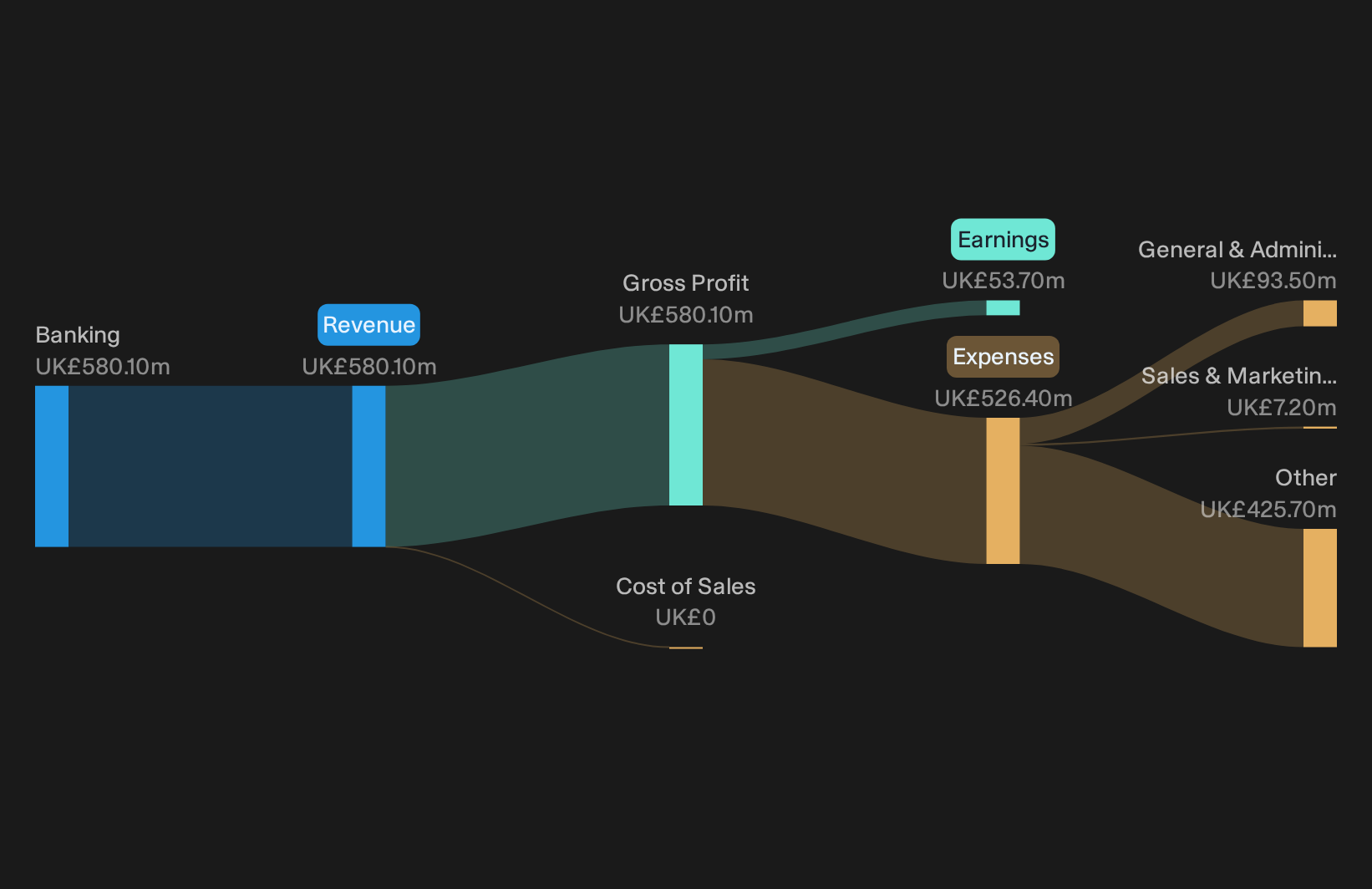
Metro Bank Holdings is a UK challenger bank offering personal, business, commercial and private banking, generating about £580.1 million from banking activities in the United Kingdom and carrying a market value of roughly £1.18b.
"Metro Bank's relationship-led banking model, supported by a high proportion of low-cost, noninterest-bearing deposits (43% vs. 18% market average), increases deposit stickiness and supports low funding costs. This positions the company to attract customers seeking personalized service amid rising financial literacy and demand for differentiation."
What happens to that funding advantage if one policy decision changes how regulators want smaller UK lenders like Metro Bank to be capitalised and supervised over the next few years?
If that supervision tightens, the full narrative for Metro Bank Holdings shows how Metro Bank Holdings’ branch focus and deposit mix could either accelerate a rebound or mask deeper balance sheet pressures.
NatWest Group (LSE:NWG)
NatWest Group is one of the largest UK retail and commercial banks in this screen, directly exposed to any shifts in UK bank taxes and regulation. The group earns about £8.9b from Commercial & Institutional, £6.3b from Retail Banking, £1.2b from Private Banking and Wealth Management, plus £0.4b from Central Items, and carries a market value near £55.3b.
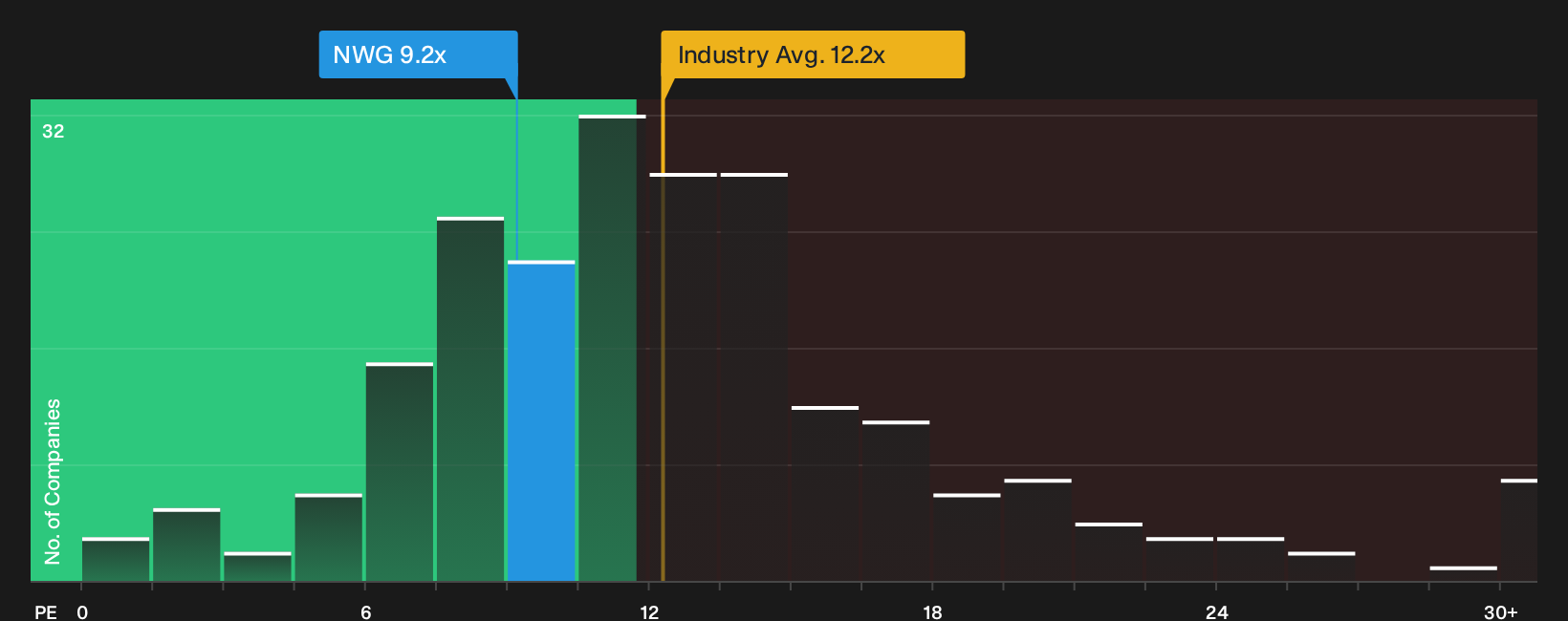
For this UK-focused bank and capital-markets player, policy risk is not background noise. With a P/E around 9.2x versus UK peers near 13x and broader European lenders on roughly 12.2x, pricing seems to reflect a heavy UK tax and relocation discount. The key question is how that gap closes if a single regulatory review shifts capital requirements or future earnings expectations.
If that discount ever starts to close, the 4 key rewards and 3 important warning signs to see where NatWest Group’s tax, capital and earnings story could be mispriced.
Seeking Alternatives Before The Crowd?
Fresh ideas move first. Once momentum builds and prices start flying, the easy entries shrink fast. Scan under the radar for now, while it matters, and get in early.
- Spot cash generative operators before the market fully catches on by running the 7 high quality undervalued stocks and focusing on businesses where fundamentals still anchor the story.
- Track where structural demand might support mining profits over time by scanning the 35 best rare earth metal stocks and focusing on producers tied to long term supply chains.
- Follow the arms dealers of automation by reviewing the 95 robotics and automation stocks and concentrating on companies supplying the hardware and software behind factory upgrades.
This article by Simply Wall St is general in nature. We provide commentary based on historical data and analyst forecasts only using an unbiased methodology and our articles are not intended to be financial advice. It does not constitute a recommendation to buy or sell any stock, and does not take account of your objectives, or your financial situation. We aim to bring you long-term focused analysis driven by fundamental data. Note that our analysis may not factor in the latest price-sensitive company announcements or qualitative material. Simply Wall St has no position in any stocks mentioned.
Have feedback on this article? Concerned about the content? Get in touch with us directly. Alternatively, email editorial-team@simplywallst.com