


How Engagement Concerns Will Impact Netflix Stock Investors
- Wells Fargo recently downgraded Netflix after highlighting ongoing declines in viewing hours per subscriber and softer engagement with its top original shows, despite efforts to broaden formats and add live events.
- The downgrade spotlights a core business pressure for Netflix: the need to convert heavy content and platform investment into deeper user engagement rather than just wider household reach.
- We will now look at how Netflix's investment narrative is tested by weakening engagement metrics flagged in the Wells Fargo downgrade.
Scan how Netflix’s engagement story compares with peers facing similar pressures by zeroing in on 29 high quality undervalued stocks that pair solid fundamentals with room for a sentiment reset.
Netflix Investment Narrative Recap
To own Netflix, you need to believe the business can convert its content, ad tech and live programming into durable viewing time and pricing power. The Wells Fargo downgrade and weaker engagement data put that belief under pressure. The key short term catalyst is the October 20 earnings update, where guidance and engagement commentary will matter more than headline subscriber figures.
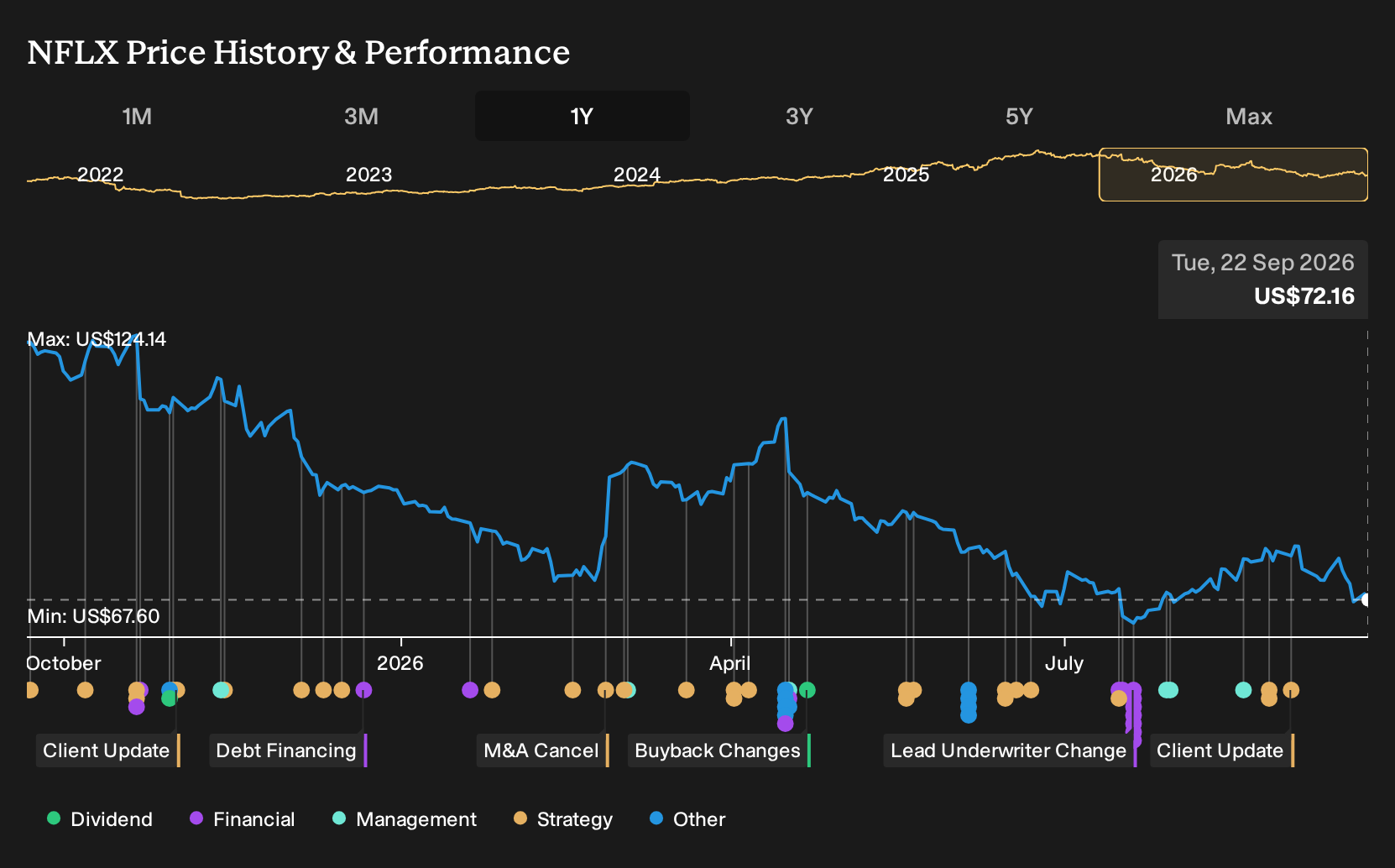
The biggest current risk is that viewing hours per user keep softening while content and live sports costs stay heavy. The recent drop in the share price reflects how sensitive the market is to this gap. The Paramount and Warner Bros. Discovery merger slightly eases competitive clutter but does not change that core engagement question.
The most relevant recent development for this engagement story is Netflix’s push into live events, including more NFL games this season. Live programming gives the platform appointment viewing that can lift hours watched, support advertising demand and stress test churn if fans stick around after games to watch series and films.
This live push also intersects directly with the ad business, which management expects to reach around US$3b in 2026 revenue, and with rising content spend risk. Sports and large live shows are expensive. The execution challenge is to earn enough viewing time and ad dollars from those events to justify the extra outlay, especially with YouTube and other video platforms competing for the same attention.
What The Netflix Forecasts Assume
Netflix’s narrative projects US$65.5b in revenue and US$19.8b in earnings by 2029. That path builds on analysts assuming 10.6% yearly top line growth and an earnings increase of about US$6.2b from US$13.6b today.
Uncover how Netflix's fair value indicates a 30% potential upside to its current price before the market closes that gap.
Exploring Other Perspectives
One alternative angle to focus on is content cost pressure. The most pessimistic analysts already assumed Netflix’s revenue would reach about US$63.5b and earnings about US$17.1b by 2029, with a lower 18.2x P/E, even before this Wells Fargo downgrade. That group sees thinner margins and suggests the current news could push expectations even lower. Views clearly span a wide range, so treat this as an invitation to compare several narratives before deciding what makes sense for you.
Explore 42 other Netflix fair value estimates, including one that suggests as much as 13% downside from the current price.
Reach Your Own Conclusion
Don't just follow the ticker. Dig into the data and build a conviction that's truly your own.
- A great starting point for your Netflix research is our analysis highlighting 3 key rewards and 2 important warning signs that could impact your investment decision.
- See our latest analysis for Netflix. The report includes a comprehensive fundamental analysis summarized in a single visual, the Snowflake, making it easy to evaluate Netflix's overall financial health at a glance.
Looking for more Netflix investment ideas?
Once you have a view on Netflix, it can help to pressure test that thinking against other opportunities with different risk and income profiles. The Simply Wall St Screener gives you a structured way to do that.
- If capital preservation sits high on your priority list, consider reviewing 30 resilient stocks with low risk scores that pair steadier fundamentals with lower risk scores.
- If reliable income matters to you, weigh Netflix against 7 dividend fortresses that focus on companies offering stronger yield potential.
- If you want to broaden your watchlist beyond the usual large caps, scan 16 high quality undiscovered gems that combine solid financial quality with less crowded investor attention.
This article by Simply Wall St is general in nature. We provide commentary based on historical data and analyst forecasts only using an unbiased methodology and our articles are not intended to be financial advice. It does not constitute a recommendation to buy or sell any stock, and does not take account of your objectives, or your financial situation. We aim to bring you long-term focused analysis driven by fundamental data. Note that our analysis may not factor in the latest price-sensitive company announcements or qualitative material. Simply Wall St has no position in any stocks mentioned.
Have feedback on this article? Concerned about the content? Get in touch with us directly. Alternatively, email editorial-team@simplywallst.com