


Is Baxter Stock Underperforming the Nasdaq?
Baxter International Inc. (BAX), headquartered in Deerfield, Illinois, develops and provides a portfolio of healthcare products. With a market cap of $11.8 billion, the company develops, manufactures, and markets products and technologies related to hemophilia, immune disorders, infectious diseases, kidney disease, trauma and other chronic and acute medical conditions. The company's products are used by hospitals, kidney dialysis centers, nursing homes, rehabilitation centers, doctors' offices, and research laboratories.
Companies worth $10 billion or more are generally described as “large-cap stocks,” and BAX perfectly fits that description, with its market cap exceeding this mark, underscoring its size, influence, and dominance within the medical instruments & supplies industry. Baxter excels through diversified healthcare products and innovative expansions. Strategic acquisitions enhance its connected care solutions, while investments in new launches and geographic growth solidify its medical technology leadership.
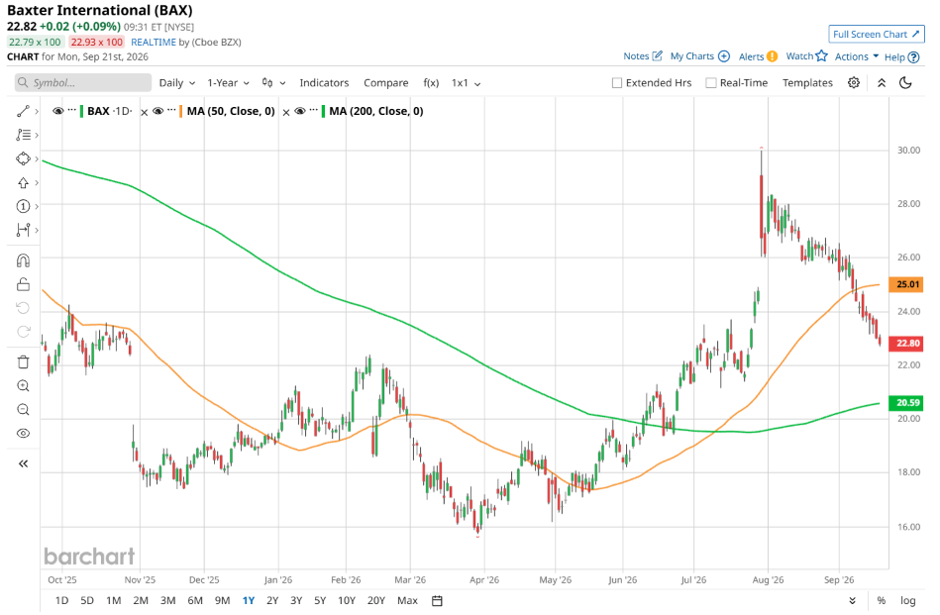
Despite its notable strength, BAX shares have slipped 24% from their 52-week high of $30, achieved on Jul. 30. Over the past three months, BAX stock has gained 14.6%, outperforming the Nasdaq Composite’s ($NASX) marginal gains during the same time frame.
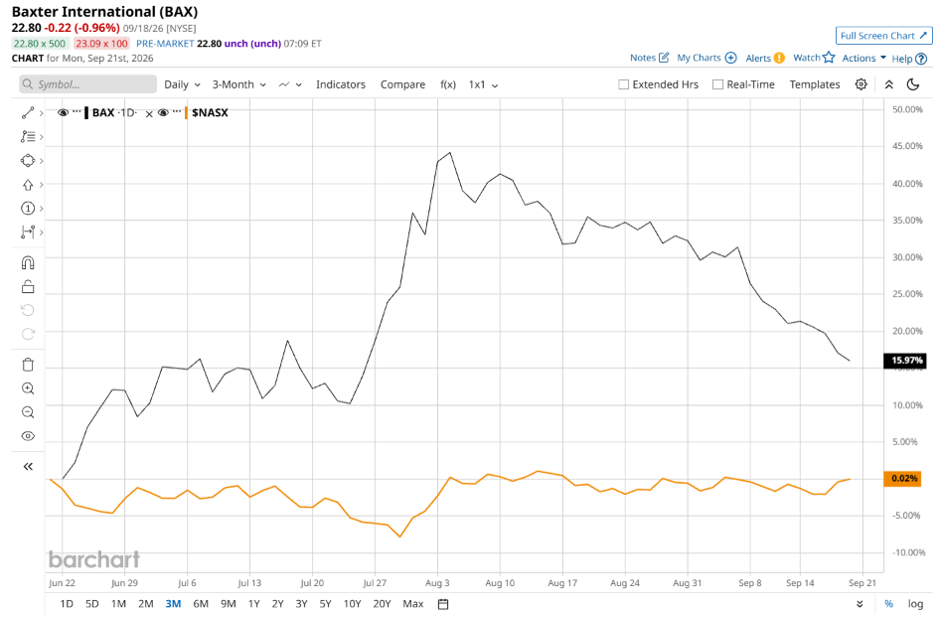
In the longer term, shares of BAX rose 19.3% on a YTD basis, outperforming NASX’s YTD gains of 15.2%. However, the stock dipped 1% over the past 52 weeks, underperforming NASX’s 18.3% returns over the last year.
To confirm the bullish trend, BAX has been trading above its 200-day moving average since early June, with slight fluctuations. However, the stock has been trading below its 50-day moving average since early September.
BAX’s underperformance was largely driven by operational disruptions, margin pressure, and earnings volatility. Severe weather damaged its key North Carolina manufacturing hub, severely disrupting supply chains and triggering significant revenue losses. Lower-than-expected earnings, highlighted by major fourth-quarter earnings miss, and weak full-year guidance further dented investor confidence, while cost inflation and high debt-servicing expenses compressed operating margins. These headwinds, coupled with soft demand in core product segments like IV solutions and broader hospital spending constraints, kept valuation multiples depressed despite occasional revenue gains and operational restructuring efforts.
BAX’s rival, Becton, Dickinson and Company (BDX) has taken the lead over the stock, with 22.8% gains over the past 52 weeks, but lagged behind the stock with an 18.3% uptick on a YTD basis.
Wall Street analysts are cautious on BAX’s prospects. The stock has a consensus “Hold” rating from the 15 analysts covering it, and the mean price target of $27 suggests a potential upside of 18.4% from current price levels.
On the date of publication, Neha Panjwani did not have (either directly or indirectly) positions in any of the securities mentioned in this article. All information and data in this article is solely for informational purposes. For more information please view the Barchart Disclosure Policy here.