


AI Governance Stocks In Focus As US Policy Moves To The Front Page
AI suddenly has a seat at the geopolitical top table, with Washington’s new “AI Force,” an AI czar and a planned Trump–Xi summit turning model risk and compliance from back‑office concerns into front‑page policy. That shift creates fresh attention on U.S. AI governance and compliance software providers exposed to this news flow. This article walks through three such stocks and explains how this policy moment could reshape their opportunity set.
The three stocks that follow are a curated sample, and the full screen surfaced 14 more U.S.-listed AI governance and compliance software providers with equally compelling narratives that are not covered below.
If you want to move beyond headlines and identify your own highest conviction angles in this policy shift, head straight to the U.S.-listed AI Governance and Compliance Software Providers screener.
Sprout Social (SPT)
Sprout Social uses AI to help brands manage social conversations, which naturally pulls it into the governance conversation as companies look to keep customer facing automation compliant and auditable.
Sprout Social runs a cloud platform that helps businesses manage social media messaging, analytics and workflows, with AI woven into publishing, customer care and monitoring. It generated about US$481.8 million from internet software and services and has a market value of roughly US$616.2 million.
"The company unveiled its AI powered social intelligence platform and the expanded Trellis AI engine, which is being integrated across Publishing, Listening, Smart Inbox and Reporting, along with a new Trellis Studio environment for custom AI workflows."
What happens to Sprout Social’s earnings story now largely hinges on how one quiet shift in its AI-focused cost and product mix plays out.
That inflection point is exactly what the full narrative for Sprout Social unpacks, spelling out where Trellis could accelerate value and where rising AI governance costs might quietly cap upside.

Synopsys (SNPS)
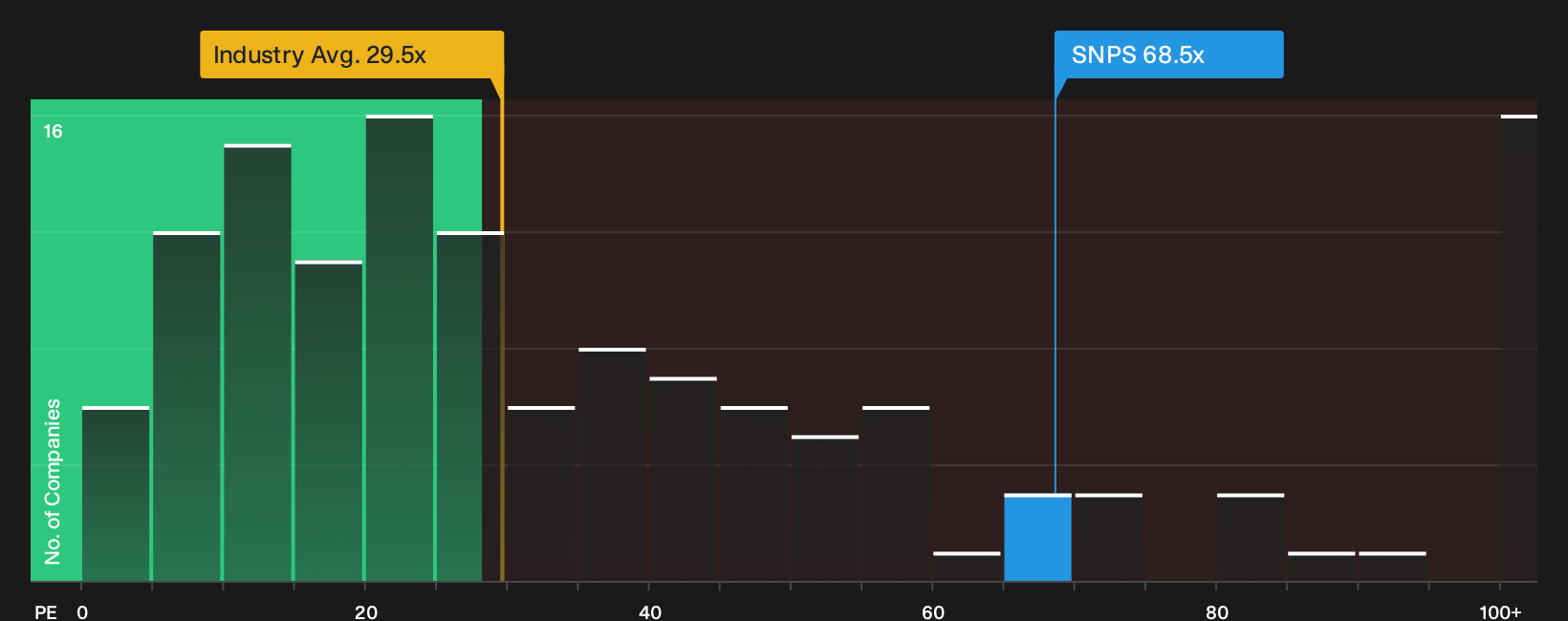
Synopsys is the quiet AI governance pick in this screen, because its design and verification software helps keep advanced chips and embedded AI systems secure, tested and policy ready long before any model reaches a data center or consumer device.
Synopsys develops electronic design automation and design IP used to build and verify semiconductors, with around US$7.7b from Design Automation and US$1.7b from Design IP, and a market value near US$73.8b.
"Bullish analysts see agentic AI as a support for Synopsys, arguing that AI agents are using existing electronic design automation tools rather than replacing them."
What happens if one quiet shift in how AI rich chip projects are verified changes the balance between rising complexity and Synopsys’ pricing power?
If that balance is what interests you, read the full narrative for Synopsys to see how Synopsys could turn rising complexity into accelerating pricing power and resilience.
Cerence (CRNC)
Cerence builds AI powered voice assistants for vehicles, which pulls it directly into the AI governance conversation as regulators focus on how conversational systems behave in safety critical transport settings.
Cerence generates about US$309.5 million from its Automotive segment and has a market value near US$350 million.
Cerence matters here because it sits where in car AI meets safety rules, with its assistants expected to listen carefully, respond reliably and leave an audit trail regulators can understand.
"Cerence's recent expansion into non-automotive segments, as reflected in its LG partnership, signals the start of a multi-industry voice-AI monetization strategy that leverages massive IoT proliferation and could generate meaningful new revenue streams with much higher unit volumes."
What happens to Cerence’s margins if one quiet shift in how automakers price in safety grade voice AI plays out in its favor?
If that safety rich pricing shift is what you are watching, read the full narrative for Cerence and see how Cerence’s auto roots could fuel broader voice-AI upside.

Seeking Fresh Alternatives Before They Fly
Fresh ideas do not stay quiet for long. Breakout momentum often gets caught fast once the crowd arrives. Scan these curated shortlists while it still matters and act now.
- Spot rising quality before wider momentum hits by scanning a curated pool of 16 high quality undiscovered gems that combine solid fundamentals with under the radar stories.
- Lock onto enduring cash generators by running through a focused group of 7 dividend fortresses built around higher yields and balance sheets built to absorb shocks.
- Position ahead of the next hardware wave by checking a filtered mix of 88 AI infrastructure stocks geared to the compute, networking and data needs behind AI demand.
This article by Simply Wall St is general in nature. We provide commentary based on historical data and analyst forecasts only using an unbiased methodology and our articles are not intended to be financial advice. It does not constitute a recommendation to buy or sell any stock, and does not take account of your objectives, or your financial situation. We aim to bring you long-term focused analysis driven by fundamental data. Note that our analysis may not factor in the latest price-sensitive company announcements or qualitative material. Simply Wall St has no position in any stocks mentioned.
Have feedback on this article? Concerned about the content? Get in touch with us directly. Alternatively, email editorial-team@simplywallst.com