


Tariff Resilient Stocks With Domestic Supply Chains Retail Investors Should Watch
Tariff headlines are back in focus, and that matters for your portfolio. When imported goods face extra charges, cost pressure can ripple through global supply chains while companies rooted in local manufacturing and distribution may feel that shock very differently. That gap in exposure can create both opportunity and risk. This article walks through three stocks exposed to the latest trade story and how each might fit into your watchlist.
The stocks covered below are just a starting sample, as the full screen surfaced 15 more domestically focused consumer and industrial companies with equally compelling stories that are not discussed in this article. To identify potential tariff‑resilient ideas tailored to your own risk profile, head straight into the Domestic-focused consumer and industrial companies with limited import exposure screener.
BlueLinx Holdings (BXC)
BlueLinx Holdings sits squarely in this screener’s sweet spot, with a business built around US building products distribution that leans on domestic construction activity rather than complex global supply chains. That is where the tariff story really starts to matter.
BlueLinx Holdings distributes residential and commercial building materials across the US, generating about US$3 billion from wholesale building products, with a market cap of roughly US$583 million, which puts it in the smaller end of the domestically focused industrials group.
Ongoing investments in logistics and digital transformation, including supply chain modernization, e-commerce, and AI-driven demand forecasting, are poised to meaningfully enhance operational efficiency and EBITDA margins, while differentiating the company from traditional competitors.
What happens to those plans if one less visible pressure on product pricing does not break the way management currently expects?
That pressure point is exactly where the trade story gets interesting, and the full narrative for BlueLinx Holdings lays out how BlueLinx Holdings could either accelerate or stall as tariffs bite.

Turning Point Brands (TPB)
Turning Point Brands leans heavily on U.S. and Canadian smokers and nicotine users for its business, which fits this screener’s focus on domestically driven demand and more limited direct tariff exposure.
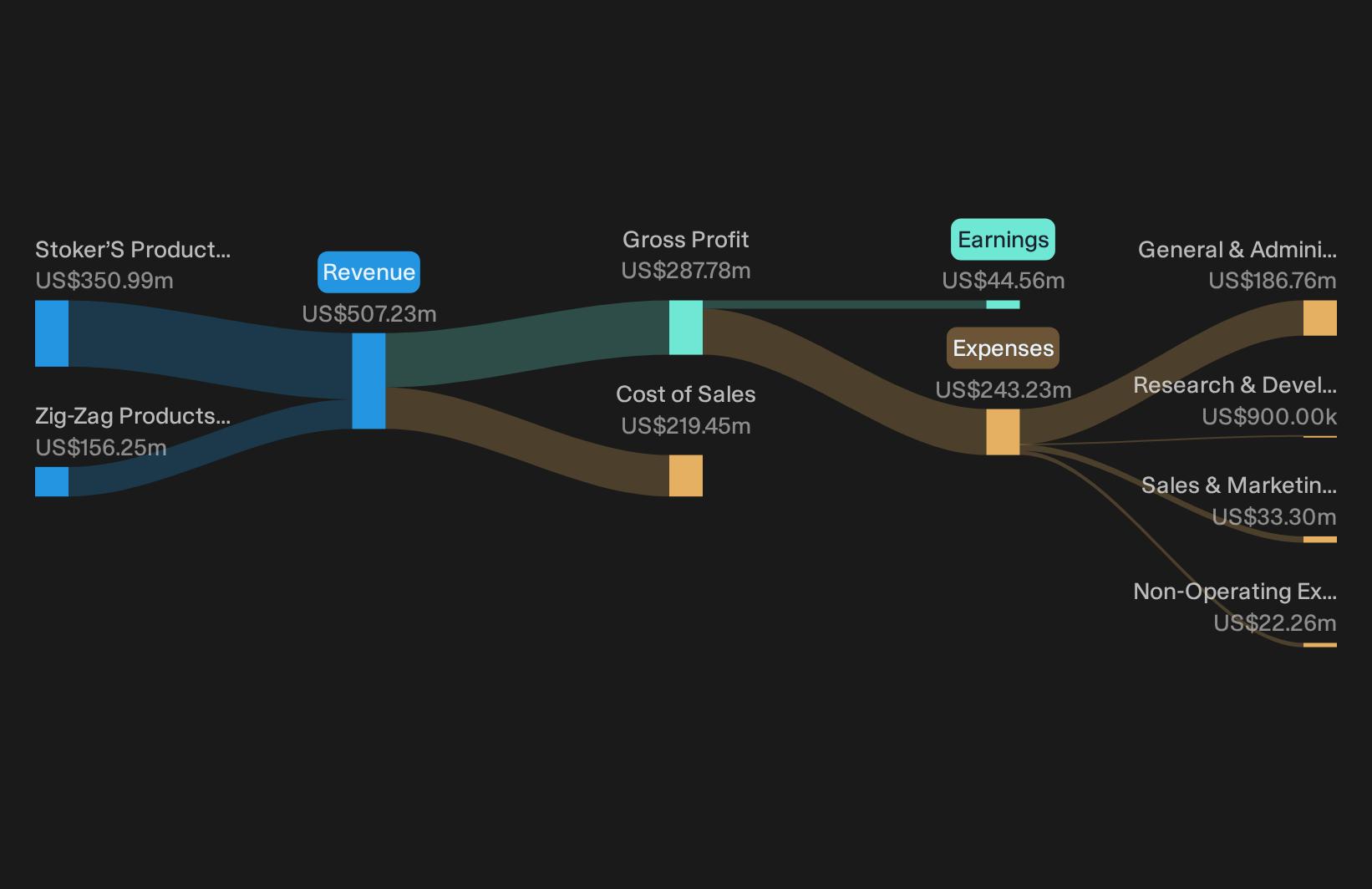
Turning Point Brands manufactures and sells branded rolling papers, cigars, accessories, and smokeless tobacco, earning about US$351 million from Stoker’s Products and US$156 million from Zig-Zag Products. This domestically skewed mix underpins a market value of roughly US$1.4b.
For investors watching tariff headlines, Turning Point Brands offers a case where local manufacturing, domestic distribution, and brand power could matter more than cross border trade flows.
Ongoing supply chain optimizations, focused investment in U.S. manufacturing to mitigate tariff risks, and continued migration of volume to higher-margin segments are described as potential factors that could structurally enhance the company's gross margin profile, supporting sustained EBITDA and earnings growth.
The real swing factor is how one untested assumption about future category regulation interacts with that margin story over time.
That regulatory wild card is exactly where the story gets interesting, and the full narrative for Turning Point Brands shows how Turning Point Brands could see earnings momentum accelerate rather than stall.
Midera Food Processing (MFP)
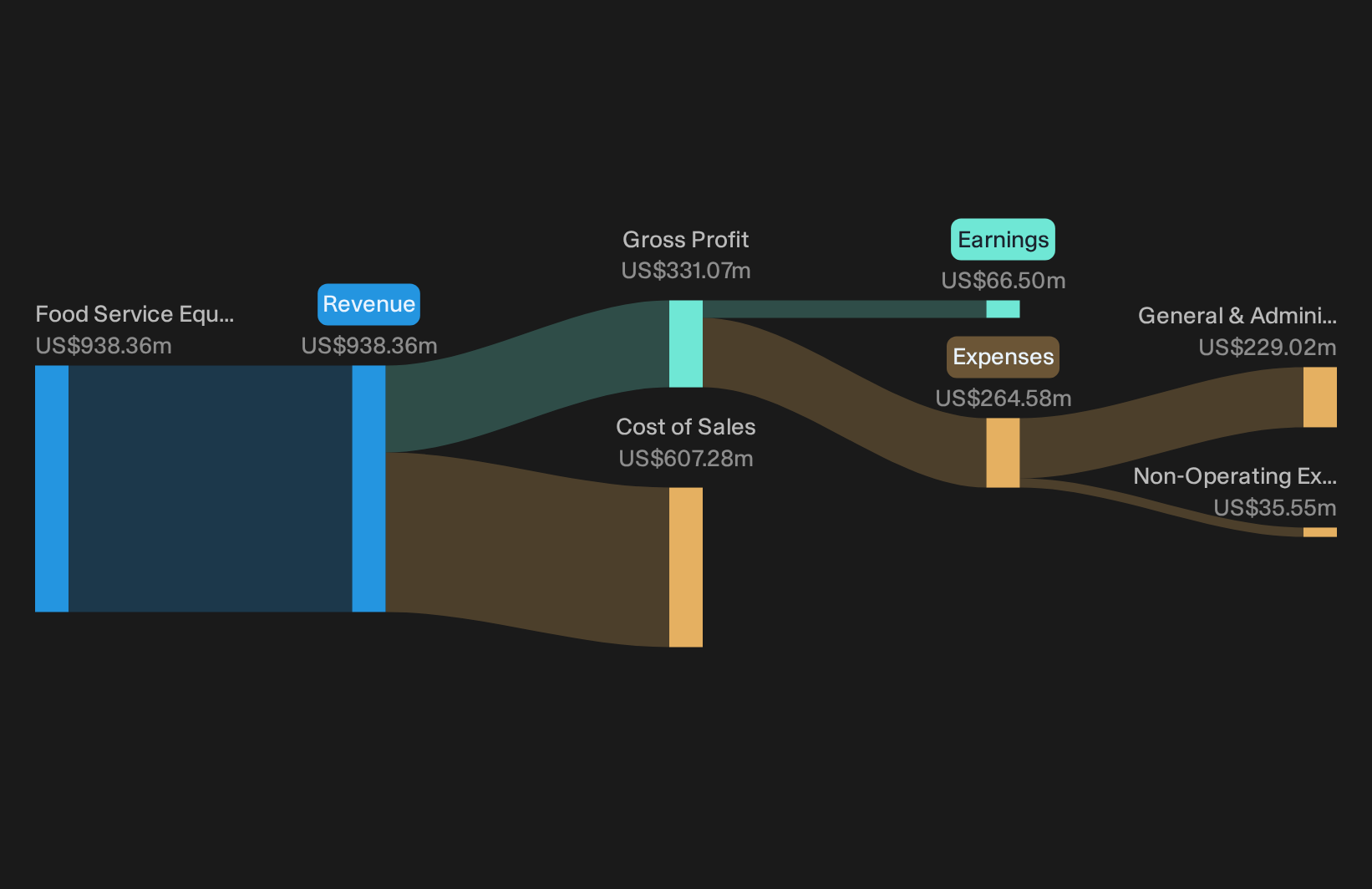
Midera Food Processing manufactures preparation, cooking, packaging and food safety equipment for meat, bakery, snack and alternative protein plants, largely serving production lines that feed domestic food demand. The business generates about US$938 million from Food Service Equipment and has a market cap near US$1.9b.
Midera Food Processing gives you a pure play on food-processing equipment tied to plant spending at home rather than imported consumer goods, which fits squarely with this domestically focused, lower import exposure screen. The interest point is how a single unseen pressure on pricing and margins plays out as tariffs and refunds move from headline noise to concrete cash flows.
That hidden pricing squeeze is exactly what the analysis report for Midera Food Processing unpacks, including how Midera Food Processing could see margins decouple from tariff headlines.
Seeking Alternatives Before The Crowd?
Fresh ideas move first. By the time momentum is obvious, early entry points can be gone or flying away under the radar for now. Do not delay, get in early.
- Spot potential breakout income plays by scanning the curated 7 dividend fortresses before yields get caught dropping as prices react to new headlines.
- Track under the radar momentum with the hand picked 16 high quality undiscovered gems and size up quality businesses before attention and capital rush in.
- Ride long term structural demand by reviewing the focused 39 power grid technology and infrastructure stocks while the grid upgrade story still feels early for many investors.
This article by Simply Wall St is general in nature. We provide commentary based on historical data and analyst forecasts only using an unbiased methodology and our articles are not intended to be financial advice. It does not constitute a recommendation to buy or sell any stock, and does not take account of your objectives, or your financial situation. We aim to bring you long-term focused analysis driven by fundamental data. Note that our analysis may not factor in the latest price-sensitive company announcements or qualitative material. Simply Wall St has no position in any stocks mentioned.
Have feedback on this article? Concerned about the content? Get in touch with us directly. Alternatively, email editorial-team@simplywallst.com