


3 UK Rail Stocks Worth Watching As State Backed Spending Reshapes The Sector
UK rail is being pulled back under state control, yet government plans for more trains, better stations and fresh kit keep pouring money into the tracks. That mix of politics, public spending and restructuring can reshuffle where value sits. This article walks through three UK rail infrastructure and rolling stock suppliers exposed to those changes, unpacking how each stock might benefit or face pressure as Great British Railways takes shape.
The stocks below are a starting sample, and the full screen on Simply Wall St surfaces 7 more UK rail infrastructure and rolling stock suppliers with equally compelling narratives that are not covered here.
If you want to quickly identify and analyze the wider set of potential rail beneficiaries with medium-plus market caps and balanced fundamentals, head straight to the UK Rail Infrastructure & Rolling Stock Suppliers screener.
Costain Group (LSE:COST)
Costain Group is one of the clearest rail-facing plays in this screen, with a UK-only footprint that ties its future closely to government backed transport upgrades and wider infrastructure programmes. This context is important for understanding how it is trying to grow earnings from here.
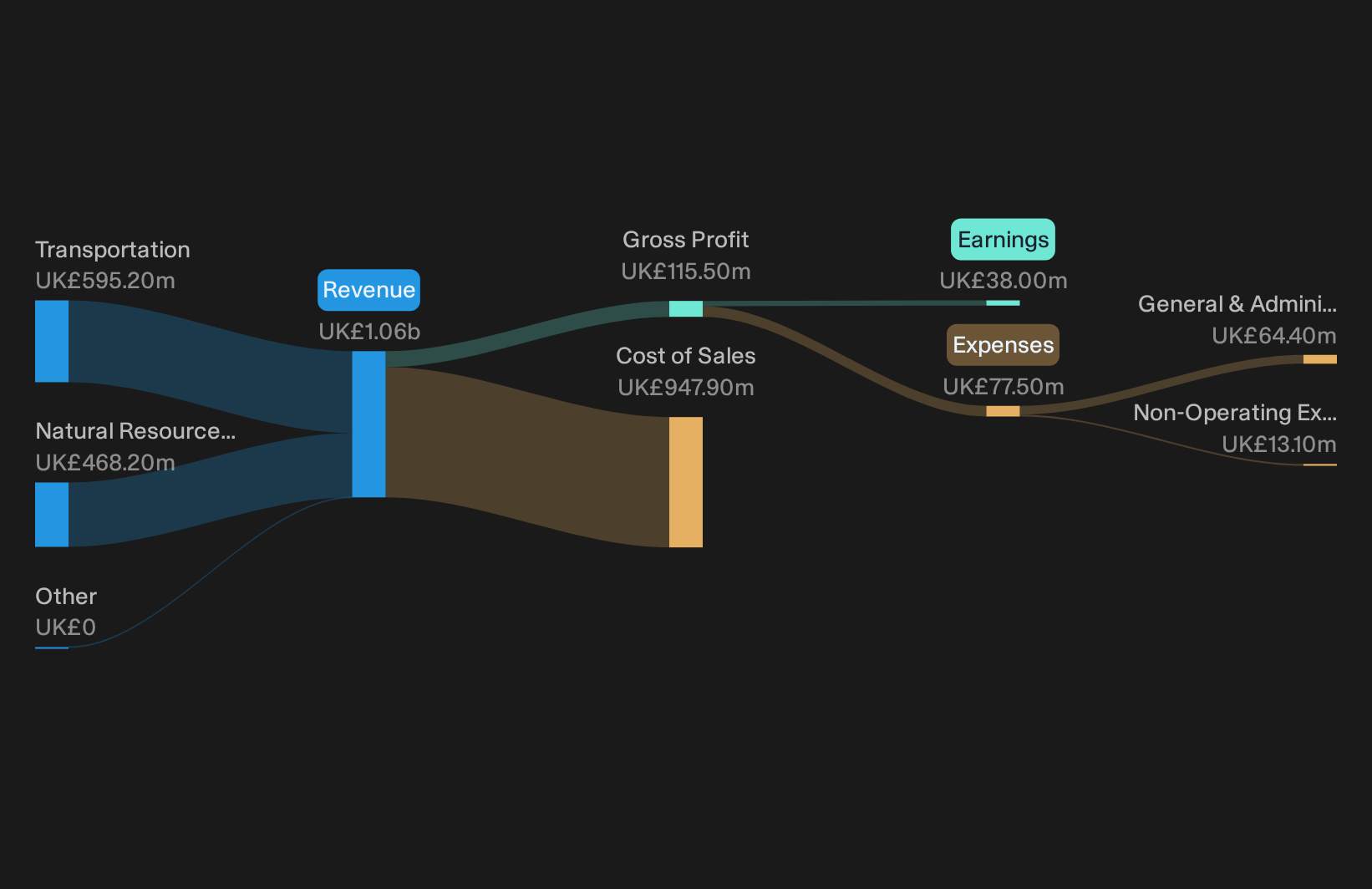
Costain Group delivers infrastructure solutions across UK transport and utilities, with about £595 million of revenue from Transportation and £468 million from Natural Resources, and a market value of roughly £672 million.
"Strategic emphasis on higher-margin consultancy, digital solutions, and advanced project delivery (including digital transformation and selective risk-managed contract models) supports sustained operating margin expansion above sector averages, leading to structurally higher profitability."
The key factor for investors is how a single shift in long term public infrastructure spending priorities influences that profitability path.
That spending mix is exactly what the full narrative for Costain Group unpacks in detail, separating earnings momentum from contract risk and examining how rail exposure could be accelerating or stalling it.
Balfour Beatty (LSE:BBY)
Balfour Beatty gives you exposure to the UK rail build out from a different angle, as a broad transport and infrastructure contractor that can pick up civil engineering, electrification and station upgrade work alongside highways and utilities projects.
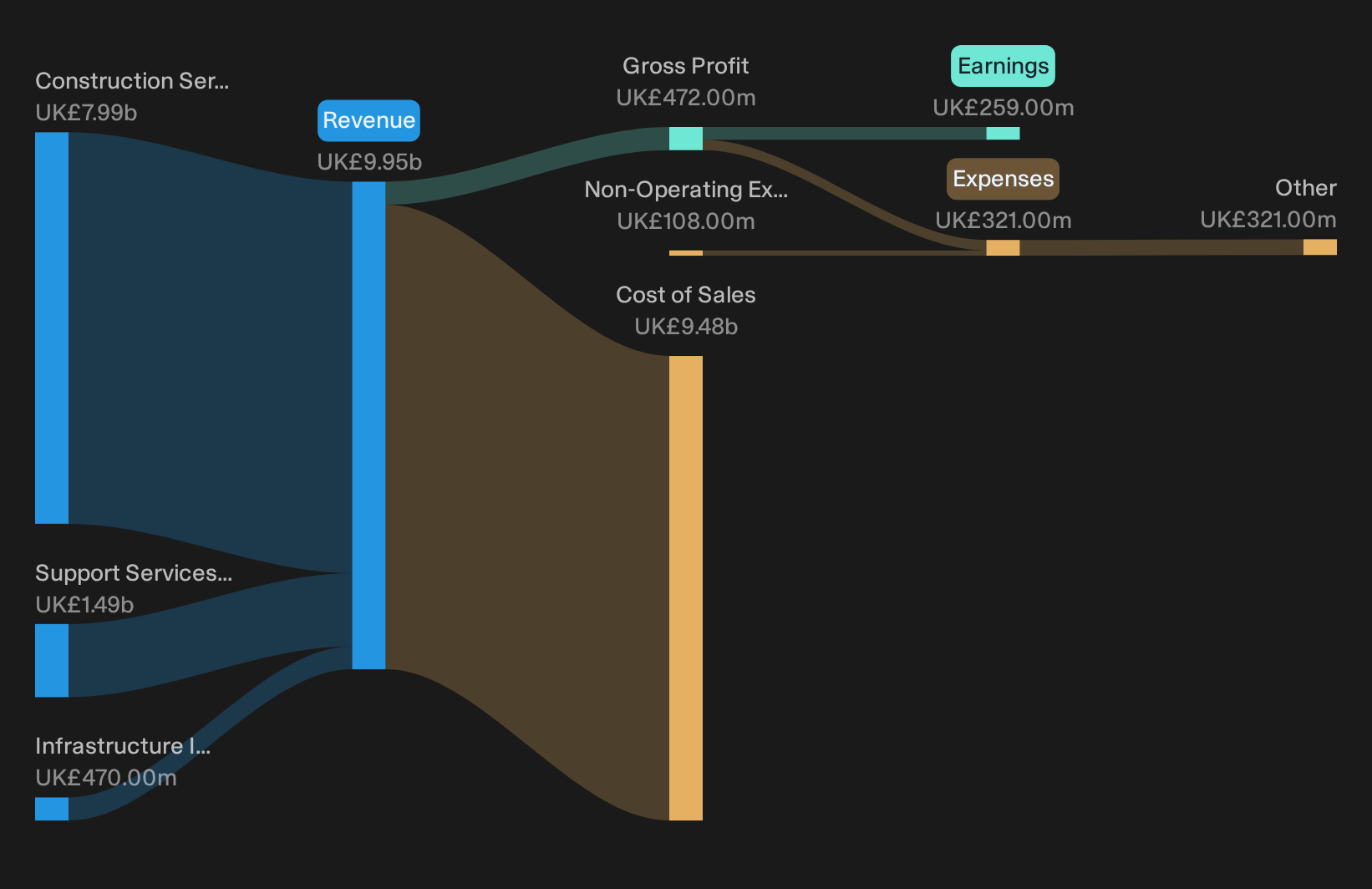
Balfour Beatty runs construction, support services and infrastructure investment operations with about £8.0b from Construction Services, £1.5b from Support Services and £470 million from Infrastructure Investments, and the group is valued at roughly £4.3b.
"That positions the company well to profit from the Labour government's initiative for growth, the related, mooted slashing of planning and building regulations in particular."
What happens to Balfour Beatty’s earnings power if a single key assumption about future UK transport project approvals quietly shifts?
If that question is on your mind, the full narrative for Balfour Beatty shows how UK rail approvals could accelerate or stall Balfour Beatty’s earnings story.
Renew Holdings (AIM:RNWH)
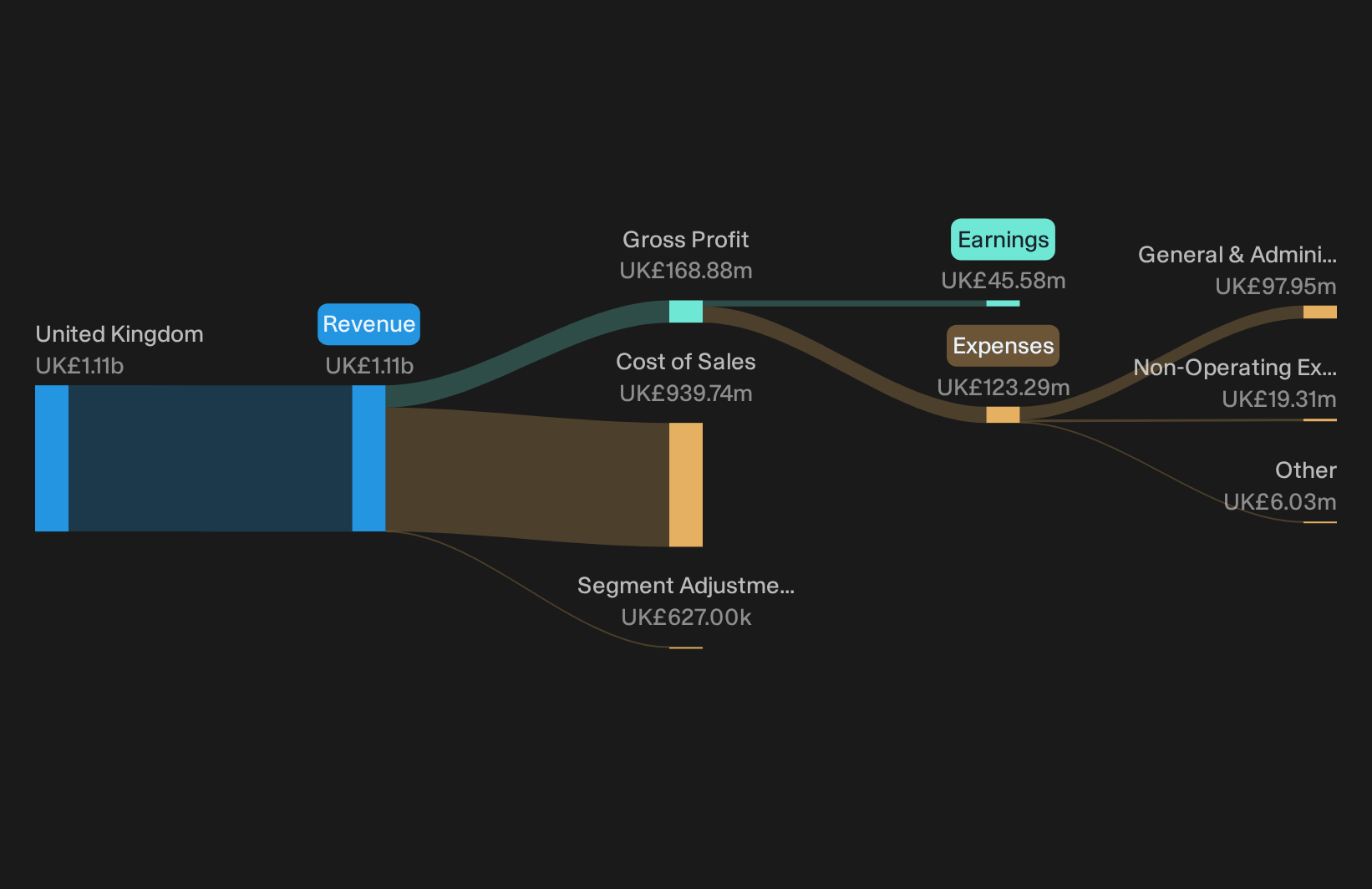
Renew Holdings is a specialist engineering services group plugged directly into UK rail maintenance and asset renewal, while also working across other regulated infrastructure like energy, water and nuclear. It generates about £1.1b from Engineering Services and carries a market value of roughly £720 million.
Renew Holdings offers heavy duty engineering for rail assets, from electrification and signalling to tunnels and stations, which aligns tightly with the screener’s focus on rail infrastructure suppliers that may be positioned for Great British Railways era spending. Investors get broad infrastructure exposure, tilted toward ongoing rail upkeep and upgrades, with the appeal depending on how one unseen pressure shapes future contract economics.
That hidden pressure point is exactly what the 4 key rewards and 1 important warning sign unpacks, showing where Renew Holdings’ rail exposure could quietly reshape future earnings power.
Seeking Alternatives Before Momentum Flies
Fresh ideas move first. By the time every investor has noticed a breakout trend, early entry points are already dropping away. Scan these under the radar lists and review them promptly.
- Identify potential up-and-comers with stronger balance sheets before wider attention hits by scanning the 6 high quality undiscovered gems while they are still flying under most radars.
- Focus on cash generative opportunities that may hold up better when volatility spikes by running the list of solid balance sheet and fundamentals (11 results) while the data is still current.
- Track structural demand shifts in the grid, charging and transmission space by following companies in the 39 power grid technology and infrastructure stocks before that story is fully reflected in the broader narrative.
This article by Simply Wall St is general in nature. We provide commentary based on historical data and analyst forecasts only using an unbiased methodology and our articles are not intended to be financial advice. It does not constitute a recommendation to buy or sell any stock, and does not take account of your objectives, or your financial situation. We aim to bring you long-term focused analysis driven by fundamental data. Note that our analysis may not factor in the latest price-sensitive company announcements or qualitative material. Simply Wall St has no position in any stocks mentioned.
Have feedback on this article? Concerned about the content? Get in touch with us directly. Alternatively, email editorial-team@simplywallst.com