


Conference Update Could Be A Big Moment For Union Pacific Stock
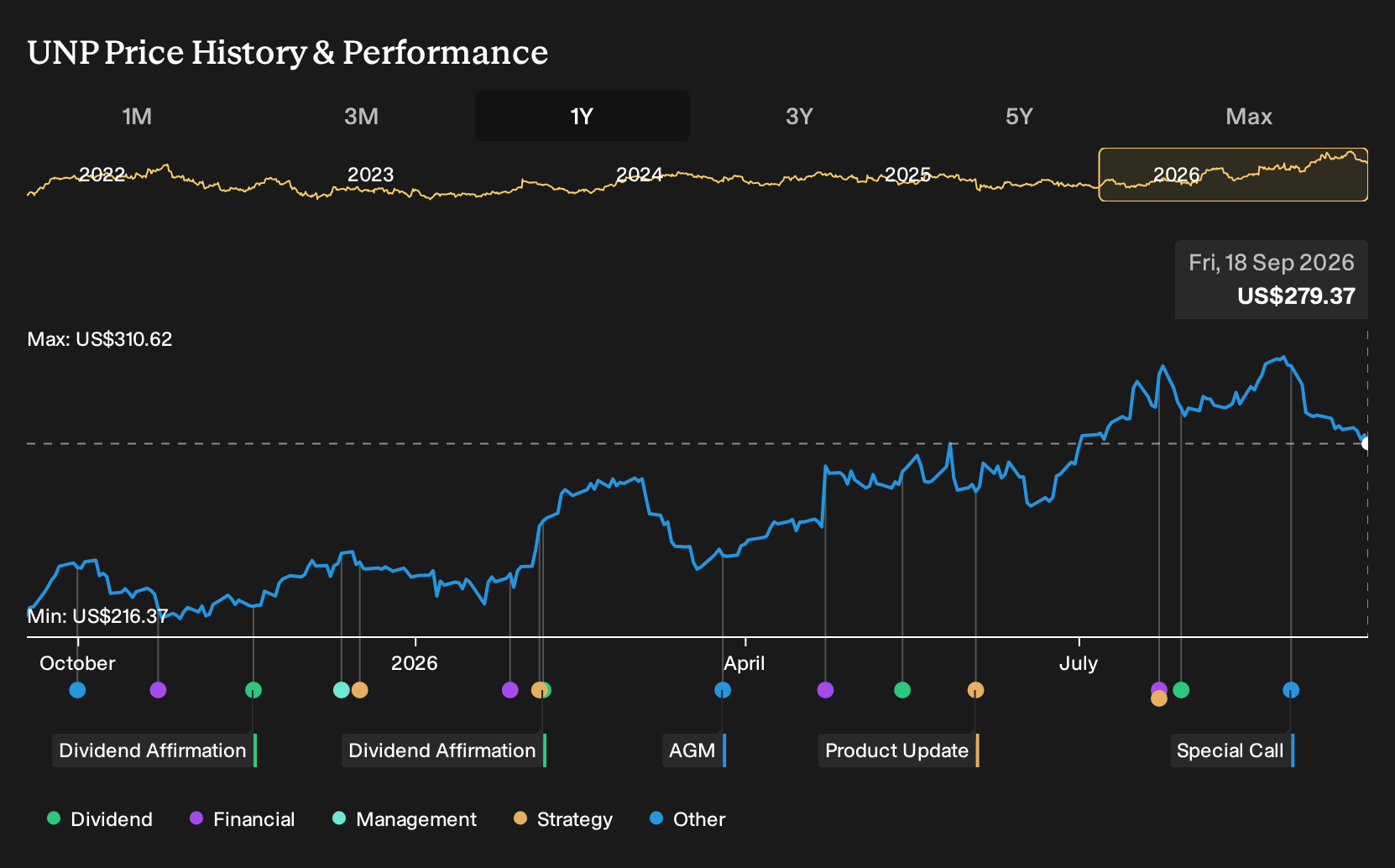
- Union Pacific executives recently outlined volume trends, fuel cost pressures, and network investment priorities at Morgan Stanley's Laguna Conference, while the Big Boy No. 4014 holiday tour supports Make-A-Wish through the Community Ties Giving Program.
- The focus on high-growth freight segments like renewable fuels and automotive gives investors a clearer view of where Union Pacific is targeting future volume opportunities.
- We will now see how Union Pacific's focus on high-growth freight segments at the conference may shape its investment narrative.
Union Pacific Investment Narrative Recap
To own Union Pacific, you need to believe this railroad can keep using its network, pricing power, and efficiency tools to turn steady freight demand into resilient cash flows. The Laguna Conference update keeps the focus on exactly that. Management talked volumes, fuel costs, and network investment, which all flow straight into operating margins and reliability.
Over the near term, the key swing factor is how well Union Pacific manages fuel and inflation pressures while keeping trains running smoothly for high-growth areas like renewable fuels and automotive. The main risk is softer demand tied to trade policy or macro slowdowns, especially in intermodal and bulk. The recent comments do not materially change that risk profile.
The UBS upgrade that followed strong Q2 earnings and higher full year guidance ties directly into these themes. Analysts reacted to cargo trends and execution across customer markets, which line up with what Union Pacific highlighted at Laguna on volumes and network performance. The upgrade itself is secondary. The operational read through is what matters.
For catalysts, investors are watching whether Union Pacific can turn those Houston and Phoenix capacity projects, plus newer segments like renewable fuels, into consistent freight volumes without letting service slip. That is where conference commentary and Q2 results intersect. If execution stays tight while trade and coal related headwinds remain contained, the thesis around efficiency and price discipline remains intact.
Union Pacific's current earnings are US$7.3b and analyst models point to US$29.8b in revenue and US$9.3b in earnings by 2029. That framework implies 5.4% yearly revenue growth and an earnings increase of about US$2b from today's level.
Uncover why Union Pacific's fair value indicates a 17% potential upside to its current price, which could narrow quickly.
Exploring Other Perspectives
Two fair value estimates from the Simply Wall St Community cluster between US$296.58 and US$327.75, which shows a tight but still varied range of opinions around Union Pacific. Those private forecasts sit alongside risks tied to trade policy, coal demand, and trucking competition, so you should weigh several competing viewpoints before leaning on any single valuation.
Explore another Union Pacific fair value estimate, including one that suggests it could be worth just $296.58.
Decide For Yourself
Disagree with existing narratives? Extraordinary investment returns rarely come from following the herd, so trust your own analysis.
- A great starting point for your Union Pacific research is our analysis highlighting 4 key rewards and 1 important warning sign that could impact your investment decision.
- See our latest analysis for Union Pacific. The report includes a comprehensive fundamental analysis summarized in a single visual, the Snowflake, making it easy to evaluate Union Pacific's overall financial health at a glance.
Looking For More Investment Ideas Beyond Union Pacific?
If the Union Pacific story has sharpened your thinking about freight, capital intensity, and long-term cash generation, it can be useful to compare it with other businesses that share similar financial qualities. The Simply Wall St Screener gives you a quick way to line up different stocks against the same checklist and spot where the risk and reward trade-offs look more appealing for your portfolio.
- Prefer steadier profiles with fewer red flags and more consistent metrics across the balance sheet, cash flows, and earnings quality? Then start with a curated 30 resilient stocks with low risk scores.
- If durability and financial strength matter most, filter for companies with robust liquidity and manageable debt using a focused list of solid balance sheet and fundamentals (23 results).
- Looking for underfollowed stories that still show healthy fundamentals and reasonable pricing? Widen the search with a hand-picked 16 high quality undiscovered gems.
This article by Simply Wall St is general in nature. We provide commentary based on historical data and analyst forecasts only using an unbiased methodology and our articles are not intended to be financial advice. It does not constitute a recommendation to buy or sell any stock, and does not take account of your objectives, or your financial situation. We aim to bring you long-term focused analysis driven by fundamental data. Note that our analysis may not factor in the latest price-sensitive company announcements or qualitative material. Simply Wall St has no position in any stocks mentioned.
Have feedback on this article? Concerned about the content? Get in touch with us directly. Alternatively, email editorial-team@simplywallst.com