


Credit Facility Refresh Could Be A Game Changer For CenterPoint Energy Stock (CNP)
- CenterPoint Energy replaced its prior US$2.40b unsecured revolving credit facility with a new five-year US$2.20b senior unsecured facility that includes swingline and letter of credit features, as well as temporary leverage flexibility tied to disaster recovery spending.
- The new covenant allowing a higher debt to capitalization ratio during large natural disaster restorations offers CenterPoint Energy added room to fund infrastructure repairs without immediately pressuring balance sheet targets.
- We will now look at how CenterPoint Energy's refreshed revolving credit facility might influence the company’s longer term investment narrative.
CenterPoint Energy Investment Narrative Recap
To own CenterPoint Energy, you need to be comfortable with a heavy, ongoing capital program in electric and gas infrastructure and the reliance on external funding that comes with it. The refreshed US$2.20b revolving credit facility slightly trims available liquidity versus the prior line, but the disaster recovery flexibility supports the existing grid resiliency and load growth thesis rather than changing it.
The key near term swing factor remains how quickly regulators approve and time cost recovery on that spend, especially after recent rate case activity. The biggest operational risk still sits around higher interest costs and leverage, since interest payments are not well covered by earnings and the utility relies on higher risk funding sources.
The new revolving credit agreement matters most when viewed next to CenterPoint Energy’s push to harden the grid and handle Houston load growth. That covenant allowing temporary higher leverage during large natural disaster restorations fits directly with the company’s resiliency initiatives and expected capital needs tied to weather events and system upgrades.
It also interacts with catalysts such as earnings growth expectations and regulatory settlements. Extra flexibility can help keep projects moving and support earnings predictability if securitization of storm costs proceeds as planned. However, it does not remove the underlying risk that more debt and higher rates could pressure interest coverage and, by extension, the dividend and future funding choices.
CenterPoint Energy's current analyst narrative points to revenue of US$11.4b and earnings of US$1.6b by 2029, built on expected top line growth of 6.7% per year and a move from US$1.1b in earnings today to that 2029 consensus figure, which is about a US$0.5b step up.
Uncover why CenterPoint Energy's fair value indicates a 21% potential upside to its current price that may not last much longer.
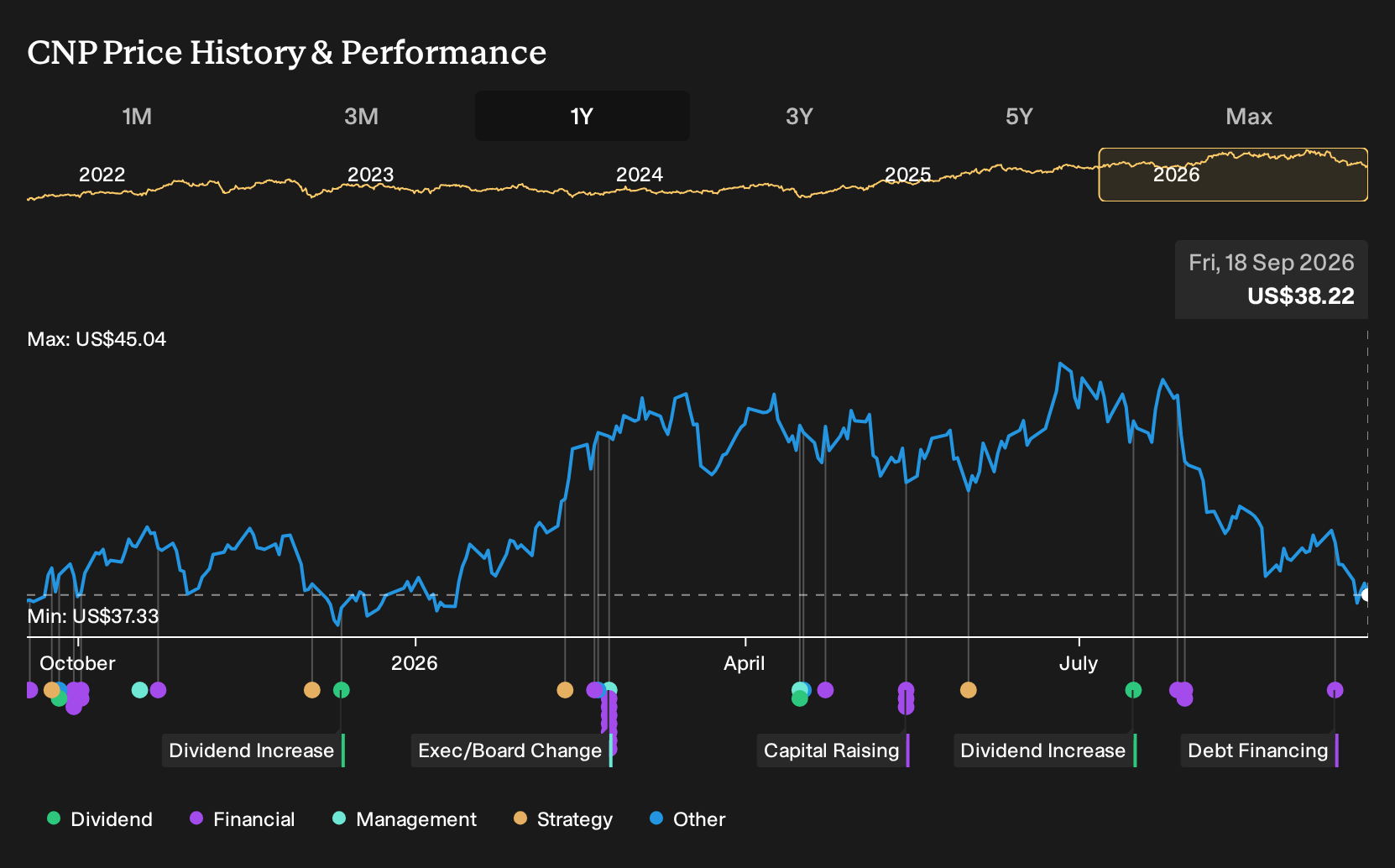
Exploring Other Perspectives
Across 4 fair value estimates from the Simply Wall St Community, CenterPoint Energy’s range runs from about US$28.67 to US$46.13, so some retail investors see deep undervaluation while others sit closer to the top end. Layer that against rising financing needs and regulatory timing risk, and you get very different views on future resilience. Use these competing angles to stress test your own thesis.
Explore 3 other CenterPoint Energy fair value estimates, including one that suggests there could be as much as 25% downside from the current price.
Form Your Own Verdict
Don't just follow the ticker. Dig into the data and build a conviction that's truly your own.
- A great starting point for your CenterPoint Energy research is our analysis highlighting 2 key rewards and 2 important warning signs that could impact your investment decision.
- See our latest analysis for CenterPoint Energy. The report includes a comprehensive fundamental analysis summarized in a single visual, the Snowflake, making it easy to evaluate CenterPoint Energy's overall financial health at a glance.
Looking for more investment ideas beyond CenterPoint Energy?
Once you have a view on CenterPoint Energy, it often helps to widen the lens and compare it with other opportunities that fit different risk and return profiles. The Simply Wall St Screener can help you quickly zero in on stocks that match the type of balance sheet strength, income profile, or valuation edge you want to focus on next.
- If resilience matters most, scan a 30 resilient stocks with low risk scores and see which businesses pair steadier risk scores with more defensive fundamentals.
- If value is the priority, check out a 33 high quality undervalued stocks that filters for companies combining stronger cash flows with sturdier balance sheets.
- If you want something off the beaten path, shortlist a 16 high quality undiscovered gems that highlights solid fundamentals where market attention still looks limited.
This article by Simply Wall St is general in nature. We provide commentary based on historical data and analyst forecasts only using an unbiased methodology and our articles are not intended to be financial advice. It does not constitute a recommendation to buy or sell any stock, and does not take account of your objectives, or your financial situation. We aim to bring you long-term focused analysis driven by fundamental data. Note that our analysis may not factor in the latest price-sensitive company announcements or qualitative material. Simply Wall St has no position in any stocks mentioned.
Have feedback on this article? Concerned about the content? Get in touch with us directly. Alternatively, email editorial-team@simplywallst.com