


Investing Based on Past Performance in 2026 Almost Guarantees a Bad Outcome. Do This Instead.
Risk management is my number one priority. As I see it, you can’t get where you want to be as an investor if you don’t control the risk you take.
That ranges from the use of cash, incorporation of hedging techniques, and a whole lot more. Here, I want to draw your attention to one of the less research intensive aspects of risk management.
Every financial prospectus carries the mandatory regulatory disclaimer: “Past performance is no guarantee of future results.” It is written to shield funds against overeager retail investors who buy assets at the top of a cycle.
But here in 2026 and beyond, I think the inverse statement is far more accurate. Relying on the past decade’s performance playbook is practically a mathematical guarantee of bad outcomes.
Investors who extrapolate the extraordinary equity returns of the post-2008 era into the next decade are missing the forest for some nice-looking trees. And those trees are part of an imaginary forest.
The Math of Valuation Extremes
The S&P 500 Index ($SPX) delivered roughly 15% annualized returns over the past decade. However, that performance was fueled by a unique, non-repeatable confluence of historic tailwinds including zero-interest-rate policy (ZIRP), endless quantitative easing, cheap energy, and aggressive corporate debt issuance used for share buybacks.
Gravity is not the exact definition of what prompts my concerns for “extrapolators,” but it is in the neighborhood. The better-fitting Wall Street expression is “trees don’t grow to the sky.” The stock market is priced for perfection.
That might not matter in the next month, quarter, or even year. But as I write here all the time, just because the market doesn’t fall apart today, it doesn’t mean it isn’t VERY risky. My entire Return Opportunity And Risk (ROAR) Score is based on that.
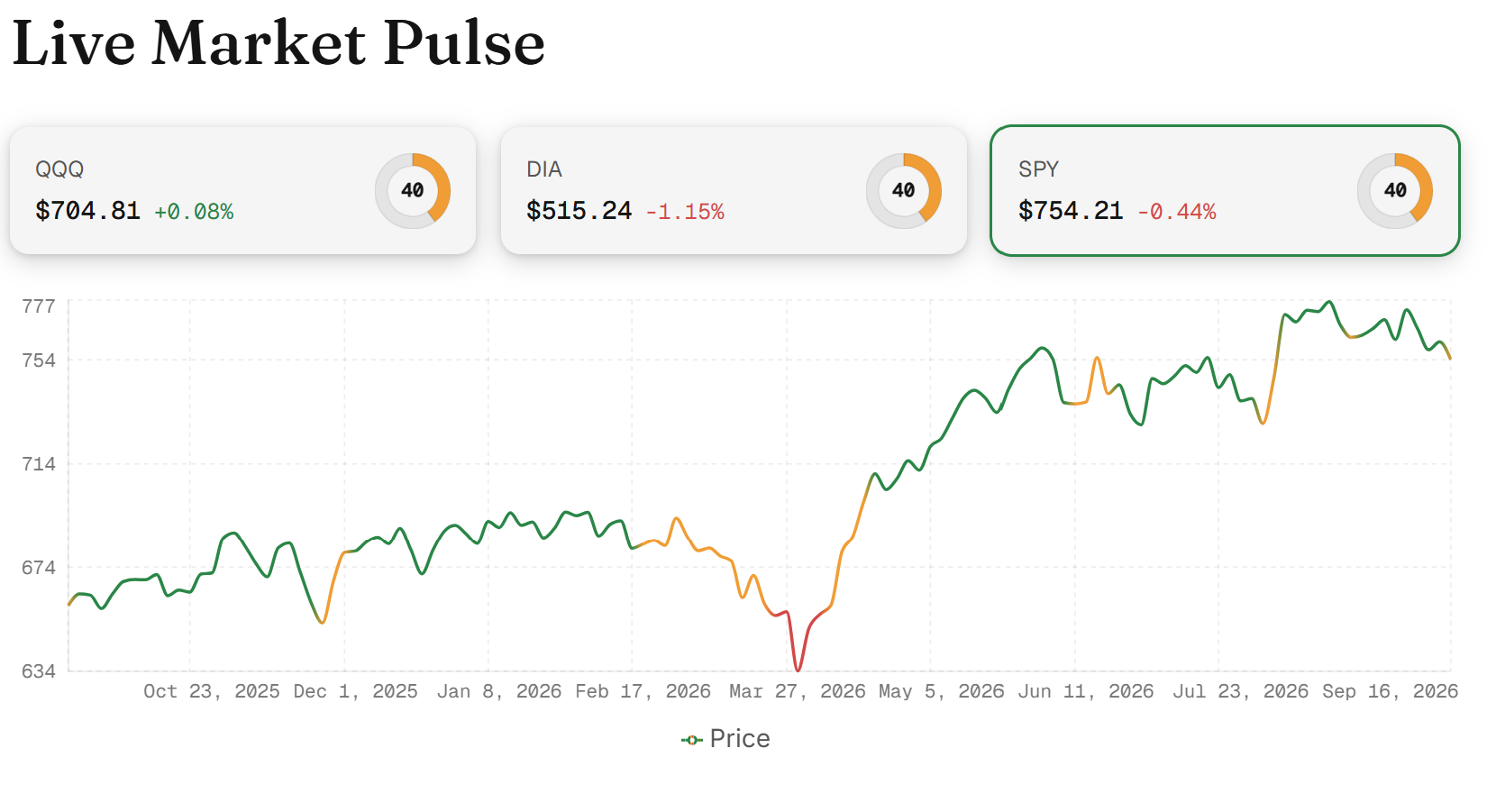
And so, I took notice when all three major U.S. stock market indexes’ ROAR Scores dropped to 40 within a three-day span this month. This suggests the risk of major loss is picking up steam.
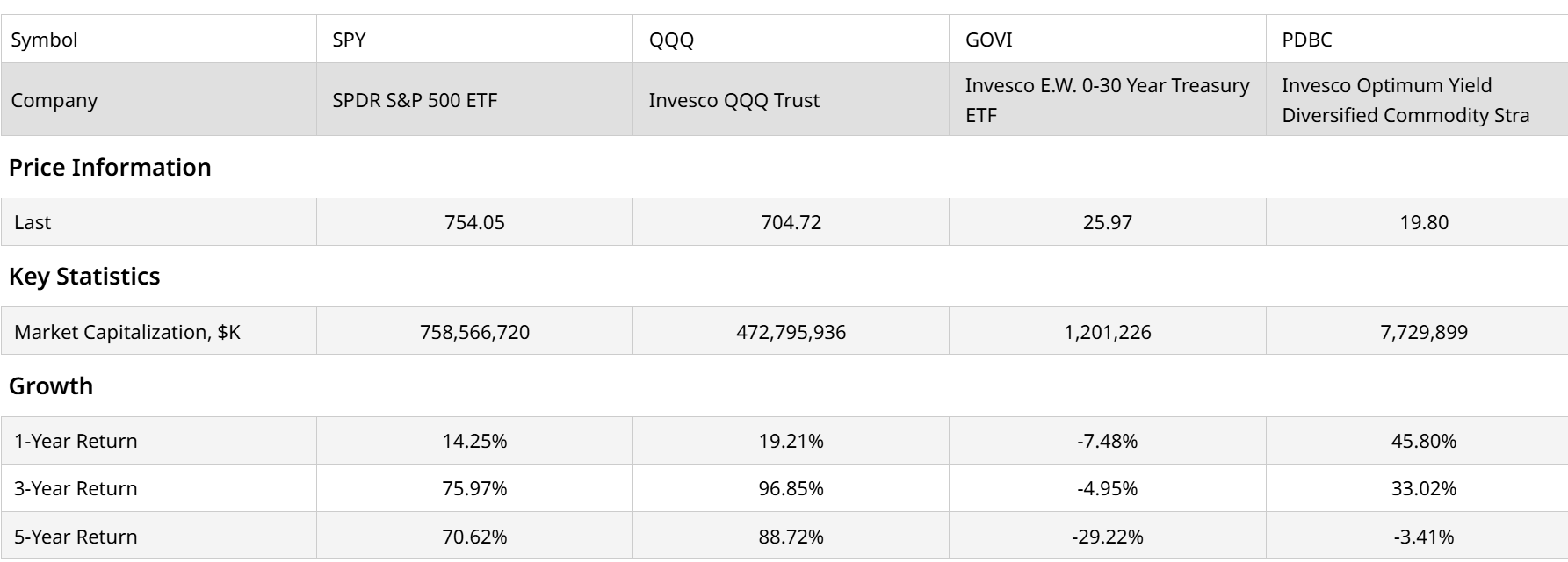
However, this is not simply about saying “stock valuations are rich, don’t expect them to make you richer forever.”
Sure, with market cap-GDP ratios and price-earnings multiples near historical highs, investors can use the past to predict low to flat annualized returns over the following 10-year holding period.
But as you see in the table above, while stock returns are “lying” about how good the future is likely to be for the S&P 500 and the Nasdaq-100 Index ($IUXX), bonds and commodities might be the mirror image. Which is why, particularly in the case of bonds, represented by the Invesco Equal Weight 0-30 Year Treasury ETF (GOVI), my perspective is also to ignore the past returns. As in, how bad they were.
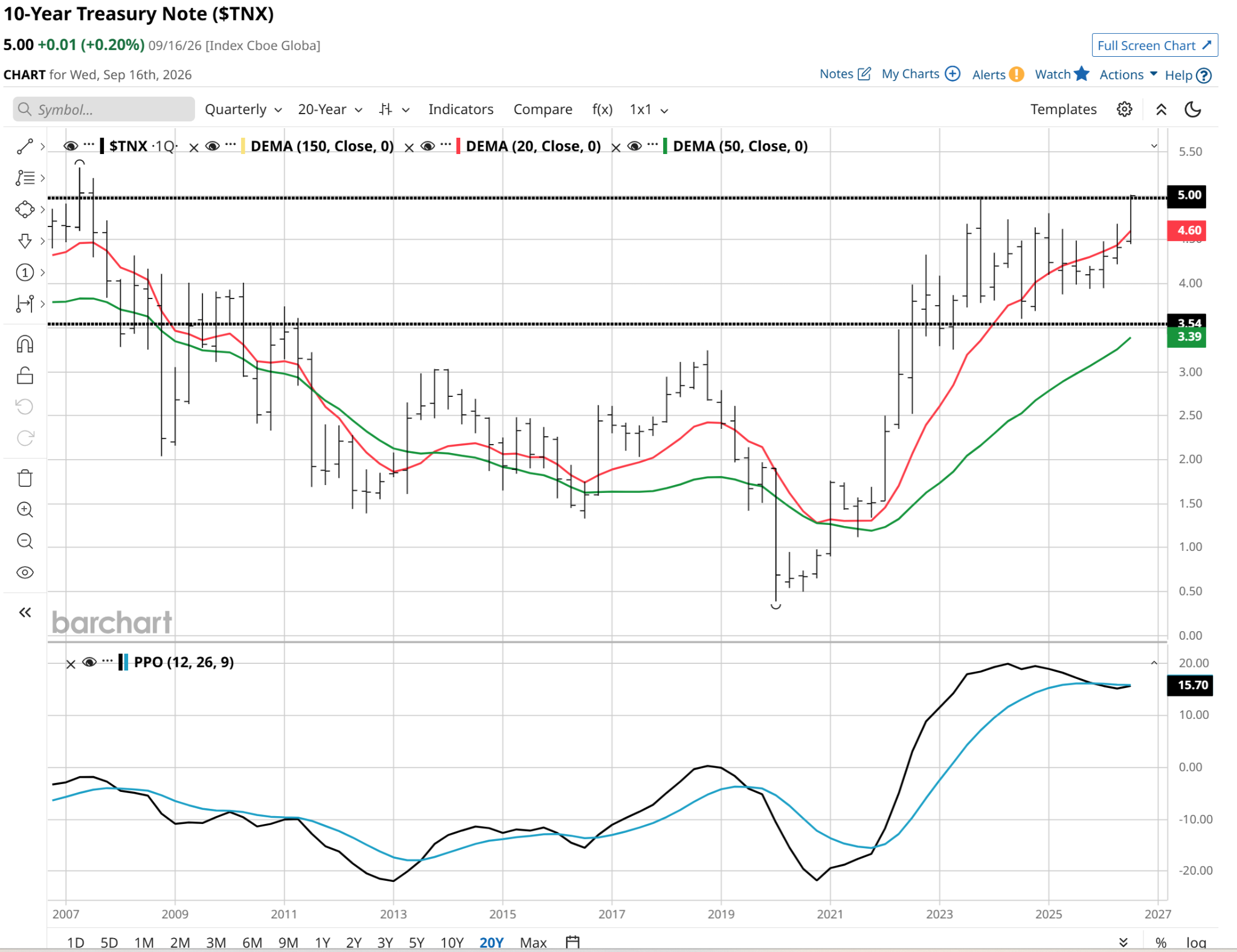
That has everything to do with interest rates. Using the benchmark 10-year as an example, see how rates lifted off of near-zero to the approximately 5% rate now? That’s historic.
And since bond prices drop when rates rise, in this situation, which emanated from the 2008 financial crisis, bond returns are among the worst in a century. Even a pseudo-contrarian can appreciate that this is not a past performance to cut and paste to the future.
Throw Out the Old Playbook Right Now
Strategies that generated effortless gains during the ZIRP era have turned into vulnerabilities. That starts with “buy-the-dip” S&P 500 indexing. Passively pouring fresh capital into a market where over 50% of the index is concentrated in a single, capex-heavy AI theme leaves investors exposed to deep drawdowns if enterprise spending slows. This month, the cracks have really started to appear.
In addition, speculative growth companies that survived on cheap debt are hitting a high-cost refinancing wall. Buying unhedged equities on price momentum alone guarantees exposure to earnings drag as interest expenses rise
Commodities are the most nuanced of the group. That’s in part because I chose to represent them with the Invesco Optimum Yield Diversified Commodity Strategy ETF (PDBC), which is roughly half energy and half other commodities.
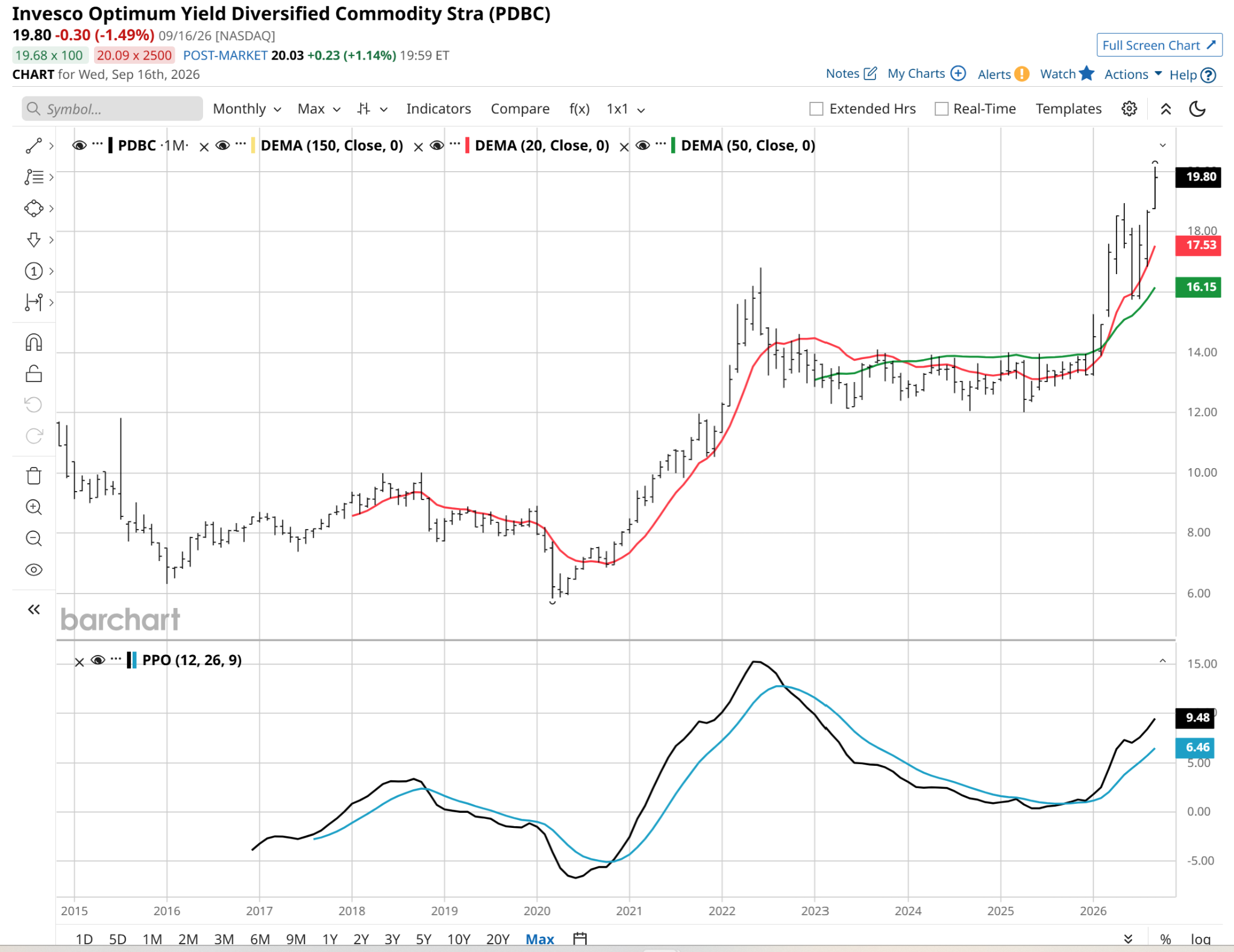
From looking at the long-term chart, something within the commodities realm looks poised to outperform stocks over the next decade. Oil and gas? Maybe. Gold and silver? Not likely. Agricultural commodities? Just look at the headlines. Or your supermarket bill.
I’ll personally be working to identify some ETFs that might represent strong return potential with manageable risk in the 5-10 years ahead.
You know what I won’t be prioritizing as I conduct that research? How they performed during the past 5-10 years. Because, well, you know what the fund prospectuses say. Believe it.
The coming environment will reward active risk management, higher cash yields, and tactical asset management. Continuing to drive forward while staring exclusively in the rearview mirror isn’t just bad for your portfolio. It could be hazardous to your retirement lifestyle. The easiest way to confront this danger is to ignore what happened in the past, to the extent it predicts the future. It rarely does.
Rob Isbitts is a semi-retired CIO, former fiduciary investment advisor, and Barchart columnist. Check out his other work at ETFYourself.com (featuring the Fresh Charts weekly trading post), and ROAR.PiTrade.com, helping investors to better-manage their own portfolios.
On the date of publication, Rob Isbitts did not have (either directly or indirectly) positions in any of the securities mentioned in this article. All information and data in this article is solely for informational purposes. For more information please view the Barchart Disclosure Policy here.