


Meta Stock Surges as It Unveils New Personal AI Agent
Meta Platforms (META) recently handed investors a new reason to pay attention. The social media giant unveiled Muse, a personal AI agent designed to work on behalf of everyday users, and the announcement landed as Meta's core business fires on all cylinders.
For a company that spent months fielding questions about how it would turn massive AI spending into revenue, Muse offers a concrete answer. Muse is an end-to-end personal agent that can plan trips, negotiate bills, and shop online. Notably, the personal AI agent market is one of technology's fastest-growing verticals. Investors watching META stock's price action are essentially betting that Meta can turn that growth into a durable new business line.
What Is Muse And How Does It Work
Muse is built to feel like texting a person rather than operating software, according to a company statement. Users talk to it inside a dedicated Muse app or directly through WhatsApp, and it takes action using Muse Spark, Meta's most capable model to date.
The agent is meant to handle both small errands and big, open-ended goals. It can send an email, book travel, or fill out forms on its own. For bigger projects, like selling a car for a better price or adjusting a fitness plan as life changes, Muse keeps working in the background and checks back in only when it needs approval or something changes.
When it is time to pay, Muse can check out using Link, a payment tool built by Stripe. The company statement notes Muse is the first AI agent covered by Link's purchase protections, which include coverage for damaged or lost items and a return guarantee on eligible purchases. Shop Pay and 1Password support are coming soon.
Muse runs on what Meta calls a Muse Secure VM, a dedicated virtual machine built specifically to house an agent and a person's data. A separate Sentinel agent sits on the same machine and approves anything Muse tries to send out to the internet, so nothing leaves without a check.
Meta also says people can disconnect services, wipe specific memories, or opt out of having their interactions used to train its models.
Why META Stock Investors Care About Agents
Meta chief executive Mark Zuckerberg has been laying the groundwork for this moment for months.
During Meta's second quarter 2026 earnings call, he told analysts that personal agents represent a market he expects to reach billions of people over the next five years, working 24 hours a day on tasks tied to someone's health, finances, career, and relationships.
He also drew a clear line between coding agents, which took off first because developers can tolerate rough edges, and consumer agents, which need to work perfectly out of the box for everyday people to adopt. Muse is Meta's attempt to prove it can clear that bar.
The timing lines up with strong underlying numbers. Meta's total Family of Apps revenue hit $60.4 billion in the second quarter, up 28% from a year earlier, while total company revenue reached $60.8 billion.
Meta guided third-quarter revenue to a range of $61 billion to $64 billion and said full-year capital expenditures, most of it going toward AI infrastructure, would land between $130 billion and $145 billion.
Chief financial officer Susan Li told analysts the company remains demand-constrained even at that spending level, meaning there are more profitable uses for AI compute than Meta currently has capacity to run.
How Big Is the Personal AI Agent Opportunity?
The broader market backs up why Wall Street is paying attention. The personal AI agent sector grew from $7.8 billion in 2025 to a projected range of $48 billion to $52 billion by 2030, a compound annual growth rate of roughly 44% to 46%, according to a Flowtivity report. Separately, Gartner expects 40% of enterprise applications to embed AI agents by the end of 2026, up from less than 5% a year earlier.
Muse enters a field that already includes Microsoft (MSFT) Copilot, Google (GOOG) (GOOGL) Gemini, and the open-source project OpenClaw, which became one of the fastest-growing repositories in GitHub history earlier this year.
Meta's advantage, according to Zuckerberg, is distribution. WhatsApp reaches billions of people daily, giving Muse a built-in audience that few competitors can match. Muse is rolling out now in the U.S. on iOS, Android, and the web, with support for AI glasses coming soon.
Meta says it will be free for most everyday use, with subscription tiers for people who want deeper functionality. A more locked-down version, called Muse Confidential VM, is planned for later this year and will encrypt a user's entire virtual machine with a key that only they hold.
For a company that has poured tens of billions of dollars into AI infrastructure, Muse is the clearest signal yet of what Meta expects that spending to produce.
Is META Stock Undervalued?
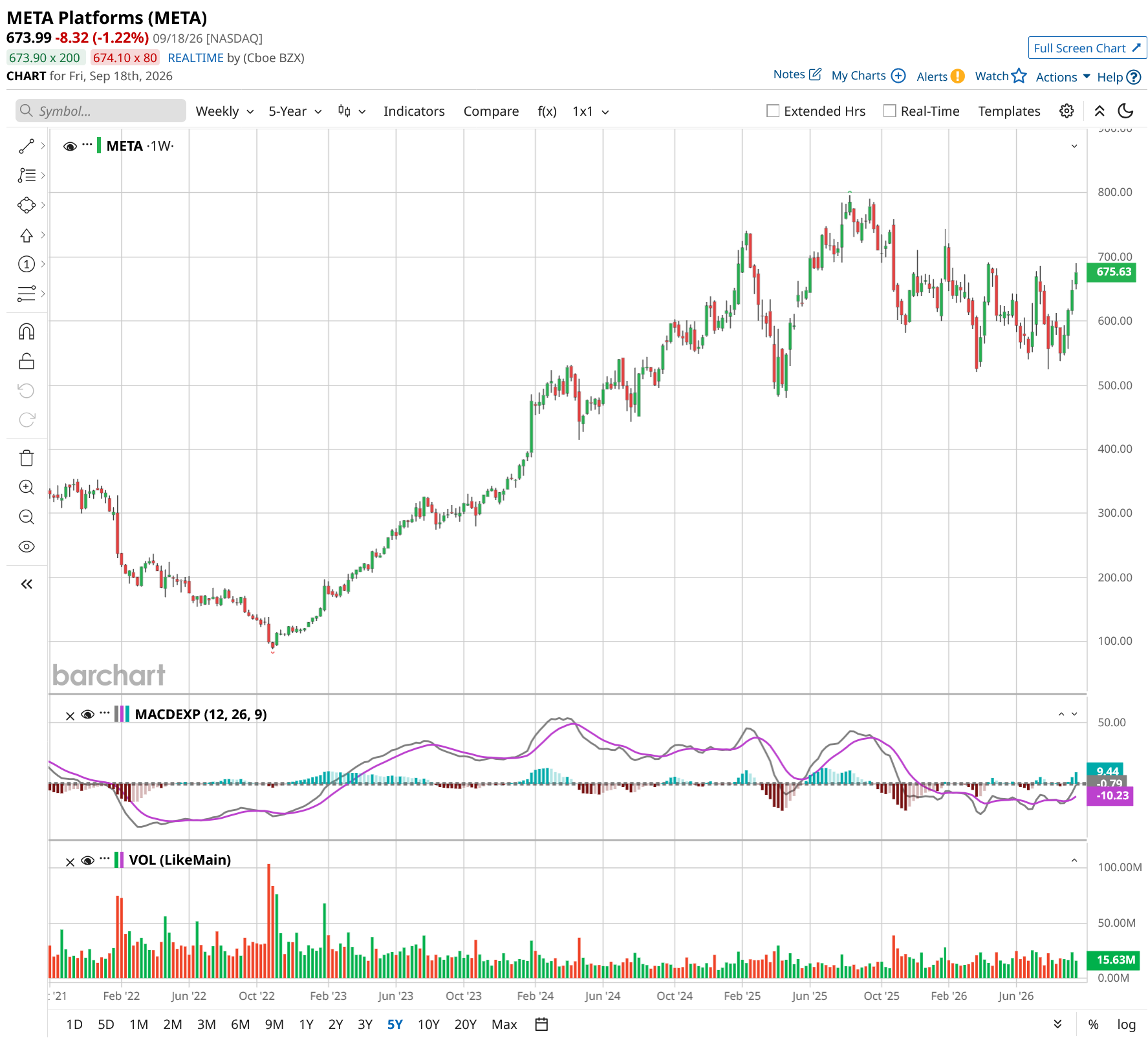
Analysts tracking META stock forecast revenue to increase from $201 billion in 2025 to $473 billion in 2030. Over that period, adjusted earnings are projected to rise from $29.68 per share to $53 per share. If META trades at 20x forward earnings, below its 10-year average of 23x, it could surge 62% from current levels.
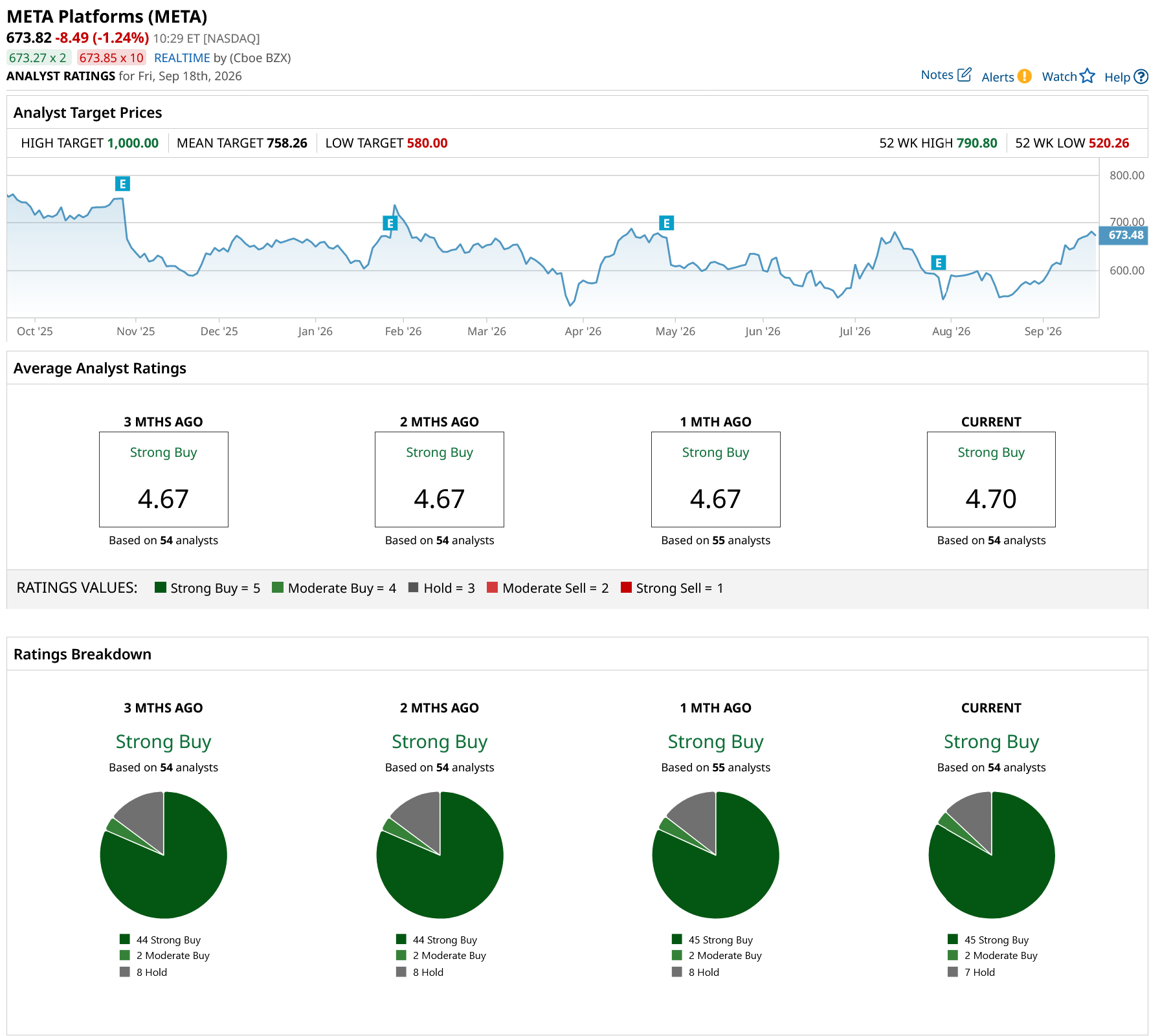
Out of the 54 analysts covering META stock, 45 recommend “Strong Buy,” two recommend “Moderate Buy,” and seven recommend “Hold.” The average META price target is $758.26, above the current price of about $674.
On the date of publication, Aditya Raghunath did not have (either directly or indirectly) positions in any of the securities mentioned in this article. All information and data in this article is solely for informational purposes. For more information please view the Barchart Disclosure Policy here.