


Lockheed Martin Stock And Defense Suppliers Worth A Closer Look
Fresh headlines around a proposed US$24.3b F-35 sale to Saudi Arabia have pushed defense back into the spotlight, with Lockheed Martin, RTX and their peers suddenly front and center in global politics and portfolio debates. Investor money often moves first when long-term contracts are in play, and hesitates when Washington scrutiny rises. This article walks through three U.S. large-cap defense stocks exposed to this news and explains why each might deserve a closer look.
The three stocks covered below are just a sample, and the full screen surfaced 13 more U.S. large-cap defense contractors with equally compelling narratives that are not unpacked in this article. To go straight to the full universe and identify your own highest-conviction ideas, head into the U.S. Large-Cap Defense Contractors screener.
ATI (ATI)
Overview: ATI produces high performance titanium, nickel and specialty alloys, plus complex forged components, heavily used in aerospace and defense platforms worldwide.
Operations: ATI generates about US$2.7b from High Performance Materials & Components and US$2.5b from Advanced Alloys & Solutions, with roughly US$2.8b reported in the United States.
Market Cap: US$25.8b
ATI appears in this defense-focused screen as one of the key materials suppliers behind engines and airframes. This provides exposure to aircraft build rates without direct program risk.
"Demand for ATI’s specialty alloys is described as benefiting from the ongoing global expansion in commercial air travel and the rising middle class, with expectations for multi-year growth in both new-build aircraft and high-frequency MRO applications. ATI’s backlog of long-term, sole-source engine materials contracts with all three major OEMs is reported to extend well into the 2030s and beyond, supporting visibility and durability of revenue."
What happens if a single unseen pressure on those high value alloys shifts the balance between pricing power and long-run volume growth?
If that pressure point interests you, read the full narrative for ATI to see how ATI’s contracts, pricing power and end market mix could be decoupling beneath the surface.

Arxis (ARXS)
Overview: Arxis designs and manufactures mission critical electronic and mechanical components that sit deep inside defense, space and commercial aerospace platforms.
Operations: Arxis generated about US$773 million from Electronic Components and US$997 million from Mechanical Components, emphasizing diversified mission critical hardware.
Market Cap: US$21.3b
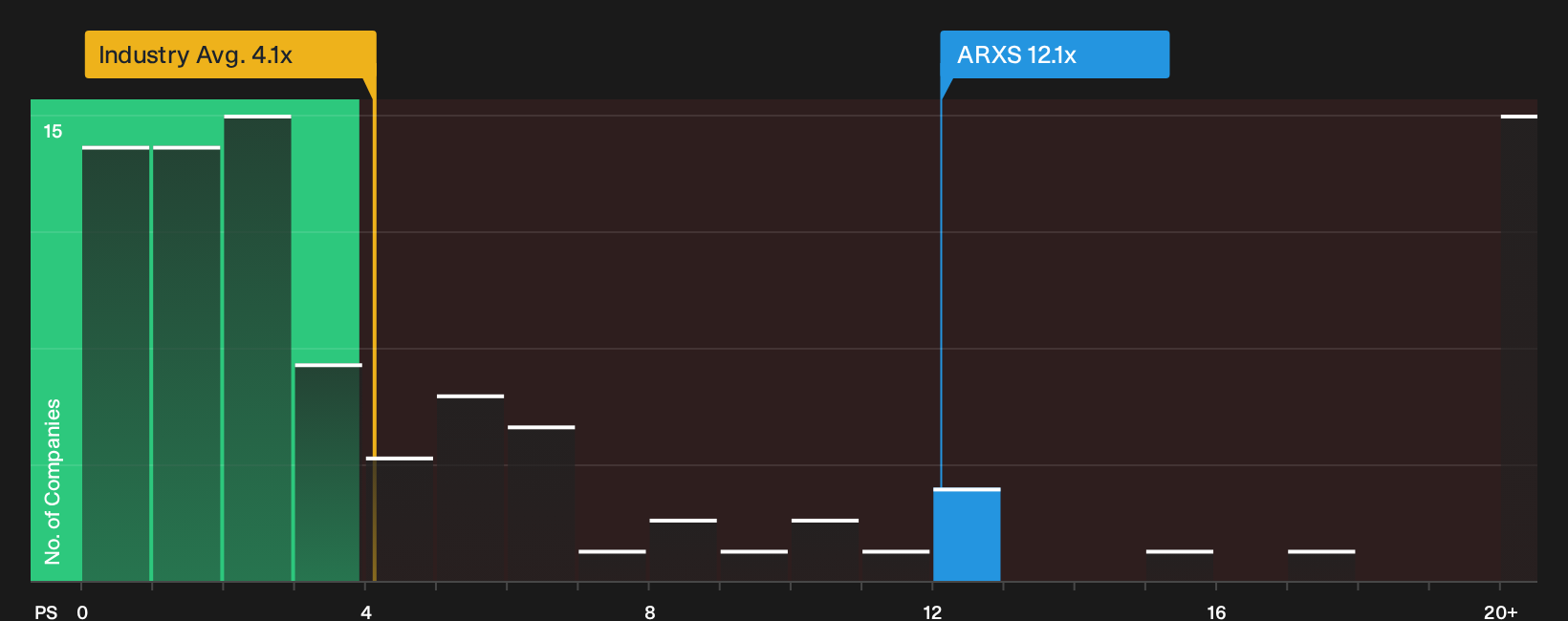
Arxis provides exposure to the defense contractor supply chain through components such as bearings, connectors and radar absorbing materials that are used in air defense, radar and missile systems. However, the mix of premium P/S multiples, recent acquisitions and a relatively short profitability record means that any change in how customers commit to multiyear supply agreements could have a meaningful impact on margins.
Those shifting commitments are exactly what many investors are trying to size up in Arxis, so tap into the 3 key rewards and 1 important warning sign to see where sentiment could accelerate next
Vicor (VICR)
Overview: Vicor designs and manufactures modular power components and systems that convert electricity for demanding uses, including aerospace, defense electronics and AI data centers.
Operations: Vicor reports US$474 million from advanced brick products, with sales concentrated in the United States, Asia Pacific and Europe.
Market Cap: US$8.5b
Vicor matters in this defense focused screen because its high density power modules can underpin the electronics inside advanced military and aerospace platforms.
"AI data centers and AI factories are moving toward racks that require hundreds of kilowatts and processors that need thousands of amperes. Vicor is positioning its fifth generation current multiplier and second generation vertical power delivery as the only way many hyperscalers and OEMs can meet upcoming current density targets above 3 amperes per square millimeter."
One open question is how long term demand for these power architectures could reshape expectations for Vicor’s margins and growth.
Those power shifts could be just starting. Read the full narrative for Vicor to see how Vicor’s AI and defense demand might be accelerating under the surface.

Seeking Alternatives Before The Crowd
Fresh themes move quickly. Breakout ideas gain momentum, cautious money gets caught watching, and under the radar for now opportunities stop looking cheap. Scan what is flying today and act now.
- Track early leaders in rising dividend momentum and use the 6 dividend fortresses to spot high-yield candidates before defensive buyers crowd in.
- Target future-facing picks linked to digital assets by scanning the curated 18 cryptocurrency and blockchain stocks while that story is still dropping in under most radars.
- Hunt for resilient balance sheets and durable cash flows using the selective list of solid balance sheet and fundamentals (23 results) before quality premiums start to widen.
This article by Simply Wall St is general in nature. We provide commentary based on historical data and analyst forecasts only using an unbiased methodology and our articles are not intended to be financial advice. It does not constitute a recommendation to buy or sell any stock, and does not take account of your objectives, or your financial situation. We aim to bring you long-term focused analysis driven by fundamental data. Note that our analysis may not factor in the latest price-sensitive company announcements or qualitative material. Simply Wall St has no position in any stocks mentioned.
Have feedback on this article? Concerned about the content? Get in touch with us directly. Alternatively, email editorial-team@simplywallst.com