


Does Lounge Push Change The Bull Case For Southwest Airlines (LUV)?
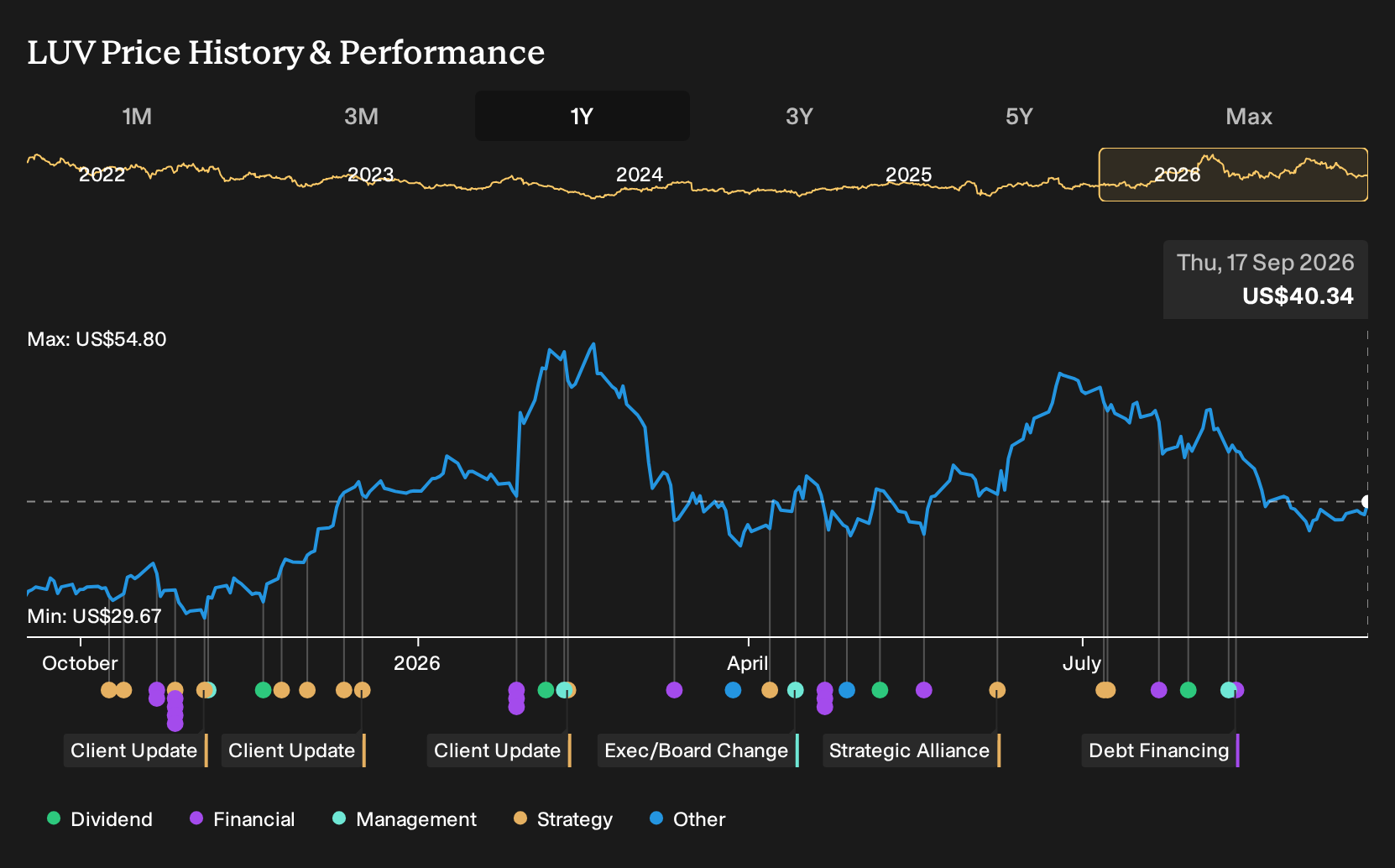
- Southwest Airlines recently outlined plans to trim less profitable flights in response to higher fuel costs, while reporting strong travel demand and a 30% year over year rise in corporate revenue.
- The carrier is reshaping its low cost identity by rolling out lounges, a premium co branded credit card with JPMorgan Chase, assigned seating, extra legroom options, and new fees that aim to shift its profit mix toward higher yielding products.
- We will now examine how Southwest Airlines' move into lounges and premium products could influence the broader investment narrative for the business.
Scan how Southwest Airlines' pivot toward premium travel compares with other carriers by reviewing a curated set of list of solid balance sheet and fundamentals (23 results) that may be better positioned to withstand higher fuel and operating costs.
Southwest Airlines Investment Narrative Recap
For an investor to stay in Southwest Airlines, there needs to be confidence that the carrier can manage higher fuel costs while keeping planes full and yields healthy. The short term swing factor is whether cutting cheaper, less profitable flights actually protects margins without dulling demand, especially as the business leans more on corporate travelers and differentiated seating.
The biggest risk right now sits with fuel and capacity. Management is paying billions more for fuel and trimming schedules, while also rolling out new products that could test customer patience on fees. Execution on this shift, without eroding Southwest Airlines' long standing brand goodwill, appears central to the story.
The lounge and premium credit card announcement is the clearest operational pivot tied to this news. Southwest Airlines is moving from a pure low cost model toward a mix that includes higher yielding services such as lounges, extra legroom and assigned seating. That gives the airline more levers than just fare increases and capacity cuts when fuel costs rise.
For catalysts, this lounge rollout connects directly to the existing Chase partnership and loyalty program, where analysts already see room for additional EBIT. The question for you is whether Southwest Airlines can build a paid premium layer while keeping its mass market appeal, and whether those new revenue streams arrive quickly enough to matter against current fuel pressure.
Southwest Airlines' narrative projects US$35.7b revenue and US$2.4b earnings by 2029. This is based on 5.9% yearly revenue growth and an earnings increase of about US$1.6b from US$837.0m today.
Uncover why Southwest Airlines' fair value indicates a 28% potential upside to its current price, which could narrow quickly.
Exploring Other Perspectives
One alternate view puts less weight on Southwest Airlines' premium push and more on a possible long term drag from weaker business travel. In that storyline, the lowest analysts were working off revenue of about US$34.8b and earnings of US$2.3b by 2029, which is more cautious. These forecasts were set before this lounge and credit card news, so you may want to compare them with your own expectations and consider how the story could shift.
Explore 4 other Southwest Airlines fair value estimates, including one that suggests it could be worth just $49.83!
Form Your Own Verdict
Don't just follow the ticker. Dig into the data and build a conviction that's truly your own.
- A great starting point for your Southwest Airlines research is our analysis highlighting 3 key rewards and 1 important warning sign that could impact your investment decision.
- See our latest analysis for Southwest Airlines. The report includes a comprehensive fundamental analysis summarized in a single visual, the Snowflake, making it easy to evaluate Southwest Airlines' overall financial health at a glance.
Looking For More Investment Ideas Beyond Southwest Airlines?
If the Southwest Airlines story has you thinking about portfolio balance, use this moment to widen the lens and scan for other businesses that might fit your risk, income, or quality preferences.
- For investors hunting for quality at a sensible entry point, review a curated set of 29 high quality undervalued stocks that align solid balance sheets with appealing fundamentals.
- If resilience matters most to you, focus on companies that score well on stability metrics and risk checks by reviewing our 30 resilient stocks with low risk scores.
- For those building a portfolio with income at the forefront, weigh up which high yielders look most durable by reviewing the 6 dividend fortresses.
This article by Simply Wall St is general in nature. We provide commentary based on historical data and analyst forecasts only using an unbiased methodology and our articles are not intended to be financial advice. It does not constitute a recommendation to buy or sell any stock, and does not take account of your objectives, or your financial situation. We aim to bring you long-term focused analysis driven by fundamental data. Note that our analysis may not factor in the latest price-sensitive company announcements or qualitative material. Simply Wall St has no position in any stocks mentioned.
Have feedback on this article? Concerned about the content? Get in touch with us directly. Alternatively, email editorial-team@simplywallst.com