


Maplebear (CART) Stock May Be A Bargain Despite New AI Assistant Launch
Maplebear, the parent of Instacart, has seen its stock settle at US$45.43 after a mixed stretch of returns, and the central issue now is how much of that price is really backed by the business’s earnings power. With new products and partnerships in the spotlight, the market story has moved quickly while the question of what investors are paying for each dollar of profit remains open.
- Over the past 3 years the share price has gained 48.2%, which puts real weight on whether the current earnings base can carry that move.
- The launch of Clementine and Cart Assistant, along with broader AI integrations, can shape expectations for future profitability by influencing how much of Instacart’s commerce flows through higher margin, data driven services.
- The analysts covering Maplebear have run their own numbers. See what analysts think Maplebear's shares could be worth.
The stock's next move may depend on whether Maplebear's current earnings are strong enough to justify today’s valuation.
If you want to pressure test how Maplebear’s earnings question compares with other AI driven commerce plays, scan through 35 AI small caps.
Is Maplebear a Bargain on Earnings?
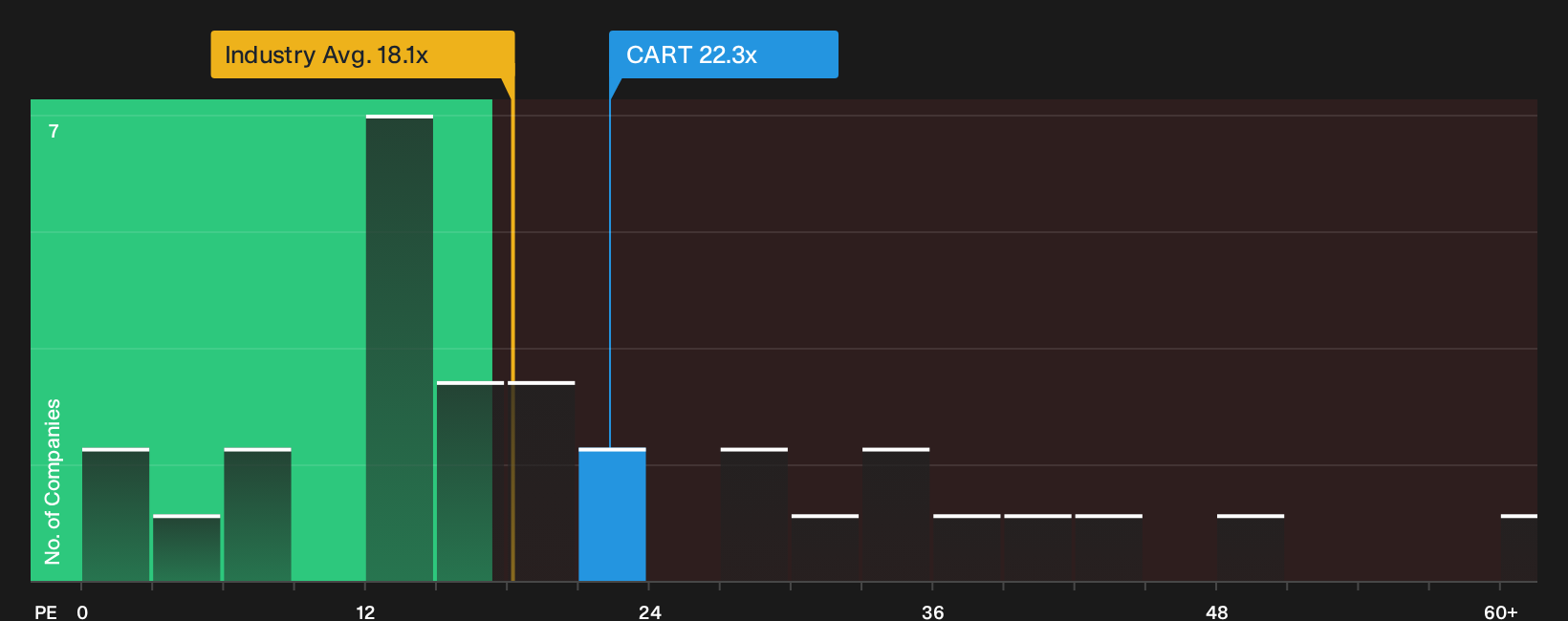
P/E is a useful lens for Maplebear because earnings are positive and the market focuses heavily on profitability for mature tech enabled commerce platforms. At a P/E of roughly 22.3x, the stock trades above the broader consumer retailing sector, where the typical company changes hands at about 18.1x earnings. That sector gap suggests investors are already willing to pay a premium for Instacart’s business model and earnings mix.
The fair multiple implied by Simply Wall St’s model, which blends the company’s margins, growth profile, risk and size, sits above where Maplebear trades today. Against that tailored benchmark and a peer group closer to 42.1x, the current 22.3x looks closer to a discount than a stretch. Because the launch of Clementine and Cart Assistant has sharpened the story around Instacart’s AI tools, the P/E still prices the stock below what similar commerce and data platforms command. To see how big that valuation gap might be in dollar terms, you can compare the current price to the model’s fair value estimate here. Explore the numbers behind Maplebear's P/E valuation.
The Maplebear Narrative: What Would Justify Today's Price?
Narratives on Simply Wall St pick up where the P/E puzzle leaves off and explain what would need to happen with Maplebear's growth, margins and earnings for the stock to be worth materially more or less than today’s price, all housed on the Community page. Rather than concentrating on a single multiple or one model output, each scenario lays out its own underlying assumptions so you can compare them with Maplebear's reported results as they arrive.
Community views on Maplebear split between those who see more potential in the AI and retail partnerships story and those who think expectations already bake most of it in.
Bull case: 20% undervalued
"Deepening enterprise partnerships and a growing suite of omnichannel retailer integrations are increasing stickiness with major retail chains, creating new recurring revenue streams and driving higher margin, non transaction based revenues."
Discover why this Narrative puts Maplebear at 20% undervalued.
Bear case: roughly fairly valued
"As online grocery penetration matures in North America and large basket orders remain the dominant use case, incremental order growth is increasingly reliant on smaller baskets and new use cases where unit economics are thinner."
Explore why this Narrative puts Maplebear at roughly fairly valued.
One More Question For Maplebear Before You Rely On The Valuation
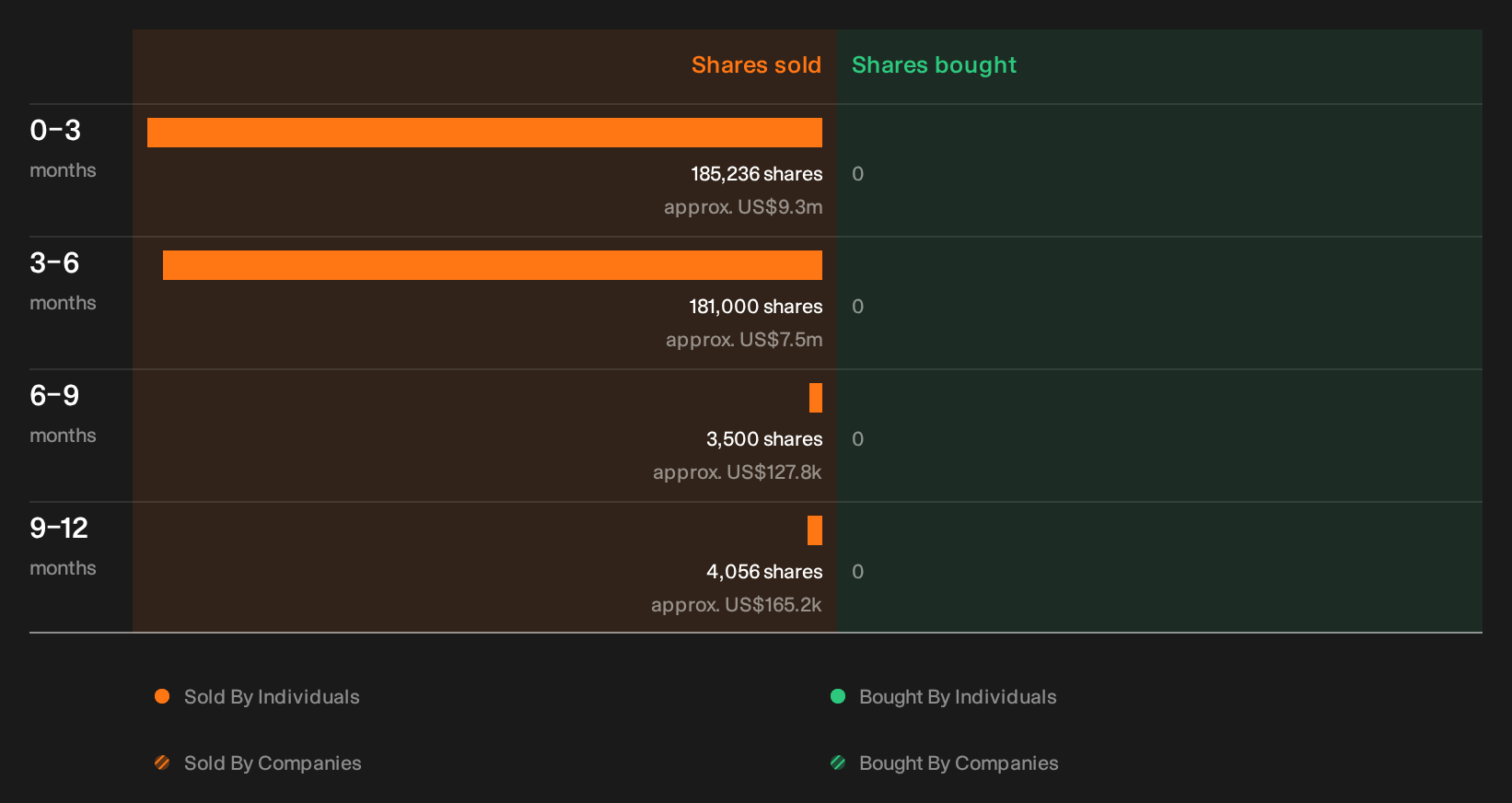
Before you lean too heavily on what the multiples suggest for Maplebear, our checks point to recent share sales from people on the inside, and the who, how much and why are all still for you to examine. See the recent insider selling flagged for Maplebear.
This article by Simply Wall St is general in nature. We provide commentary based on historical data and analyst forecasts only using an unbiased methodology and our articles are not intended to be financial advice. It does not constitute a recommendation to buy or sell any stock, and does not take account of your objectives, or your financial situation. We aim to bring you long-term focused analysis driven by fundamental data. Note that our analysis may not factor in the latest price-sensitive company announcements or qualitative material. Simply Wall St has no position in any stocks mentioned.
Have feedback on this article? Concerned about the content? Get in touch with us directly. Alternatively, email editorial-team@simplywallst.com