


Falling oil prices and the Federal Reserve's interest rate hike “cooling” inflation fears, gold regained its position at the 100-day EMA
The Zhitong Finance App learned that at the end of a turbulent week, international gold prices held up, as the Federal Reserve raised interest rates for the first time since 2023 and falling oil prices helped ease market concerns about inflation.
On Friday, spot gold traded around US$4,350 per ounce, after rising nearly 2% on Thursday, erasing most of the decline in the previous three days, according to the data. After the Federal Reserve unanimously decided to raise interest rates by 25 basis points on Wednesday, US Treasury yields soared for a while, then yields fell across the board for each term. This shift has lessened some of the pressure on gold. Since gold does not pay interest, gold generally underperforms when bond yields are high.
Oil prices fell for the third day in a row, as supply disruptions in the Middle East seem likely to ease, reducing the pressure on energy costs on inflation. Saudi Arabia has begun to resume delivery of a key pipeline within a few days, while some tankers continue to cross the strait of Hormuz, which is still tense.
Thursday's rebound brought gold back to the 100-day moving average, an indicator of momentum. Even so, the price of gold is still nearly one-fifth lower than the level before the outbreak of the war in Iran at the end of February.
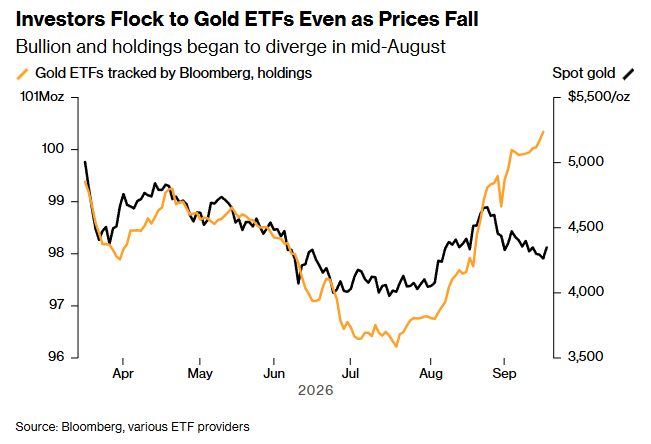
Investors have poured into gold in recent weeks, betting that this metal's long-term driver will continue. Gold ETFs recorded inflows even as prices fell.
However, Federal Reserve Chairman Kevin Walsh's statement on inflation has boosted market expectations, that is, interest rates will be raised at least once more this year, and interest rates may be raised two more times in 2027. This poses a potential headwind for gold.
As of press time, spot gold rose 0.05% to $4,348 an ounce. Silver rose 0.5% to $65.74 an ounce, surging 3.6% the day before. Platinum and palladium were slightly higher. The US dollar spot index, which measures the trend of the US dollar, was basically flat after falling 0.1% on the previous trading day.