


3 Fintech Stocks Exposed To BRICS Payment Rail Growth
Tariffs, sanctions and new payment rails are being rewritten across the BRICS bloc, and that reshuffle is feeding straight into how cross border money moves. Investors watching de dollarization debates, local currency settlement and BRICS fintech links are seeing both fresh openings and new fault lines. This article walks through three stocks exposed to that news flow and explains why their role in these evolving payment systems might matter for your portfolio.
The three BRICS stocks in this article are only a sample of what this theme throws up, and the full screen surfaced 19 more companies with equally detailed stories that are not covered below. To see the wider field and identify which tickers best fit your own thesis, head straight into the BRICS Cross-Border Fintech & Payment-Rail Providers screener.
XGD (SZSE:300130)
XGD builds payment terminals such as smart POS, QR and facial recognition devices that sit at the front of BRICS payment rails across China and overseas. Recent revenue was about CN¥2.2b from China and CN¥1.4b abroad, with a market value near CN¥10.3b.
XGD gives you pure exposure to the hardware that makes BRICS local currency and cross border digital payments actually work, from smart POS to biometric terminals. Earnings momentum, dividend payouts and international reach all matter here, depending on how one unseen pressure on its funding model plays out.
That funding squeeze is exactly why you may want to review the XGD financial health report before capital needs start reshaping XGD’s payout story.
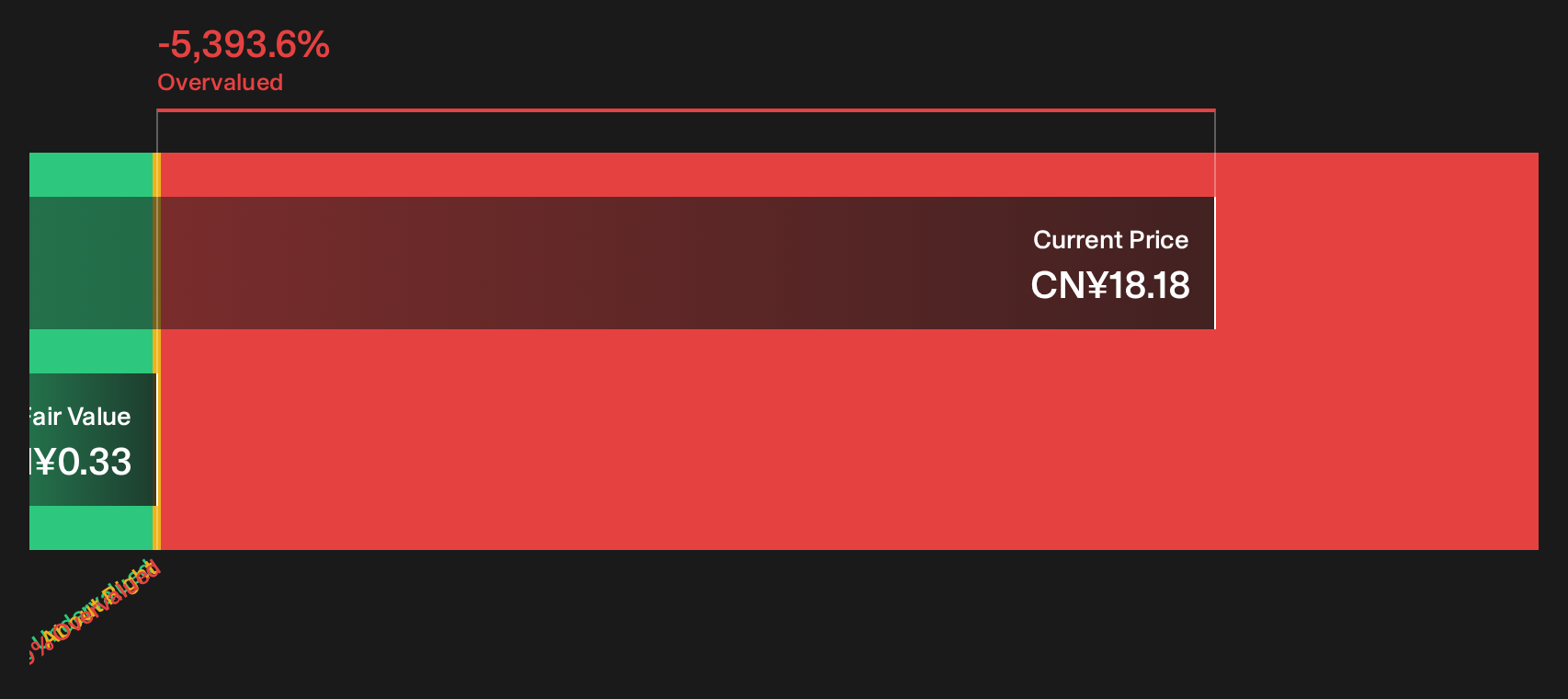
One MobiKwik Systems (NSEI:MOBIKWIK)
One MobiKwik Systems sits squarely in the BRICS fintech theme, running consumer and merchant payment rails that can plug into cross-border and local currency flows. Its financial and payment services arm generated about ₹11.3b in revenue, with the stock valued around ₹16.5b.
For BRICS-focused investors tracking how local-currency payment rails are spreading from day-to-day consumer use into wider trade and credit flows, One MobiKwik Systems reads like a live case study rather than a side bet.
"Rising adoption of UPI in India is feeding a growing funnel of transacting users on MobiKwik. If wallet-based UPI monetisation through Pocket UPI takes longer than management expects, or the eventual MDR or interchange framework is less favourable than the industry hopes, the mix shift toward UPI could cap or dilute payments revenue growth and put pressure on net margins."
The real swing factor is how a single pricing decision in this network could ripple through user volumes, fee pools and, eventually, earnings quality.
That pricing ripple is exactly what the full narrative for One MobiKwik Systems unpacks. It traces where accelerating UPI adoption could either compress take-rates or unlock a more profitable user funnel.

Zaggle Prepaid Ocean Services (NSEI:ZAGGLE)
Zaggle Prepaid Ocean Services plugs into the BRICS payments theme through B2B expense and card workflows, earning about ₹11.8b from Propel gift cards, ₹7.7b from program fees and ₹0.5b from SaaS and service charges, with a roughly ₹25.1b market value.
Zaggle Prepaid Ocean Services matters for this BRICS payments screen because its spend platforms and prepaid card rails touch exactly the corporate flows policy makers want to shift into local currencies.
"The ongoing adoption of digital payment solutions and a shift towards cashless economies, both in India and globally, is associated with increasing prepaid card and digital expense management usage, which in turn can support revenue and expand the long-term addressable market for companies in this space."
What really moves the needle is how one unresolved pressure on profitability shapes the cash needed to keep scaling those payment workflows.
That profitability question is exactly where the story gets interesting, and the full narrative for Zaggle Prepaid Ocean Services explains how Zaggle Prepaid Ocean Services could turn today’s expense rails into a stronger earnings engine.

Seeking Alternatives Before The Crowd?
Fresh themes move first and fast. Breakout ideas rarely stay under the radar for long before momentum catches on and prices start flying. Do not delay; consider getting in early.
- Spot sturdy businesses before the rush by scanning the list of solid balance sheet and fundamentals (194 results) that filters for strong finances while the rest of the market is still distracted.
- Ride structural trends with the 39 power grid technology and infrastructure stocks and track companies building tomorrow’s electricity backbone while the opportunity is still quietly building.
- Target future infrastructure candidates through the 89 AI infrastructure stocks and follow the picks providing the data-center and chip backbone supporting AI-related activity.
This article by Simply Wall St is general in nature. We provide commentary based on historical data and analyst forecasts only using an unbiased methodology and our articles are not intended to be financial advice. It does not constitute a recommendation to buy or sell any stock, and does not take account of your objectives, or your financial situation. We aim to bring you long-term focused analysis driven by fundamental data. Note that our analysis may not factor in the latest price-sensitive company announcements or qualitative material. Simply Wall St has no position in any stocks mentioned.
Have feedback on this article? Concerned about the content? Get in touch with us directly. Alternatively, email editorial-team@simplywallst.com