


How Investors Are Reacting To Omnicell (OMCL) Pharmacy Compliance Integration
- TraceLink announced that its DSCSA compliance platform has been integrated into Omnicell’s central pharmacy inventory systems, allowing hospital pharmacies to handle product verification, traceability, and audit-ready reporting directly within existing medication receiving workflows.
- This tie-up plugs Omnicell customers into TraceLink’s large authenticated supply chain network, which may ease compliance workloads for hospital teams already facing operational and cost pressure.
- Next, the focus will be on how Omnicell’s investment narrative could shift as DSCSA compliance becomes embedded within core pharmacy workflows.
Omnicell Investment Narrative Recap
To own Omnicell, you need to believe hospitals keep prioritizing medication safety, automation, and compliance, and that this ultimately supports the firm’s shift toward higher margin, recurring software and services. The TraceLink DSCSA integration fits that story by embedding Omnicell deeper into pharmacy workflows, although on its own it does not rewrite the short term picture.
The near term swing factor still sits in execution. Management needs to convert that embedded footprint into steadier SaaS adoption while keeping tariff and supply chain costs from eating into already thin margins. The biggest risk remains slower capital spending by hospitals, which could stretch automation purchase cycles and make progress more uneven.
The TraceLink tie up connects directly to Omnicell’s push around OmniSphere and broader cloud based platforms. Both efforts lean on the same idea: make medication data cleaner and more connected, then layer software, analytics, and compliance workflows on top. That is where the recurring revenue story lives and where margin improvement is likeliest to show up operationally.
Upcoming appearances such as the Wells Fargo Healthcare Conference on 9 September 2026 give the company a stage to explain how DSCSA integration, OmniSphere rollout, and newer offerings like MedVision and MedTrack fit together. For you as an investor, the key questions stay practical: are hospitals signing multi year software and service deals, and are those contracts offsetting tariff, macro, and competitive pressure in a visible way?
Omnicell's current analyst script points to revenues of US$1.4b and earnings of US$71.2 million by 2029. This outlook is built on a projected 4.4% yearly revenue growth rate and a move from US$20.4 million in earnings today to that future level, an increase of about US$50.8 million.
Uncover how Omnicell's fair value indicates an 87% potential upside to its current price before momentum traders close that gap.
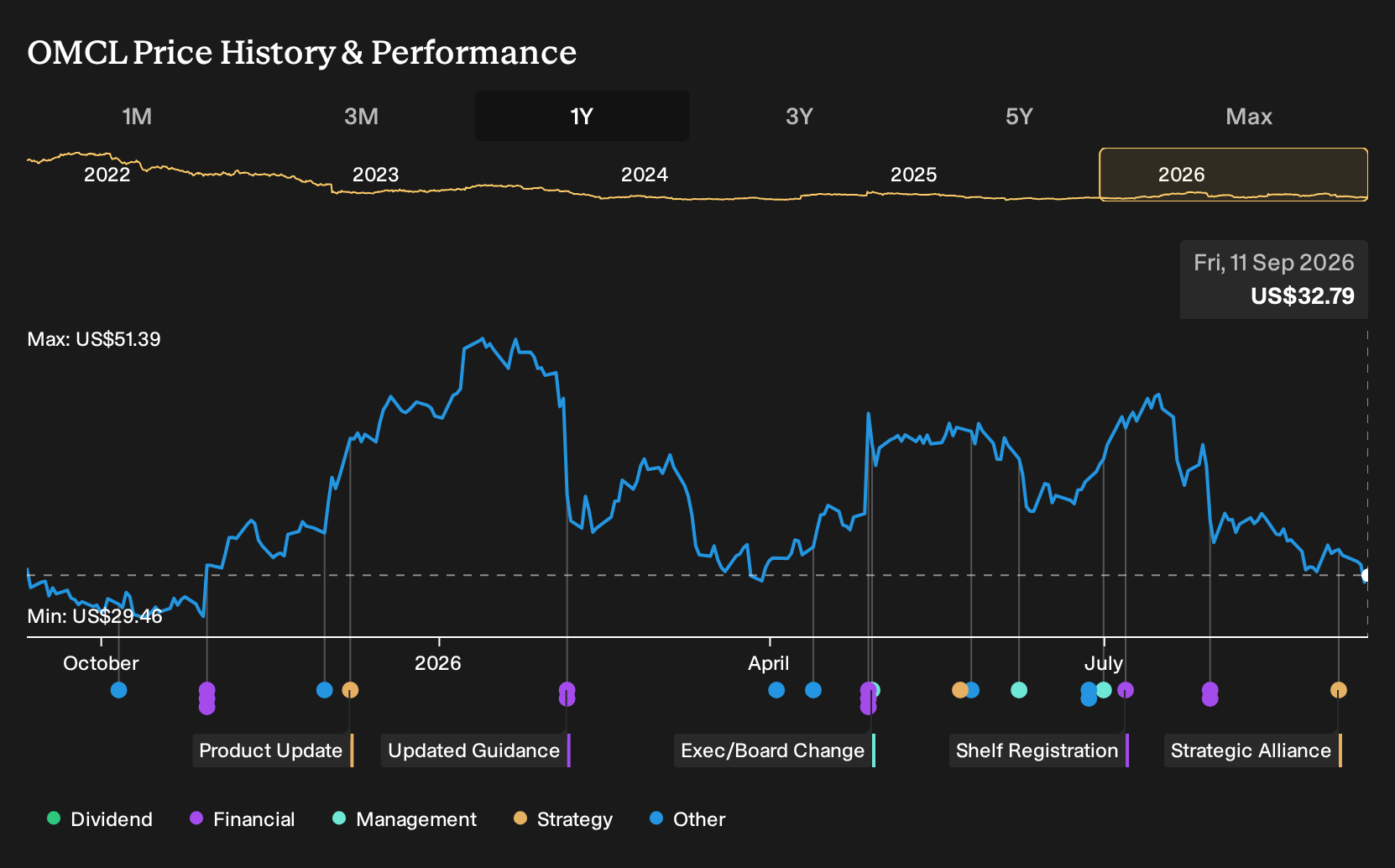
Exploring Other Perspectives
One alternate view on Omnicell leans hard into DSCSA as a real catalyst. The most optimistic analysts were already modeling roughly 5.7% annual revenue growth and about US$83.0 million of earnings by 2029. That is far above consensus. You can treat this new TraceLink integration as a test of whether that rosier path starts to look more realistic or needs a rethink.
Explore 2 other Omnicell fair value estimates, including one that suggests as much as 113% upside from the current price.
Form Your Own Verdict
Don't just follow the ticker. Dig into the data and build a conviction that's truly your own.
- A great starting point for your Omnicell research is our analysis highlighting 4 key rewards that could impact your investment decision.
- See our latest analysis for Omnicell. The report includes a comprehensive fundamental analysis summarized in a single visual, the Snowflake, making it easy to evaluate Omnicell's overall financial health at a glance.
Looking For More Ideas Beyond Omnicell?
Once you have formed a view on Omnicell, it can help to set it alongside other opportunities with different risk, income, and valuation profiles. The Simply Wall St Screener gives you a way to do that methodically rather than stock by stock guesswork.
- If capital preservation is high on your list, start with a basket of resilient companies by reviewing 11 resilient stocks with low risk scores that aim to keep volatility and business risk in check.
- For investors who care most about balance sheet strength, compare Omnicell against a list of solid balance sheet and fundamentals (23 results) that can better withstand shocks and funding stress.
- If you are hunting for underappreciated opportunities, line Omnicell up next to a 31 high quality undervalued stocks and see which businesses offer a mix of quality and price that fits your framework.
This article by Simply Wall St is general in nature. We provide commentary based on historical data and analyst forecasts only using an unbiased methodology and our articles are not intended to be financial advice. It does not constitute a recommendation to buy or sell any stock, and does not take account of your objectives, or your financial situation. We aim to bring you long-term focused analysis driven by fundamental data. Note that our analysis may not factor in the latest price-sensitive company announcements or qualitative material. Simply Wall St has no position in any stocks mentioned.
Have feedback on this article? Concerned about the content? Get in touch with us directly. Alternatively, email editorial-team@simplywallst.com