


Merck (MRK) Stock May Be 39% Below Fair Value Despite Cancer Trial Progress
Merck stock has delivered strong gains over the past few years, yet the valuation signals are split, as a Discounted Cash Flow (DCF) view points to a sizable gap to intrinsic value while market based multiples suggest the shares already carry a premium. That mix leaves investors weighing a low overall value score against an intrinsic value estimate that screens the stock as materially undervalued.
- Over the past 5 years, Merck has returned 132.6%, which puts recent pricing on a very different footing than earlier in the period when expectations were lower.
- Development of oncology combinations around Keytruda and antibody drug conjugates, along with new products such as the oral PCSK9 inhibitor LIPFENDRA, can support cash flow expectations, while patent expiries and expanding drug price negotiations may restrain what investors are willing to pay for that pipeline.
- The broader checks are mixed, with a low value score of 2 out of 6 indicating that Merck does not screen as a clear bargain, even though the DCF estimate suggests the shares trade about 38.8% below intrinsic value and multiples screen as overvalued.
The issue now is whether Merck’s recent share gains already reflect the pipeline and product news flow, or if the intrinsic value estimate still points to room for further upside in the longer run.
Spot opportunities beyond Merck by scanning a curated list of healthcare stocks where valuation and fundamentals still look compelling through solid balance sheet and fundamentals stocks screener (23 results).Is Merck a Bargain on Cash Flow?
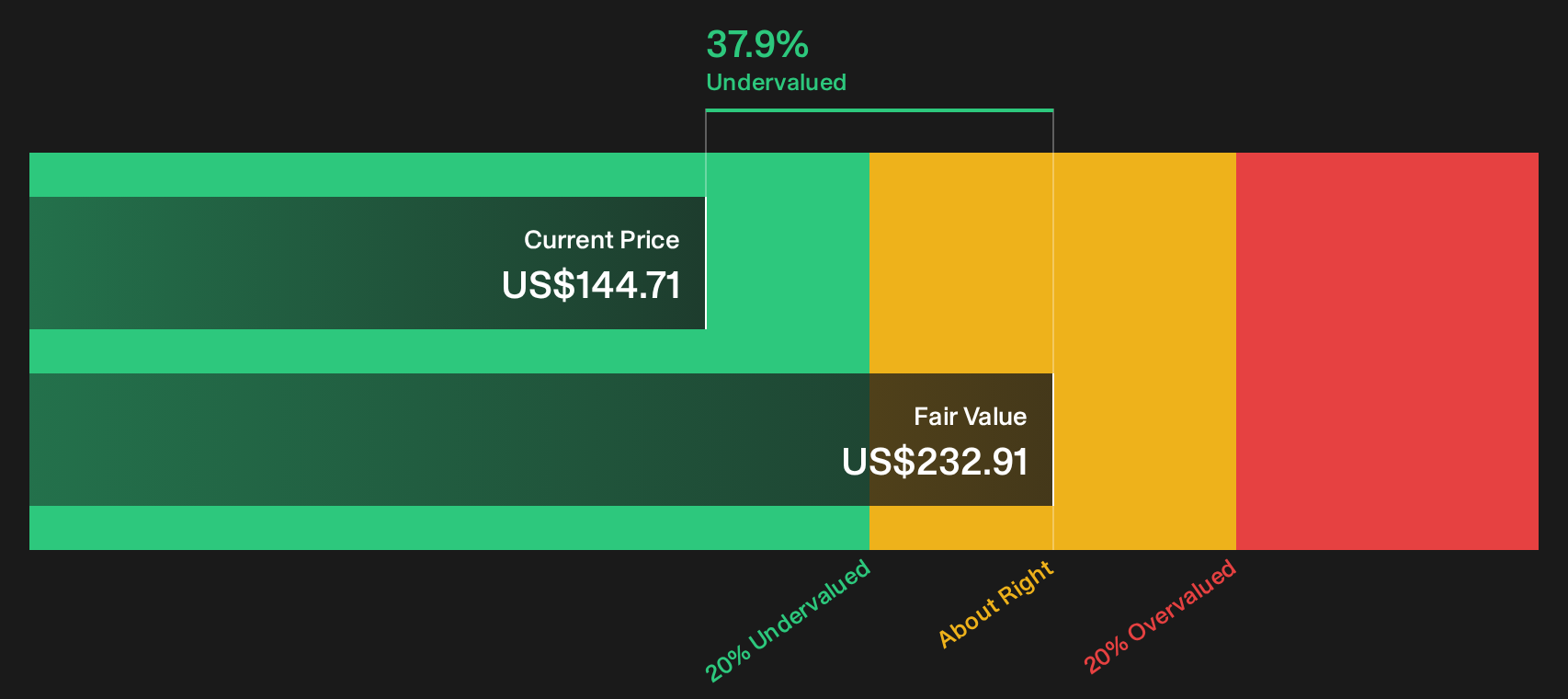
The Discounted Cash Flow model looks at what Merck’s future cash generation could be worth in today’s dollars. Merck currently produces last twelve month free cash flow of about $16.1b, and the projection path in this model assumes growing, but not explosive, cash flows that level off gradually over the next decade.
On those assumptions, the DCF points to an estimated intrinsic value of about $235 per share in dollar terms. This implies the stock trades roughly 38.8% below that estimate. Because the Medicare drug price negotiation program has advanced and Merck recently lost a legal challenge to it, that policy overhang helps explain why the share price may still sit below what the cash flow model suggests.
On this DCF view, Merck stock appears undervalued relative to its projected cash generation.
Our Discounted Cash Flow (DCF) analysis suggests Merck is undervalued by 38.8%. Track this in your watchlist or portfolio, or discover 31 more high quality undervalued stocks.
Is Merck Getting Expensive on Earnings?
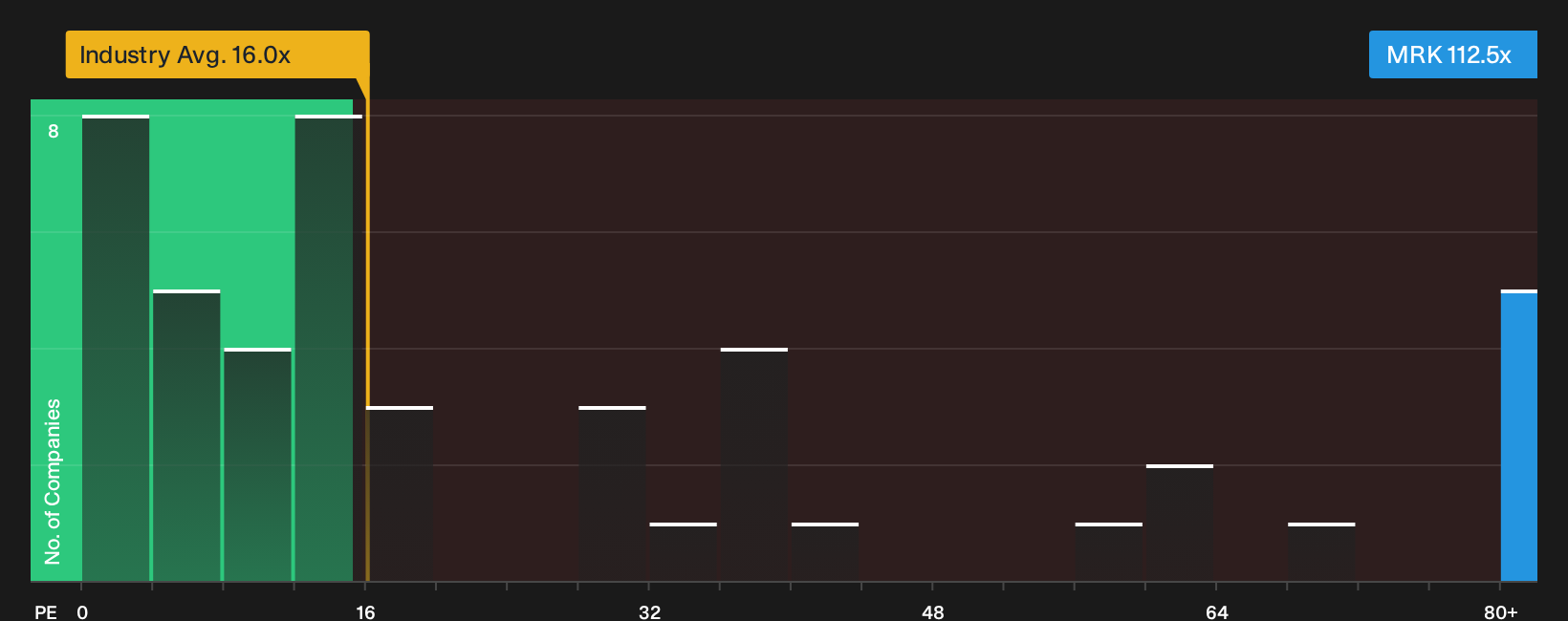
P/E works well for Merck because earnings power still anchors how investors think about a large, mature pharma group with a broad product base. On this measure, the stock trades on about 111.9x earnings, compared with a pharmaceuticals sector average of roughly 16.0x and a peer group around 29.5x.
A fair P/E multiple for Merck, based on its size, risk profile and profitability, is estimated at about 48.5x. The current valuation sits far above that level. This suggests investors are already paying a steep premium for the oncology pipeline, new launches such as LIPFENDRA and the broader drug portfolio despite policy pressure on pricing.
On the P/E lens alone, Merck stock appears clearly overvalued relative to both its sector and the tailored fair multiple estimate.
See what the numbers say about this price — find out in our valuation breakdown.
The Merck Narrative: What Would Justify Today's Price?
Narratives pick up where this Merck valuation puzzle leaves off and spell out which future paths for growth, profitability and earnings would need to play out for the current share price to look high or low. Instead of stopping at a single ratio or DCF output, they unpack the specific assumptions that number rests on so you can track whether Merck’s actual progress lines up with the future that is implicitly being priced in, all on Simply Wall St’s Community page.
Community views on Merck could hardly be further apart, with one camp focused on pipeline potential and the other on policy and Keytruda risk.
Bull case: roughly fairly valued
"With its acquisition and licensing strategy, Merck has nearly tripled its late-phase pipeline since 2021, which is expected to have a potential commercial opportunity of over $50 billion by the mid-2030s, driving earnings growth…"
Read the full Bull Case to see why Merck could be undervalued
Bear case: 33% overvalued
"Intensifying global pressure on drug pricing from policymakers, insurers, and patients, including the prospect of government-mandated price cuts and the impending impact of the Inflation Reduction Act, threatens to erode future revenue growth and compress net margins across Merck's flagship and pipeline products…"
Read the full Bear Case to see why Merck could be overvalued
Do you think there's more to the story for Merck? Head over to our Community to see what others are saying!
The Bottom Line
Merck looks cheap on a Discounted Cash Flow (DCF) view, with the intrinsic value estimate implying a sizeable discount to the current share price, while the P/E and other market multiples point to an overvalued stock that already embeds heavy optimism about the pipeline. That clash, alongside a weak overall value profile, suggests the market is paying up for growth, sentiment and oncology potential, even though the cash flow model paints a different picture. The real swing factor from here is whether Merck can translate its pipeline and pricing power into cash generation that matches the optimistic earnings multiple rather than the more cautious market view on policy and patent risk.
This article by Simply Wall St is general in nature. We provide commentary based on historical data and analyst forecasts only using an unbiased methodology and our articles are not intended to be financial advice. It does not constitute a recommendation to buy or sell any stock, and does not take account of your objectives, or your financial situation. We aim to bring you long-term focused analysis driven by fundamental data. Note that our analysis may not factor in the latest price-sensitive company announcements or qualitative material. Simply Wall St has no position in any stocks mentioned.
Have feedback on this article? Concerned about the content? Get in touch with us directly. Alternatively, email editorial-team@simplywallst.com