


Here's Why We're Not Too Worried About Phinergy's (TLV:PNRG) Cash Burn Situation
We can readily understand why investors are attracted to unprofitable companies. By way of example, Phinergy (TLV:PNRG) has seen its share price rise 113% over the last year, delighting many shareholders. Having said that, unprofitable companies are risky because they could potentially burn through all their cash and become distressed.
Given its strong share price performance, we think it's worthwhile for Phinergy shareholders to consider whether its cash burn is concerning. In this article, we define cash burn as its annual (negative) free cash flow, which is the amount of money a company spends each year to fund its growth. The first step is to compare its cash burn with its cash reserves, to give us its 'cash runway'.
How Long Is Phinergy's Cash Runway?
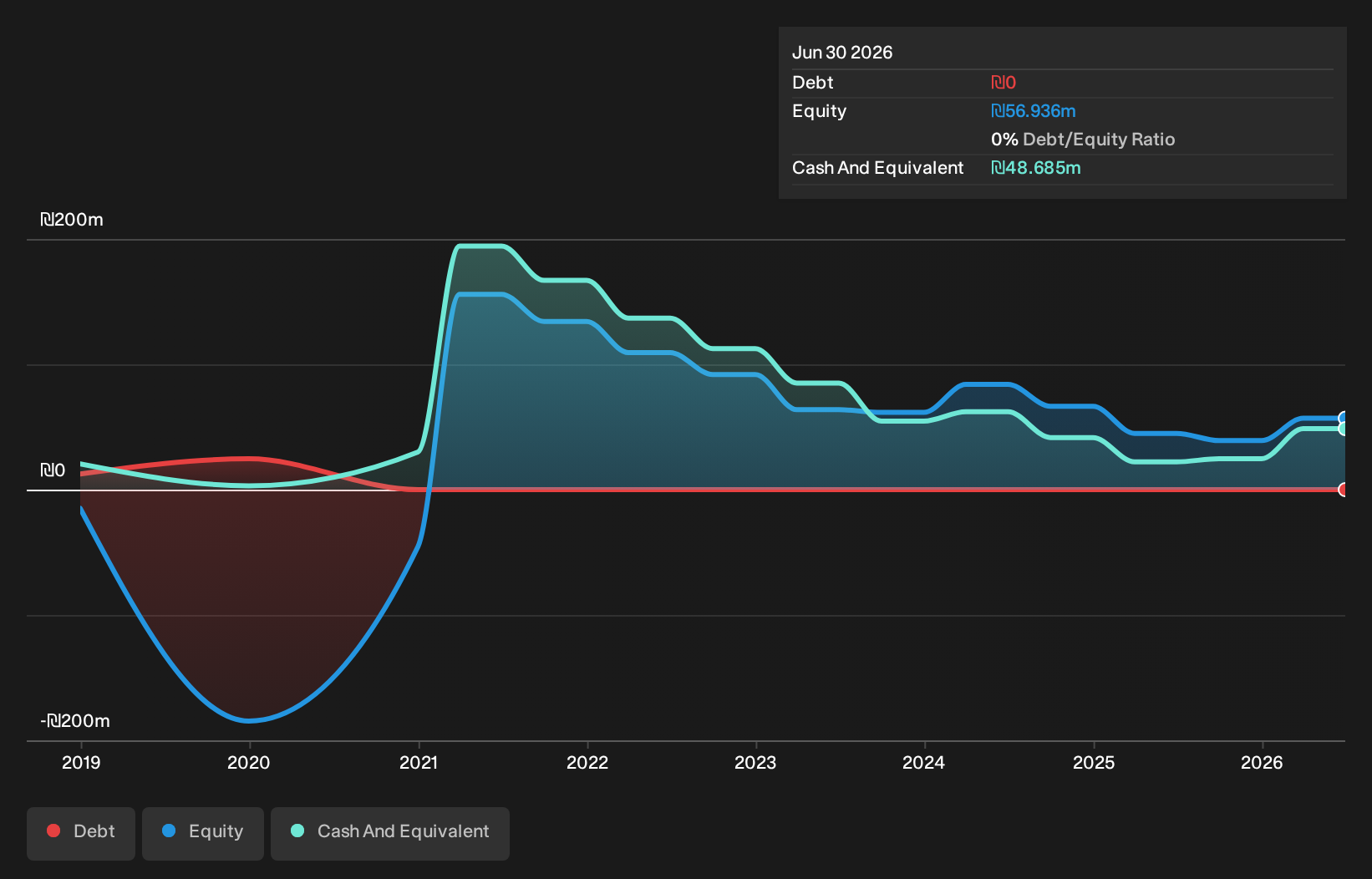
You can calculate a company's cash runway by dividing the amount of cash it has by the rate at which it is spending that cash. When Phinergy last reported its June 2026 balance sheet in August 2026, it had zero debt and cash worth ₪49m. Looking at the last year, the company burnt through ₪34m. Therefore, from June 2026 it had roughly 17 months of cash runway. While that cash runway isn't too concerning, sensible holders would be peering into the distance, and considering what happens if the company runs out of cash. You can see how its cash balance has changed over time in the image below.
Check out our latest analysis for Phinergy
How Is Phinergy's Cash Burn Changing Over Time?
In our view, Phinergy doesn't yet produce significant amounts of operating revenue, since it reported just ₪1.1m in the last twelve months. Therefore, for the purposes of this analysis we'll focus on how the cash burn is tracking. With cash burn dropping by 2.3% it seems management feel the company is spending enough to advance its business plans at an appropriate pace. Phinergy makes us a little nervous due to its lack of substantial operating revenue. So we'd generally prefer stocks from this list of stocks that have analysts forecasting growth.
How Hard Would It Be For Phinergy To Raise More Cash For Growth?
Even though it has reduced its cash burn recently, shareholders should still consider how easy it would be for Phinergy to raise more cash in the future. Generally speaking, a listed business can raise new cash through issuing shares or taking on debt. One of the main advantages held by publicly listed companies is that they can sell shares to investors to raise cash and fund growth. By looking at a company's cash burn relative to its market capitalisation, we gain insight on how much shareholders would be diluted if the company needed to raise enough cash to cover another year's cash burn.
Phinergy has a market capitalisation of ₪373m and burnt through ₪34m last year, which is 9.0% of the company's market value. Given that is a rather small percentage, it would probably be really easy for the company to fund another year's growth by issuing some new shares to investors, or even by taking out a loan.
So, Should We Worry About Phinergy's Cash Burn?
The good news is that in our view Phinergy's cash burn situation gives shareholders real reason for optimism. One the one hand we have its solid cash runway, while on the other it can also boast very strong cash burn relative to its market cap. While we're the kind of investors who are always a bit concerned about the risks involved with cash burning companies, the metrics we have discussed in this article leave us relatively comfortable about Phinergy's situation. Separately, we looked at different risks affecting the company and spotted 3 warning signs for Phinergy (of which 2 can't be ignored!) you should know about.
Of course, you might find a fantastic investment by looking elsewhere. So take a peek at this free list of interesting companies, and this list of stocks growth stocks (according to analyst forecasts)
Have feedback on this article? Concerned about the content? Get in touch with us directly. Alternatively, email editorial-team (at) simplywallst.com.
This article by Simply Wall St is general in nature. We provide commentary based on historical data and analyst forecasts only using an unbiased methodology and our articles are not intended to be financial advice. It does not constitute a recommendation to buy or sell any stock, and does not take account of your objectives, or your financial situation. We aim to bring you long-term focused analysis driven by fundamental data. Note that our analysis may not factor in the latest price-sensitive company announcements or qualitative material. Simply Wall St has no position in any stocks mentioned.