


Is Sempra Stock Underperforming the Dow?
With a market cap of around $55 billion, Sempra (SRE) operates regulated utilities and energy infrastructure across the United States and Mexico. The company runs its business through three main segments: Sempra California; Sempra Texas Utilities; and Sempra Infrastructure, providing natural gas, electricity transmission and distribution, and energy infrastructure services.
Companies valued at $10 billion or more are generally classified as “large-cap” stocks, and Sempra fits this criterion perfectly. Sempra serves millions of customers and develops large-scale energy projects to support access to cleaner energy.
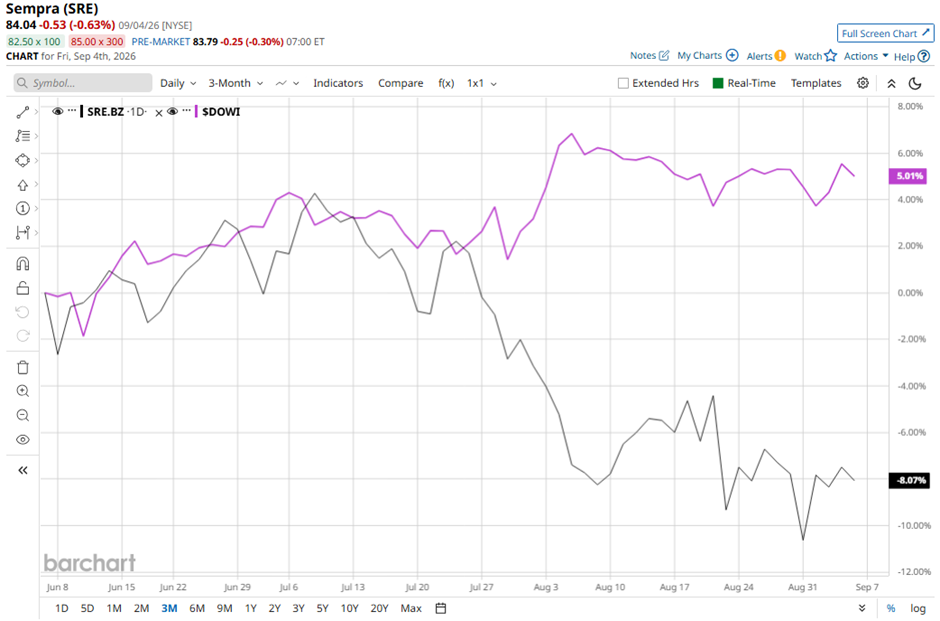
Shares of the San Diego, California-based company have fallen 16.8% from its 52-week high of $101.04. Over the past three months, the stock has declined nearly 7%, underperforming the broader Dow Jones Industrials Average's ($DOWI) 3.6% gain during the same period.
SRE stock is down 4.8% on a YTD basis, lagging behind Dow Jones' 11.1% return. Longer term, shares of the energy infrastructure company have risen 2.3% over the past 52 weeks, compared to DOWI's 17.1% increase over the same time frame.
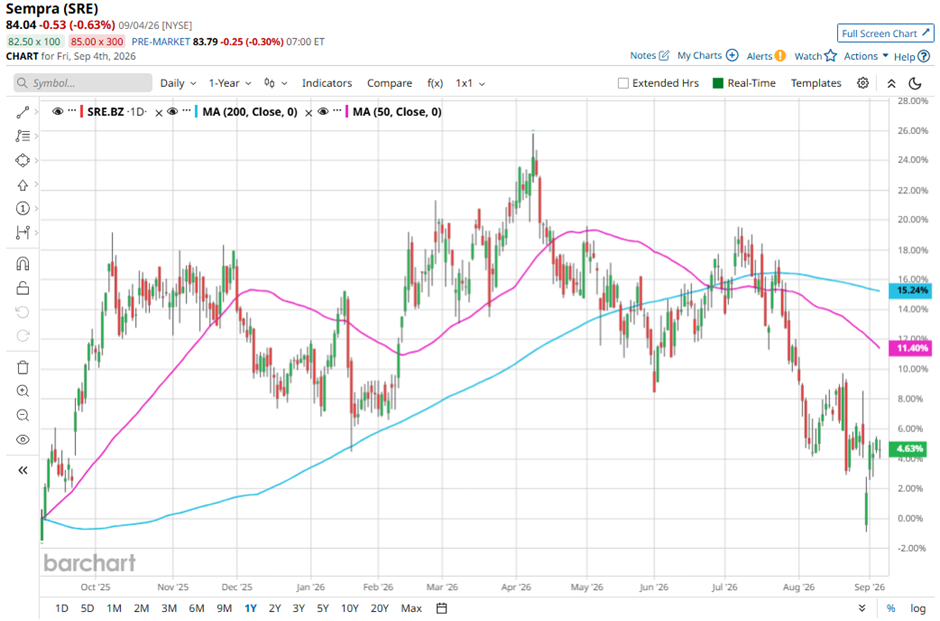
The stock has been trading below its 50-day and 200-day moving averages since late July.
Despite reporting better-than-expected Q2 2026 adjusted EPS of $1.16, Sempra shares fell marginally on Aug. 6 as the company reported revenue of $2.997 billion, falling below the consensus estimate. Investors were also cautious as long-term debt increased to $31.02 billion from $28.98 billion at the end of 2025 and the company's 2026 EPS guidance of $4.80 - $5.30 had a midpoint below the consensus estimate.
In comparison, SRE stock has outperformed its rival, Vistra Corp. (VST). VST stock has dropped 7.5% YTD and 21.3% over the past 52 weeks.
Despite the stock’s underperformance relative to the Dow, analysts remain strongly optimistic on SRE. The stock has a consensus rating of “Strong Buy” from 20 analysts in coverage, and the mean price target of $101.67 is a premium of nearly 21% to current levels.
On the date of publication, Sohini Mondal did not have (either directly or indirectly) positions in any of the securities mentioned in this article. All information and data in this article is solely for informational purposes. For more information please view the Barchart Disclosure Policy here.