


3 Indian Market Infrastructure Stocks Riding The NSE Closing Auction Shift
The rules of the game around the closing bell just changed. NSE’s new Closing Auction Session has turned the last 15 minutes into a high stakes liquidity funnel, where Rs 39,718 crore recently traded in a single burst, and Indian Stock Exchange & Market Infrastructure Providers are right in the middle of that action. This article walks through 3 stocks that appear most directly exposed to this new closing auction reality and explains why that may matter for your portfolio decisions.
These three Indian Stock Exchange & Market Infrastructure Providers are only a starting sample. The full screen surfaced 25 more listed businesses with equally detailed narratives that are not covered below.
Head straight into the Indian Stock Exchange & Market Infrastructure Providers screener to identify, analyze, and focus on the highest conviction ideas that fit your own view of this closing auction shift.
BSE (NSEI:BSE)
Overview: BSE operates one of India’s main stock exchanges, running trading, clearing, settlement, and market data services across multiple asset classes.
Operations: BSE generates about ₹57,884 million by facilitating securities trading and related services, closely tying its income to overall market activity levels.
Market Cap: ₹1,405.7 billion
BSE matters here because when closing auctions and index rebalances reshape how liquidity behaves, the venue operating the equity and derivatives rails can show a clear impact.
"Infrastructure upgrades and product diversification could place BSE ahead of competitors, opening additional revenue sources and potentially higher margins across various market segments."
What currently matters most for BSE is how one largely unseen pressure around closing auction depth ultimately feeds through to its pricing power.
That pressure point is exactly what makes the full narrative for BSE worth reading for how BSE’s closing auction economics could be quietly accelerating or masking the real story.
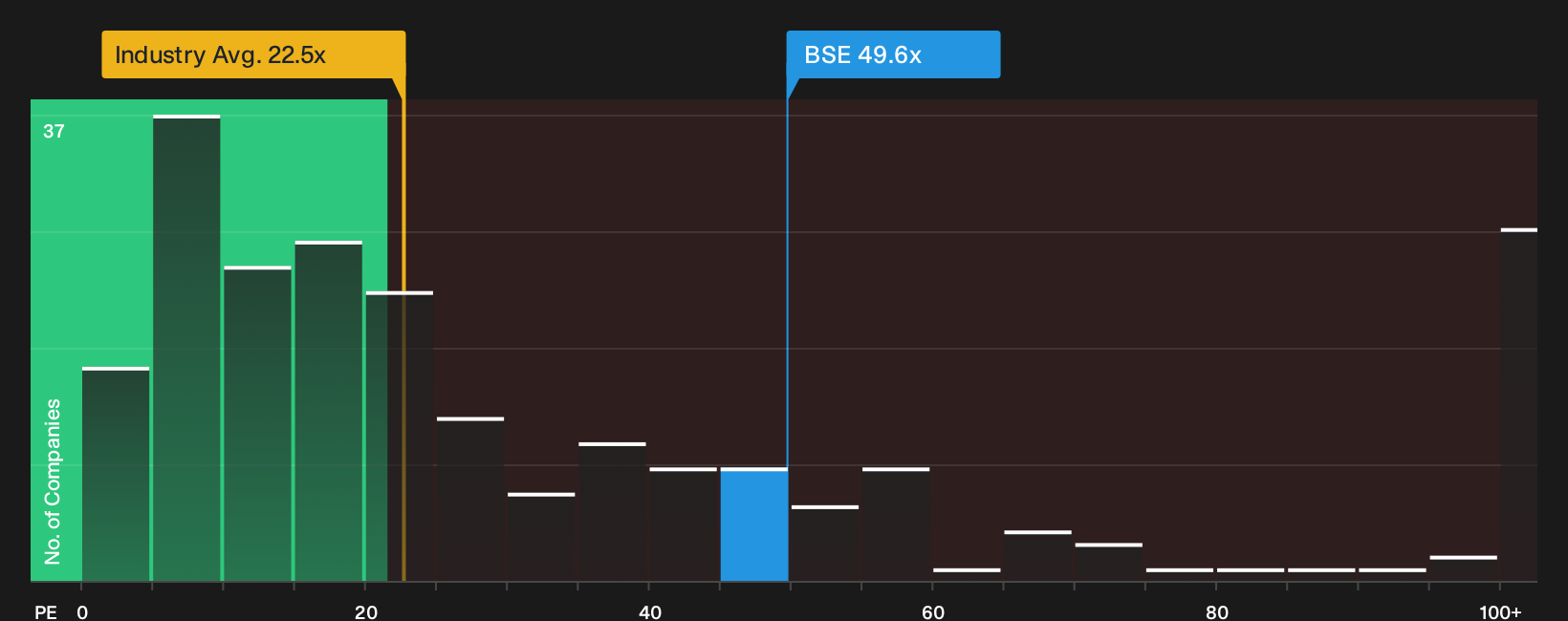
Indian Energy Exchange (NSEI:IEX)
Overview: Indian Energy Exchange runs an automated, auction-based power trading platform in India, handling electricity, green power, and related certificates.
Operations: Indian Energy Exchange generates about ₹7,656 million from its power exchange platform, with all reported revenue currently coming from India.
Market Cap: ₹104.5 billion
Indian Energy Exchange matters for this screen because it is a pure-play, auction-driven power bourse that turns institutional and algorithmic orders into real-world electricity deals.
"The mandated implementation of market coupling in the Day Ahead Market by February 2026 is expected to erode IEX's long-standing dominance and unique price discovery advantage. It is also anticipated to allow competitors direct access to volumes and to drive a loss of market share, which could ultimately threaten revenue growth and reduce operating leverage."
What investors will watch most closely is how a single shift in how energy trades clear could ripple through pricing power and fee resilience.
That is where the real inflection risk and opportunity could sit, and the full narrative for Indian Energy Exchange explains how IEX’s auction economics might be quietly decoupling from the headline story.

Multi Commodity Exchange of India (NSEI:MCX)
Overview: Multi Commodity Exchange of India runs a regulated commodity derivatives marketplace in India, handling trading, clearing, settlement, and data services.
Operations: MCX generates about ₹27,750 million from its commodity exchange platform, with all reported income currently coming from India.
Market Cap: ₹849.2 billion
MCX matters in this closing auction story because it is where increasingly sophisticated commodity derivatives trading, clearing, and data flows are being wired into India’s market plumbing.
"The continued shift of Indian households and businesses from physical to financial assets has led to increased participation in commodity markets, which is reflected in MCX's record revenue and growing trading volumes."
What investors will really want to watch is how one unresolved pressure on funding and technology spending shapes the durability of those high margins.
That funding strain is exactly where the full narrative for Multi Commodity Exchange of India shows whether MCX’s record revenues are quietly accelerating a durable model or masking future pressure points.

Seeking Alternatives Before Momentum Flies
Fresh opportunities move fast. Breakout stories gain momentum, get caught by the crowd, then pricing power drops while it matters most. Scan these under-the-radar picks and aim to participate early.
- Spot steady compounders with resilient balance sheets before everyone chases them by scanning the list of solid balance sheet and fundamentals (194 results) curated from today’s market data.
- Consider structural demand in critical materials by reviewing the 31 best rare earth metal stocks built to highlight producers tied to long-term supply bottlenecks.
- Explore income ideas that aim to keep cash flows steady while prices move around by checking the 164 dividend fortresses built for yield-focused investors.
This article by Simply Wall St is general in nature. We provide commentary based on historical data and analyst forecasts only using an unbiased methodology and our articles are not intended to be financial advice. It does not constitute a recommendation to buy or sell any stock, and does not take account of your objectives, or your financial situation. We aim to bring you long-term focused analysis driven by fundamental data. Note that our analysis may not factor in the latest price-sensitive company announcements or qualitative material. Simply Wall St has no position in any stocks mentioned.
Have feedback on this article? Concerned about the content? Get in touch with us directly. Alternatively, email editorial-team@simplywallst.com