


What Strabag (WBAG:STR) Shares Earnings Guidance Raise Means For Shareholders
- Strabag reported first half 2026 sales of €9,148.08 million and net income of €119.06 million, with basic EPS from continuing operations of €1.03.
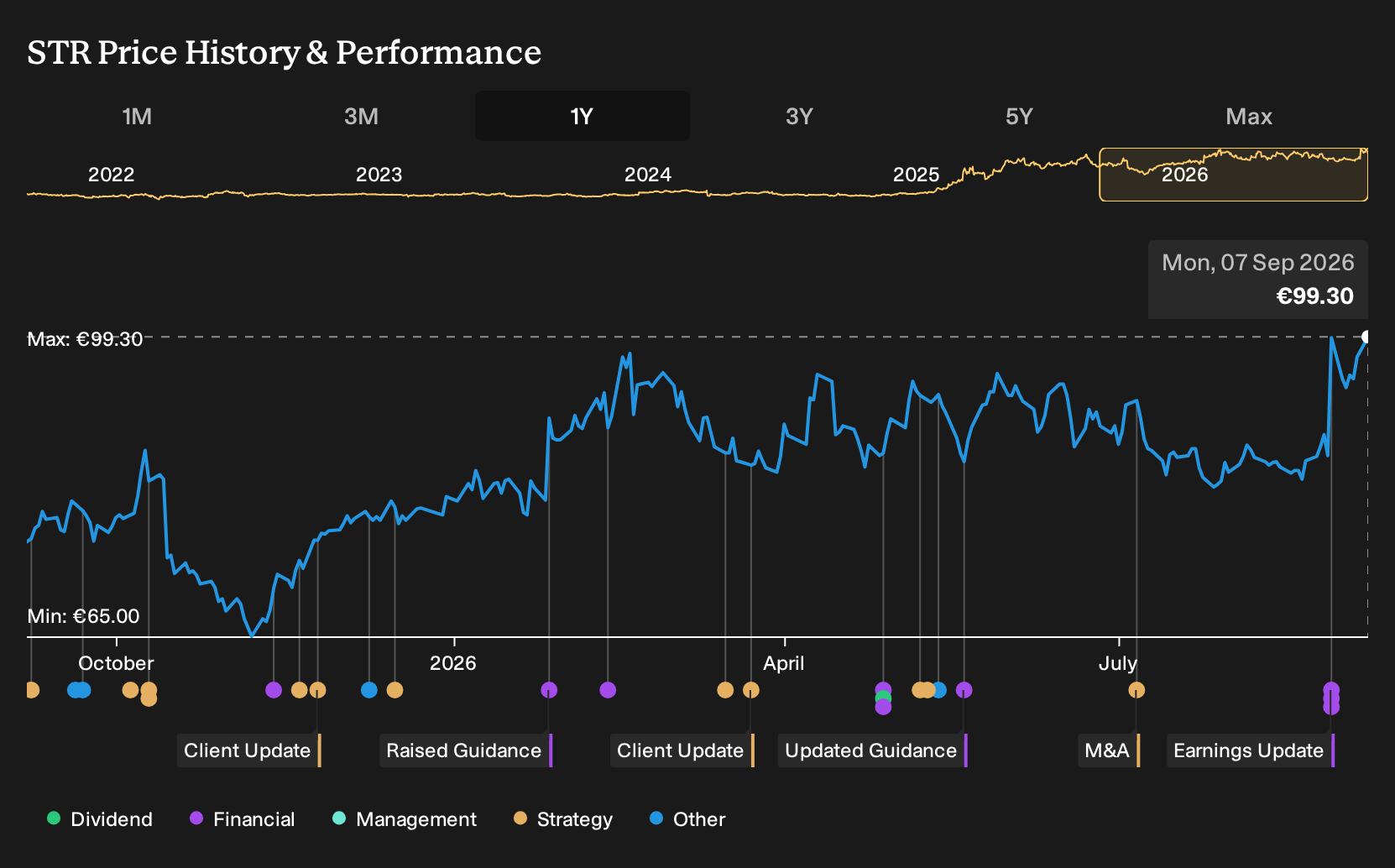
- The company paired these results with a higher EBIT margin target of 5.5% to 6% and a larger 2026 output goal approaching €23b, indicating management confidence in current project execution and demand visibility.
- With Strabag now targeting a higher 2026 EBIT margin range, we will examine how this update reshapes the broader investment narrative.
Scan how Strabag’s raised margin and output goals compare with peers by checking the hand-picked 253 high quality undervalued stocks, which also blend strong operations with disciplined balance sheets.
Strabag Investment Narrative Recap
To own Strabag, you need to be comfortable with a construction group that leans heavily on a large order backlog, public contracts and infrastructure plus energy transition projects, while still operating against a weak residential backdrop in Austria and Germany. The raised EBIT margin range and larger output goal both sit on top of that same foundation. The clearest near term swing factor remains execution quality on big public and infrastructure projects, because pricing and cost control will decide how much of the margin ambition actually shows up in earnings. The key risk is any reversal in public spending priorities.
The upgraded 2026 EBIT margin guidance to 5.5% to 6% is the announcement that matters most here. It directly tests whether Strabag can offset residential softness and rising competition in transport infrastructure with higher quality contracts and disciplined project management. If delivery matches that margin corridor while output volume approaches €23b, the story around the firm’s strong backlog and energy transition work looks more durable. If project execution slips or input costs bite, that same target could become a pressure point for expectations.
Even so, there is a specific pressure point in the Strabag story that only becomes obvious once you examine ...
Read the full Strabag narrative to see the case behind these numbers.
Strabag’s current analyst narrative points to revenue of €22.2b and earnings of €881.5 million by 2029, based on an assumed yearly top line expansion of 5.8% and a move from today’s €916.3 million of earnings to that €881.5 million level, which reflects an earnings decrease of about €34.8 million over the period.
Strabag's forecasts frame fair value at €106.25 against a €99.30 share price, a 7% upside to its current price that could narrow quickly.
Exploring Other Perspectives
Three fair value estimates from the Simply Wall St Community span roughly €77 to about €157 per share, so some retail investors see Strabag as deeply discounted while others price in far more optimism. These views predate the raised EBIT margin and output targets, so you should compare them with your own read on public spending risk and residential exposure.
If you want to see how other investors are thinking about Strabag’s pricing, you can check out the 2 other fair value estimates for Strabag.
The Verdict Is Yours
Disagree with existing narratives? Extraordinary investment returns rarely come from following the herd, so trust your own analysis and judgment.
- A great starting point for your Strabag research is our analysis highlighting 2 key rewards and 3 important warning signs that could impact your investment decision.
- See our latest analysis for Strabag. The report includes a comprehensive fundamental analysis summarized in a single visual, the Snowflake, making it easy to evaluate Strabag's overall financial health at a glance.
Looking for more Strabag sized investment ideas?
Once you have formed a view on Strabag, it can help to cross check that thinking against other businesses with different balance sheets, cash profiles and payout policies. The Simply Wall St screener gives you a quick way to filter those opportunities instead of scrolling endlessly through tickers.
- If capital preservation is high on your list, start with companies that score well on resilience and financial risk by scanning the 308 resilient stocks with low risk scores.
- Income focused investors can widen their watchlist by reviewing the 164 dividend fortresses, which highlights businesses combining higher yields with supporting fundamentals.
- For those hunting for potential mispriced opportunities with strong underlying quality, the 617 high quality undiscovered gems can surface stocks that are less widely followed but backed by solid numbers.
This article by Simply Wall St is general in nature. We provide commentary based on historical data and analyst forecasts only using an unbiased methodology and our articles are not intended to be financial advice. It does not constitute a recommendation to buy or sell any stock, and does not take account of your objectives, or your financial situation. We aim to bring you long-term focused analysis driven by fundamental data. Note that our analysis may not factor in the latest price-sensitive company announcements or qualitative material. Simply Wall St has no position in any stocks mentioned.
Have feedback on this article? Concerned about the content? Get in touch with us directly. Alternatively, email editorial-team@simplywallst.com