


Is Charles Schwab (SCHW) Still Undervalued After New Account Limits?
Charles Schwab stock has nearly doubled over the past three years, yet the valuation checks send a mixed message, with the Excess Returns intrinsic value estimate pointing to moderate undervaluation while traditional market multiples suggest the shares are roughly in line with peers. For investors, that raises the question of whether Schwab's long run in the brokerage and wealth platform space is still pricing in its key opportunities and risks in a balanced way.
- Charles Schwab has delivered a 99.0% return over the past three years, which places extra focus on whether the current price still offers a comfortable margin between market value and intrinsic value estimates.
- Recent moves to tighten rules around tax aware long short and portfolio margin accounts, along with expanding crypto access and rolling out new digital onboarding tools, can influence how investors view Schwab's future fee mix and risk profile.
- The broader valuation checks point to a mixed picture rather than a clear bargain or clear overvaluation, with the stock earning a value score of 3 and trading on earnings multiples that look broadly in line with sector norms.
The issue now is whether Charles Schwab's current share price already reflects the upside implied by the intrinsic value estimate or still leaves room for further value to be realized over time.
Spot opportunities beyond Charles Schwab by reviewing a curated list of 53 high quality undervalued stocks that also pair valuation support with solid fundamentals.Is Charles Schwab Still Cheap on Excess Returns?
The Excess Returns model values Charles Schwab by comparing what shareholders are estimated to earn on equity with the return they could require for holding the stock. For Schwab, the inputs suggest a business that is expected to generate returns on equity meaningfully above its implied cost of equity over time.
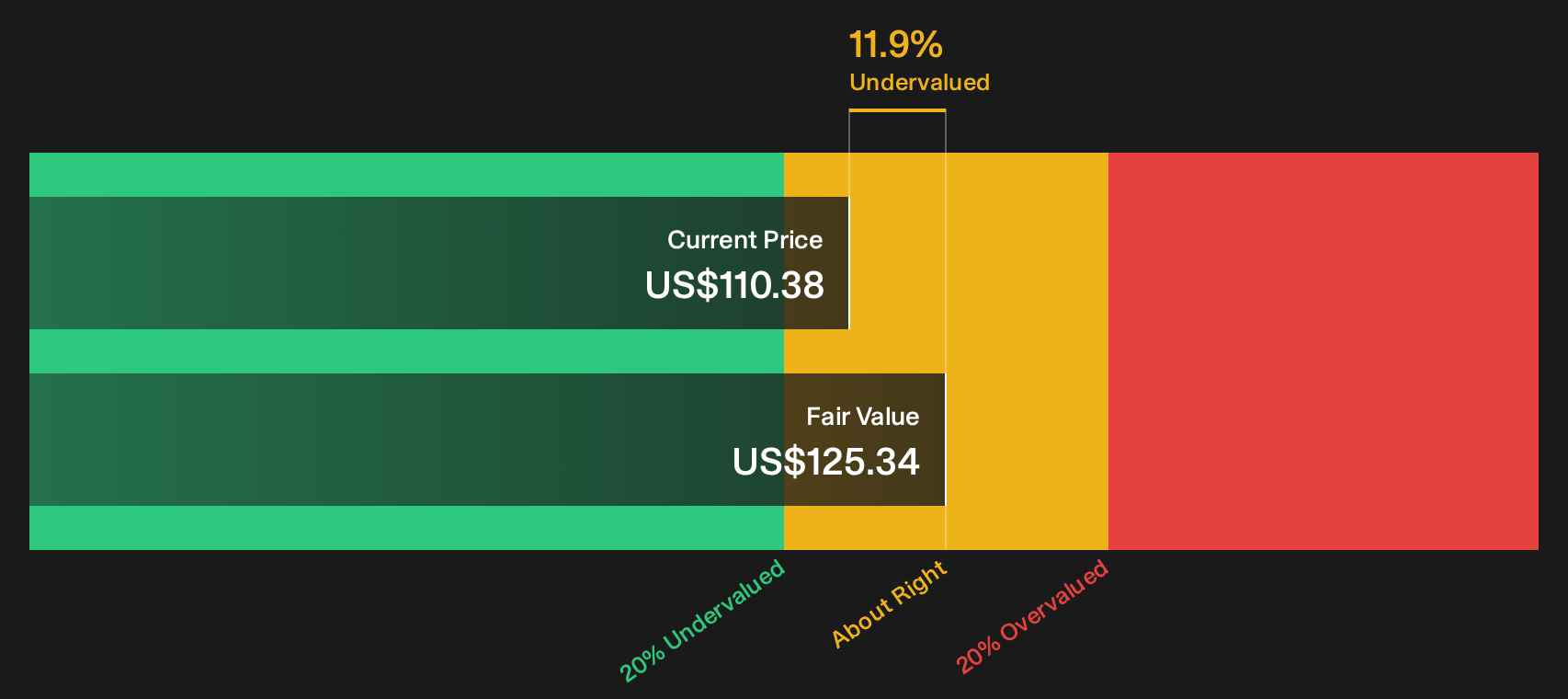
The model uses a book value of $25.42 per share and a stable EPS estimate of $7.45 per share, based on weighted future Return on Equity estimates from 5 analysts. Against an estimated cost of equity of $2.78 per share, this points to an excess return of $4.67 per share and an average Return on Equity of 23.32%. With stable book value projected at $31.96 per share, the Excess Returns model arrives at an intrinsic value of $125.34 per share, which indicates that Charles Schwab stock is 11.9% below this estimate. The recent tightening of rules on tax aware long short and portfolio margin accounts helps explain why some investors may be cautious, even though the model still views Schwab as creating value above its equity cost.
On these Excess Returns assumptions, Charles Schwab stock appears undervalued relative to the model’s intrinsic value estimate.
Our Excess Returns analysis suggests Charles Schwab is undervalued by 11.9%. Track this in your watchlist or portfolio, or discover 53 more high quality undervalued stocks.
Is Charles Schwab Fairly Priced on Earnings?
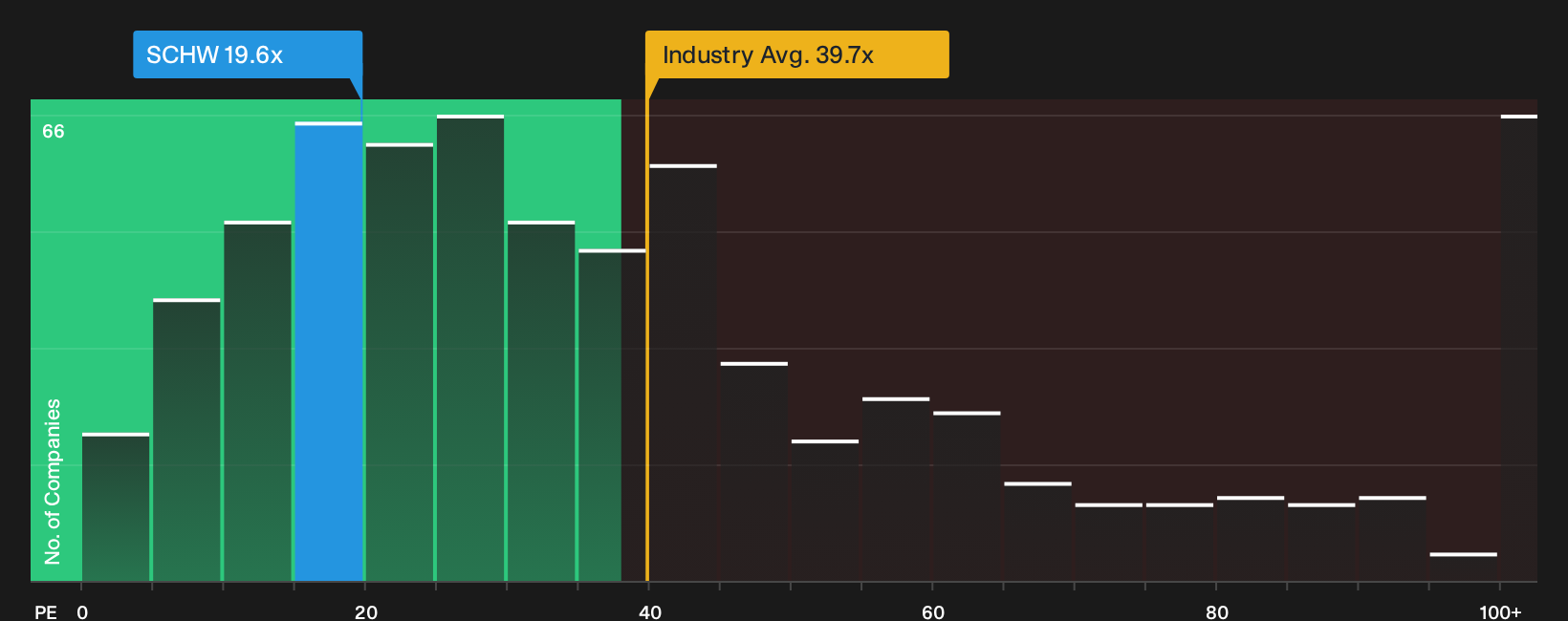
P/E is a useful yardstick for Charles Schwab because earnings are a central driver of how investors value large, diversified financial platforms. On this measure, Schwab trades on a P/E of 19.6x, which is well below the Capital Markets industry average of 39.7x and the peer average of 31.2x.
The tailored fair P/E ratio, which reflects Schwab's specific mix of growth assumptions, margins, size and risk, is 19.6x. That sits almost exactly in line with the current market multiple, so the stock does not screen as meaningfully cheap or expensive on earnings alone, despite the recent policy changes on tax aware long short accounts and portfolio margin.
Overall, Charles Schwab stock appears priced roughly in line with what its earnings profile would suggest on a P/E basis.
See what the numbers say about this price — find out in our valuation breakdown.
The Charles Schwab Narrative: What Would Justify Today's Price?
Simply Wall St Narratives for Charles Schwab pick up where the valuation checks leave off. They spell out which future paths for Charles Schwab's growth, margins and earnings would line up with a meaningfully higher or lower share price than today, and they sit on the company's Community page. Each one links its number to a clear stance on where growth, profitability and risks might go next, so you can revisit the logic as fresh information arrives.
The community is split on Charles Schwab, with one side focusing on quiet compounding potential and the other on whether recent enthusiasm already prices in a lot of good news.
Bull case: 10% undervalued
"Its model blends brokerage, asset management, advisory services, and banking in a way that creates multiple, overlapping revenue streams..."
Read the full Bull Case to see why Charles Schwab could be undervalued
Bear case: 9% overvalued
"Heavy investment in AI, technology and new platforms such as spot crypto could overshoot sustainable demand..."
Read the full Bear Case to see why Charles Schwab could be overvalued
Do you think there's more to the story for Charles Schwab? Head over to our Community to see what others are saying!
The Bottom Line
The Excess Returns intrinsic value estimate points to Charles Schwab stock trading at a discount, while the P/E view suggests pricing that is about right compared with peers. That gap largely comes down to how you weigh Schwab's ability to earn above its equity cost against current market expectations embedded in sector multiples. With broader checks painting a mixed picture, the key question is whether Schwab's fee mix, risk controls and capital use can sustain returns that justify the intrinsic value estimate. Your view on that execution risk is what decides whether the current discount signals opportunity or a fair reflection of the uncertainties ahead.
This article by Simply Wall St is general in nature. We provide commentary based on historical data and analyst forecasts only using an unbiased methodology and our articles are not intended to be financial advice. It does not constitute a recommendation to buy or sell any stock, and does not take account of your objectives, or your financial situation. We aim to bring you long-term focused analysis driven by fundamental data. Note that our analysis may not factor in the latest price-sensitive company announcements or qualitative material. Simply Wall St has no position in any stocks mentioned.
Have feedback on this article? Concerned about the content? Get in touch with us directly. Alternatively, email editorial-team@simplywallst.com