


Cattle, Hog Prices Are Still Trapped and Heading Lower. What to Watch Next.
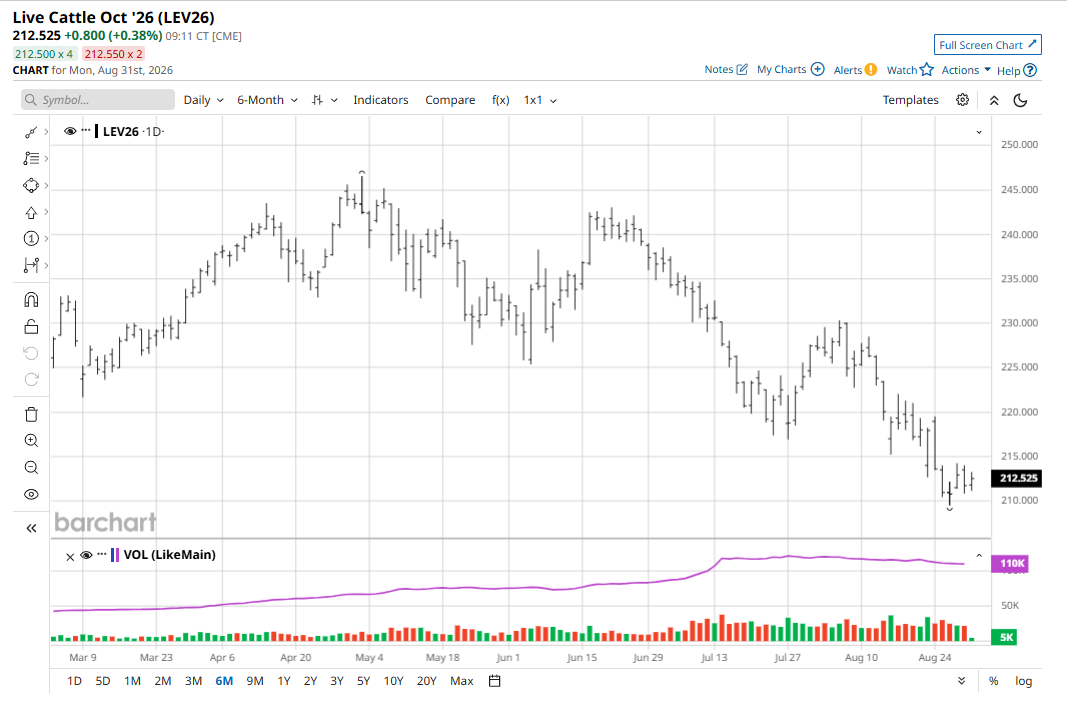
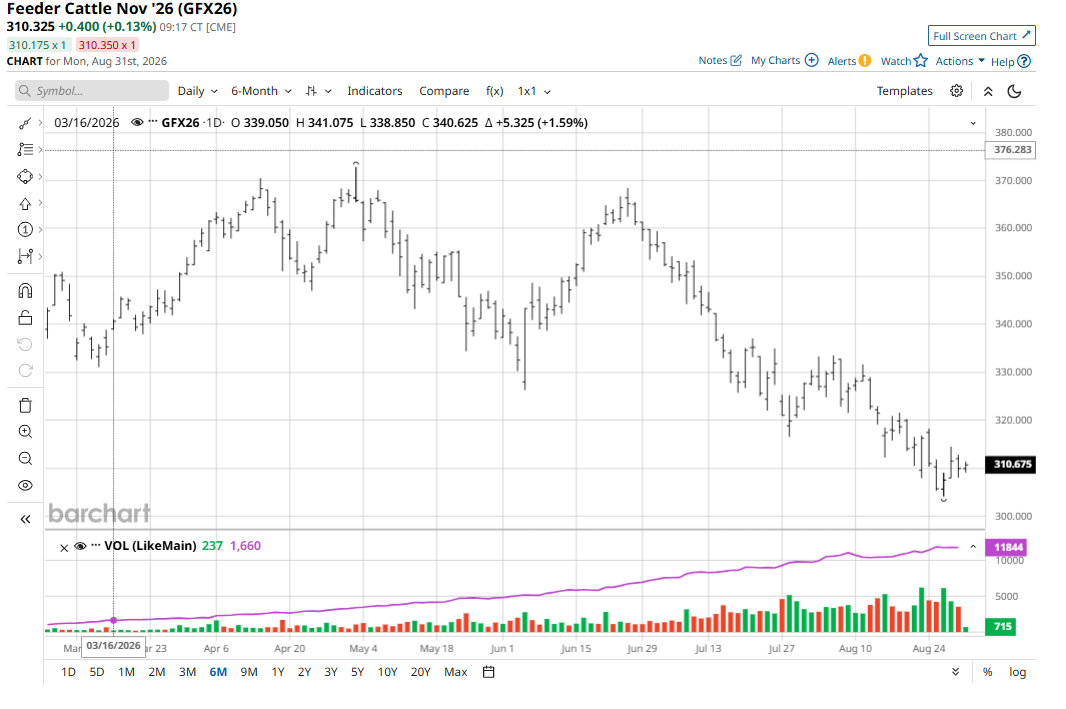
October live cattle (LEV26) futures on Friday fell $1.20 to $211.725 and for the week were down $6.20. November feeder cattle (GFX26) futures lost $1.55 to $309.925 and on the week lost $6.325. The cattle futures markets have seen steady technical selling over the past four weeks as both markets remain trapped in price downtrends on the daily bar charts.
Cattle traders this week will digest the implications of President Donald Trump’s administration trying to bring down the price of beef at the meat counter. Trump Friday said on social media that his administration will seek changes to allow farmers and ranchers to slaughter and process their own products in response to calls to loosen the grip of the big companies that dominate U.S. meat processing. “I am authorizing legal documents to be drawn in order to allow Farmers and Ranchers to be given the right to PROCESS THEIR OWN FOOD,” Trump said in a post on Truth Social. “This should move quickly.” The southern U.S. border reopening and Trump’s move to allow tariff-free beef imports aimed at lowering beef prices have weighed on cattle markets recently, pushing live and feeder futures near nine-month lows.
Softening cash cattle and beef market fundamentals have compounded the pressure on futures and have given packers the upper hand in dealing with feedlot operators. Improved packer margins, helped by tighter slaughter capacity, have lifted recent slaughter rates and should bolster better demand as cooler weather sets in this fall.
The USDA at midday on Friday reported active cash cattle trading last week at lower money, with steers averaging $218.65 and heifers $218.63. The agency reported average cash cattle trading the week prior at $225.01.
The major U.S. stock indexes recently hit record highs, which is good for upbeat consumer attitudes that could support better consumer demand for beef at the meat counter heading into fall. Recent U.S. inflation reports that showed tamer readings than in previous months are also a positive for consumers. However, retail gasoline prices at the pump that are still elevated have consumers concerned. Demand for beef could be crimped with gasoline prices staying close to $4.00 a gallon at the pumps.
Still, the U.S. cattle-supply story remains price-friendly. The USDA recently reported that U.S. feedlot placements during July totaled just 1.42 million head, down 11% from a year earlier and the lowest July placement total since the series began in 1996. July marketings were also historically low at 1.62 million head, down 7%.
Lean Hog Futures Rebound Friday, But Bulls Need to Show More Power
October lean hog (HEV26) futures on Friday rose $1.275 to $81.90, hit a two-week high, and for the week were up $1.025. Heavy short covering and perceived bargain buying late in the session Friday pushed futures prices higher. However, prices remain in a downtrend on the daily bar chart and bulls need to show more strength this week to begin to suggest a market bottom is in place.
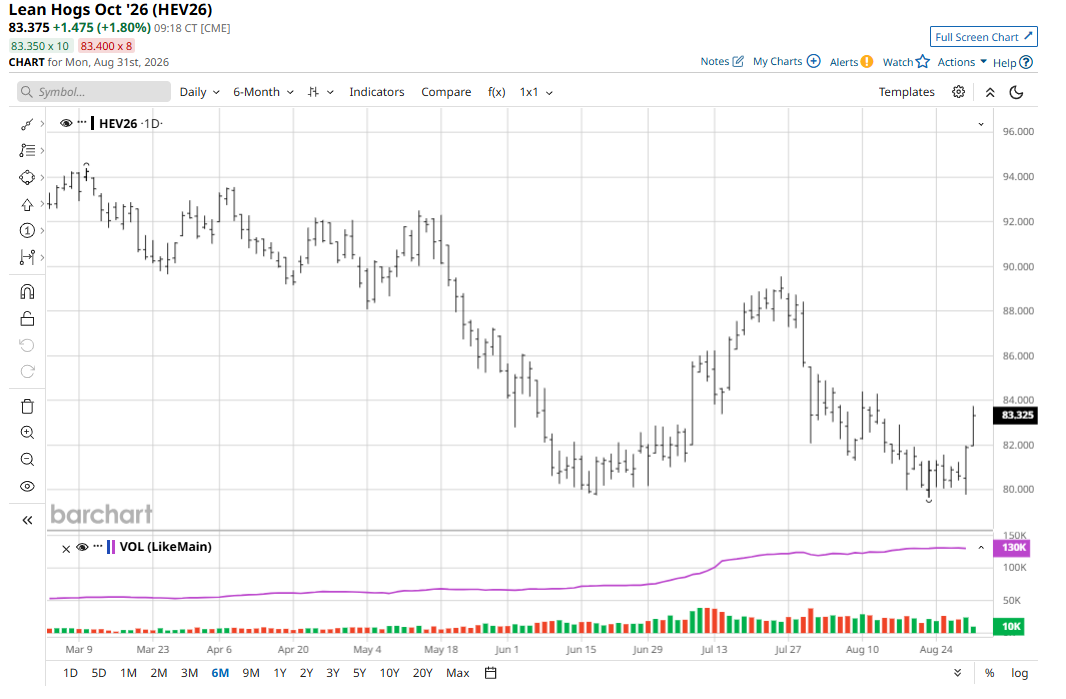
Still-declining cash hog prices also favor the lean hog futures bears. The selloff in the cattle futures market recently is also still bearish for lean hog futures.
The latest CME lean hog index is down 28 cents to $92.14. Today’s projected CME index price is down another 62 cents at $91.52. The national direct five-day rolling average cash hog price quote for Friday was $91.62. Historically, the lean hog index weakens from late summer into fall as more hogs reach market weight and slaughter levels rise. The weakening CME lean hog index and national direct prices also suggest a seasonal top in futures as summer demand softens.
The shake-up in the cattle industry, with recent plant closures and historically tight cattle supplies, are likely to continue to impact the hog industry and futures markets in the months ahead. Hog traders can argue the situation could be bullish for hogs, given historically elevated beef prices at the meat counter meaning better substitution demand for pork.
Speculators are still net short lean hog futures — pushing positioning toward extremes that can fuel sharp short-covering rallies — yet seasonality is still calling the near-term shots. Looking toward year-end the path could brighten. Tighter expected pig crops, resilient export demand, and the usual holiday-season lift may spark a rebound this fall.
Let me know what you think! I enjoy hearing from my valued Barchart readers worldwide. And I answer all your emails. Email me at jim@jimwyckoff.com.
On the date of publication, Jim Wyckoff did not have (either directly or indirectly) positions in any of the securities mentioned in this article. All information and data in this article is solely for informational purposes. For more information please view the Barchart Disclosure Policy here.