


3 AI Healthcare Stocks With Real Revenue Investors May Want To Watch
With 10 year US Treasury yields back near 20 month highs around 4.74%, investors are being paid more to sit in cash and bonds. That raises the bar for any growth story. AI powered healthcare stocks that can justify their role in a portfolio now need clear real world impact. This article looks at three Transformative AI Healthcare Stocks from the screener that fit that test.
The three stocks below are just a starting sample from this Transformative Artificial intelligence (AI) Healthcare Stocks idea. The full screen surfaces 37 more companies with equally compelling narratives that are not covered here. To identify and analyze the highest conviction setups for your own portfolio, head straight into the Transformative Artificial intelligence (AI) Healthcare Stocks screener.
Butterfly Network (BFLY)
Overview: Butterfly Network is a medical imaging company that sells handheld and cart based ultrasound devices that plug into everyday hardware, while tying them into Compass AI and ScanLab so clinicians get AI guided scanning, workflow support, and real time educational feedback at the bedside.
Operations: Butterfly Network generates about US$112 million in revenue from its AI enhanced personal ultrasound solution, with roughly US$92 million from the United States and US$20 million from international markets.
Market Cap: US$2.5b
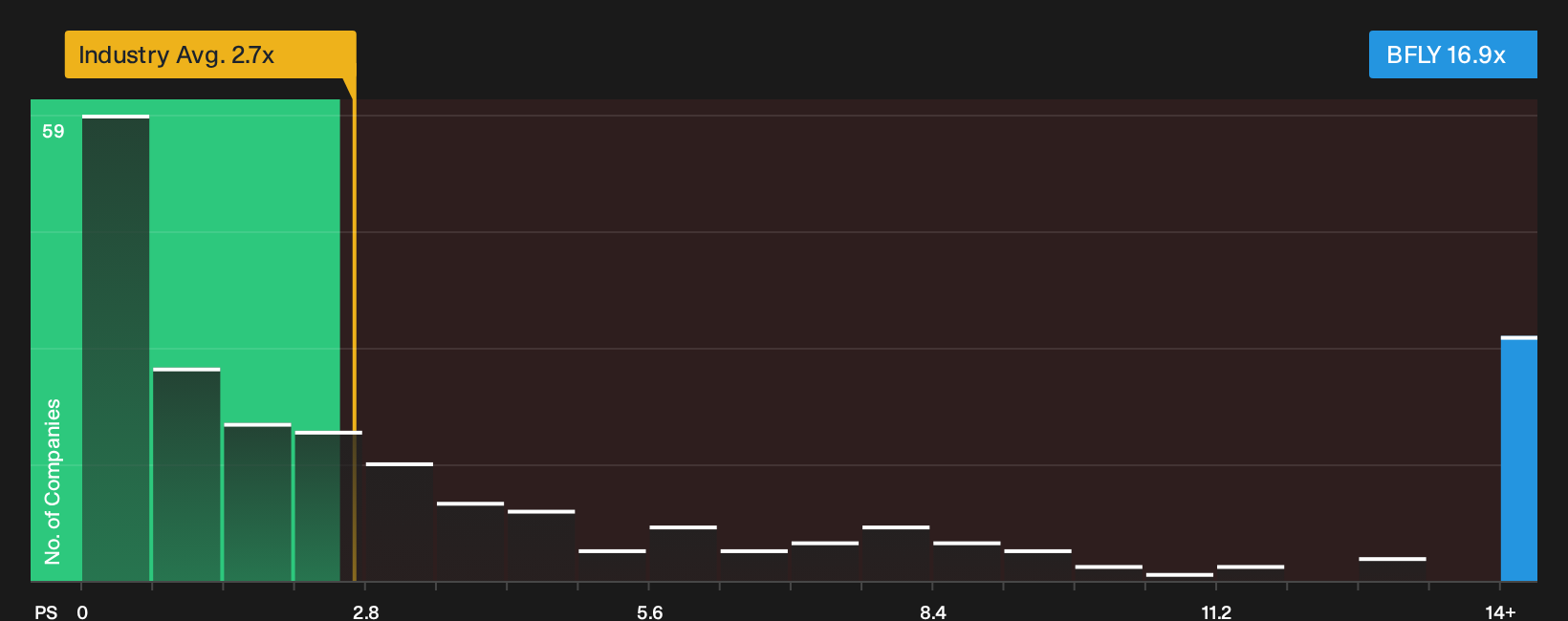
Investors looking at AI in healthcare may consider Butterfly Network because it is not just selling ultrasound hardware; it is also aiming to turn every scan into an AI assisted workflow. Compass AI is designed to connect probes, departments, and billing in one system. ScanLab is intended to help clinicians capture higher quality images with on screen guidance. That ambition comes with risk. The company is still loss making, carries a high P/S multiple around 21x, and has seen periods of insider selling, while recent insider buying presents a mixed signal. If Compass AI and Embedded partnerships gain wider traction, the potential payoff for ultrasound on chip and AI guided imaging could differ from a simple device sale story.
Butterfly Network is working to turn bedside scans into a software story rather than just a hardware sale, which could matter more than many investors realise. Get the fuller picture, including where the ultrasound on chip ambition might run into trouble, in the analysis report for Butterfly Network
Caris Life Sciences (CAI)
Overview: Caris Life Sciences is a precision oncology company that uses whole exome, transcriptome and genome sequencing across tissue and blood, combined with AI and machine learning, to guide cancer diagnosis, therapy selection, monitoring and early detection. Its MI Profile, Caris Assure, Precision Whole Genome, Caris Detect, MRD and ChromoSeq platforms are built to turn deep molecular data into clinical decisions for hospitals, clinicians, patients and pharma partners.
Operations: Caris Life Sciences generates about US$989.6 million in biotechnology revenue, with roughly US$980.2 million from the United States and US$9.4 million from international markets.
Market Cap: US$7.4b
Caris Life Sciences gives investors direct exposure to AI in cancer care through its whole genome and multi omics platforms that support therapy selection, minimal residual disease tracking and Caris Detect multi cancer early detection. Q2 2026 results showed 45% year on year revenue growth, a sharp narrowing of net losses and a fifth straight quarter of positive adjusted EBITDA and free cash flow. This indicates that the model is beginning to scale. On the other hand, there is execution risk around reimbursement, competition in MRD and early detection, and sensitivity to capital needs as testing volumes ramp. For investors who want a closer look at how this AI driven data asset could translate into future cash flows, the story is only partially visible in recent numbers so far.
Caris Life Sciences is already showing scaling revenue and positive adjusted EBITDA, yet the bigger story around its AI driven testing footprint is still forming. See how the full cash flow picture and competitive pressures line up in the analysis report for Caris Life Sciences

Stryker (SYK)
Overview: Stryker is a global medical technology company that supplies hospitals and surgeons with orthopaedic implants, surgical equipment, and a MedSurg & Neurotechnology platform that includes AI assisted virtual care, clinical communication tools and surgical robotics such as the Mako suite. Its AI driven systems are designed to support clinical decision making, streamline hospital workflows and enable robot assisted procedures, alongside a large orthopaedics business that still provides most of its revenue.
Operations: Stryker generates about US$9.7b in revenue from Orthopaedics and about US$16.1b from MedSurg and Neurotechnology.
Market Cap: US$126.4b
Investors looking at AI in healthcare may see Stryker as a way to pair established orthopaedic hardware with software rich hospital infrastructure. The MedSurg & Neurotechnology segment brings AI into clinical communication, virtual care and Mako robotics, which can make operating rooms and wards run more efficiently while supporting more precise procedures. At the same time, the stock carries execution questions after a cyberattack disrupted operations, insider selling over recent months and a meaningful debt load that funds acquisitions and digital projects. The company’s future profile will likely depend on how hospitals adopt its AI enabled platforms and how margins evolve from the software and service layer, which could result in a mix of scale, profitability and AI exposure that differs from a traditional implant manufacturer story.
Stryker’s hospital wide AI story is still easy to underestimate, especially compared with its orthopaedics scale. See how the MedSurg & Neurotechnology opportunity and recent shock risks intersect in the analysis report for Stryker

Seeking Alternatives Before The Crowd
Fresh opportunities can move from quiet accumulation to full breakout before most investors even look up. Avoid reacting only after momentum is already strong by monitoring potential ideas in advance.
- Spot potential breakouts earlier by scanning the 18 high quality undiscovered gems while they are still under the radar and before wider attention affects pricing.
- Focus on cash generating AI opportunities by reviewing the 76 profitable AI stocks that aren't just burning cash before enthusiasm influences valuations and your preferred entry range moves out of reach.
- Strengthen portfolio resilience by checking the list of solid balance sheet and fundamentals (50 results) while balance sheets still look robust and pricing reflects information that is relatively current.
This article by Simply Wall St is general in nature. We provide commentary based on historical data and analyst forecasts only using an unbiased methodology and our articles are not intended to be financial advice. It does not constitute a recommendation to buy or sell any stock, and does not take account of your objectives, or your financial situation. We aim to bring you long-term focused analysis driven by fundamental data. Note that our analysis may not factor in the latest price-sensitive company announcements or qualitative material. Simply Wall St has no position in any stocks mentioned.
Have feedback on this article? Concerned about the content? Get in touch with us directly. Alternatively, email editorial-team@simplywallst.com