


Aptiv Stock And Two Auto Suppliers Worth Watching For Tariff Driven Supply Chain Shifts
Escalating tariff threats between the US and Canada are shaking up North American auto and parts supply chains, and that disruption is exactly why many investors are watching US domestic auto manufacturers and parts suppliers so closely right now. Trade risk can reshape cost structures, profit pools and market expectations, which can create mispricing. This article walks through three stocks exposed to the latest trade headlines and explains how this backdrop could influence their risk and reward profiles.
The stocks covered below are just a sample of the idea, and the full screen surfaced 11 more US domestic auto manufacturers and parts suppliers with equally compelling narratives that are not covered in this article. Head straight into the US Domestic Auto Manufacturers and Parts Suppliers screener to analyze, filter, and identify which auto and parts stocks best fit your own highest conviction view.
Aptiv (APTV)
Aptiv is a global industrial technology company that supplies the electronics and software that sit inside modern vehicles, which fits neatly with a screener focused on larger North American auto and parts suppliers with meaningful US operations. Its business is split across Intelligent Systems at about US$5.8b of revenue and the Engineered Components Group at about US$6.8b, with adjustments and eliminations reflecting internal allocations. The stock is a mid to large cap at around US$10.0b, which puts it firmly within the size bracket many investors look for when assessing domestically exposed auto technology suppliers.
For investors watching the trade risk between the US and Canada, Aptiv offers an interesting mix of US-facing auto exposure and a growing push into software, edge AI and even non auto sectors like robotics and energy storage. The company is working through softer revenue guidance, margin pressure and a sizeable one off loss, and it also carries high debt, so the story is not without real risk. What keeps investors engaged is the combination of forecast earnings growth, a wide gap to some fair value estimates and management moves like buybacks and USMCA compliant supply chains that could matter more if tariffs on cross border parts really bite.
Aptiv’s push into software, edge AI and robotics could be masking where the real risk reward skew sits right now. Get the full picture with the following resource: 3 key rewards and 3 important warning signs
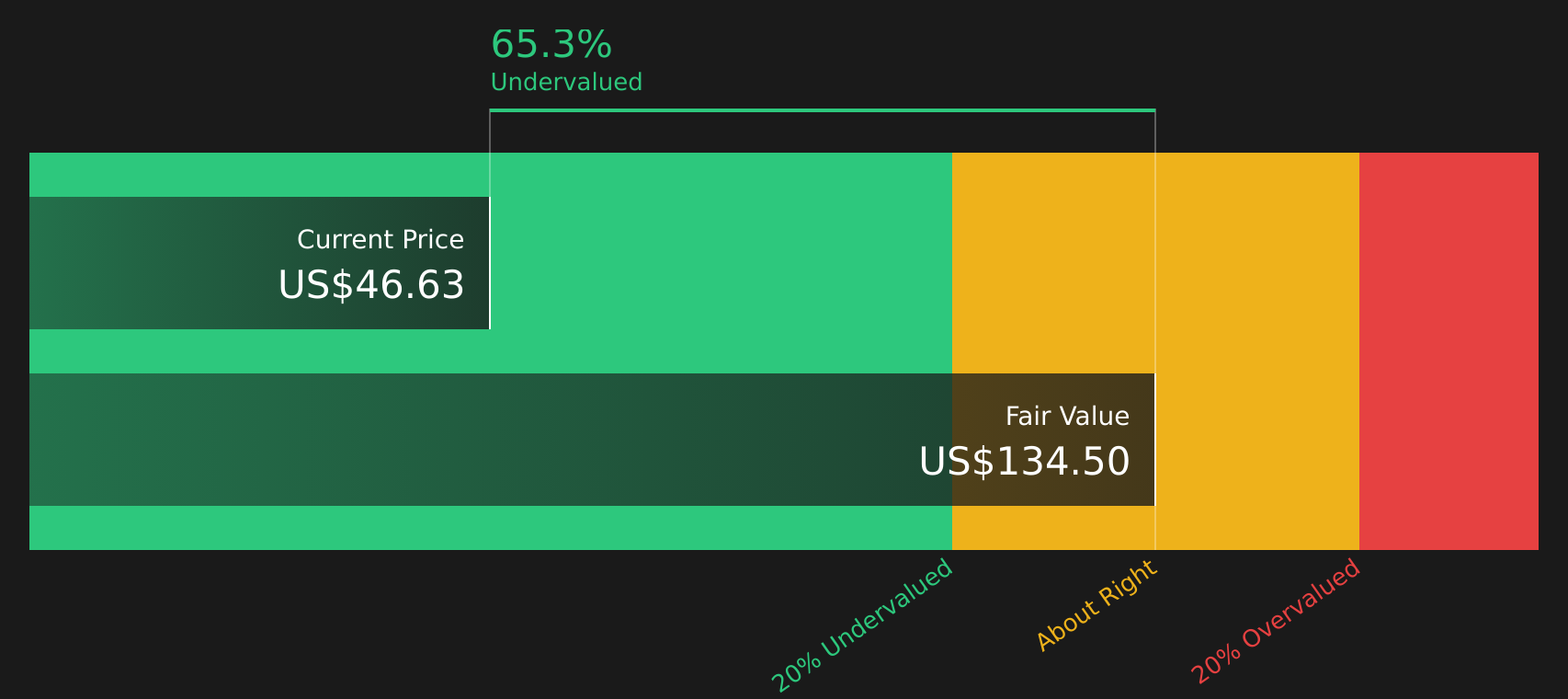
Winnebago Industries (WGO)
Winnebago Industries is one of the most directly US focused vehicle makers in the screener, building towable and motorhome RVs plus boats that largely serve American leisure travel. The company generates about US$1.3b from Motorhome RVs and US$1.1b from Towable RVs, with Marine adding roughly US$359 million and Corporate and other activities about US$45 million. The stock has a market cap of about US$898 million, which places it in the mid cap range for US listed auto related companies.
Winnebago Industries offers a mix of potential earnings recovery and income appeal that many investors look for in US centric manufacturers. The tri brand motorhome strategy and consolidation of RV production sites are both aimed at lifting margins and making better use of its ABL facility, which now runs to 2031. New models such as the compact Elora/Resa RV help keep the product line fresh for US leisure demand. At the same time, the RV cycle is still soft, dividends currently lean on high payout levels and tariffs on imported chassis or components remain a moving target, even if less than 10% of unit volume is sourced offshore. If you are weighing whether these positives outweigh the pressures on guidance and dealer inventories, Winnebago is a story worth watching more closely.
Winnebago’s RV cycle story may look stalled, yet the mix of motorhomes, towables and marine hints at something investors could be missing in the numbers. Get the full context in the analysis report for Winnebago Industries

PHINIA (PHIN)
PHINIA develops and manufactures fuel systems and aftermarket components that support everything from US commercial trucks to passenger vehicles, which fits neatly with a screener focused on larger North American auto and parts suppliers linked to domestic manufacturing. The company generated about US$2.4b from Fuel Systems and US$1.4b from Aftermarket in its latest breakdown, with a small inter segment adjustment of US$127 million. With a market cap of roughly US$2.7b, PHINIA sits in the mid to upper range of auto component stocks in this screen.
Investors looking at PHINIA are getting more than a traditional fuel systems supplier. The company is leaning into lower and zero carbon technologies, hydrogen capable systems and a broad aftermarket business that can smooth out some of the usual auto cycle swings, supported by acquisitions such as stoba Group and continued R&D spend highlighted in recent sustainability reporting. At the same time, high debt, a US$71 million one off loss and recent insider selling point to real financial and execution risk, especially with tariffs and USMCA uncertainty affecting customer volumes and pricing power. If you want to see whether PHINIA’s push into alternative fuels, aftermarket cash flow and buybacks outweigh those tariff and balance sheet questions, this is a story worth looking at more closely.
PHINIA’s push into lower and zero carbon fuel systems, along with a broad aftermarket business, could be masking where the real upside sits right now. Get the full picture in the 4 key rewards and 3 important warning signs

Curious To Explore Fresh Alternatives?
Some stocks move quietly before a breakout and momentum only shows up once the crowd has caught on. Scan these fresh ideas while it matters and get in early.
- Spot potential under the radar quality by scanning a curated set of 49 high quality undervalued stocks that pair solid cash generation with robust balance sheets before momentum starts flying.
- Track where real AI revenues meet discipline by reviewing 76 profitable AI stocks that aren't just burning cash that already generate profits instead of just burning cash while the story is still under followed.
- Follow the money into critical materials by checking 9 top copper producer stocks supplying essential infrastructure as demand themes build and pricing power could matter more.
This article by Simply Wall St is general in nature. We provide commentary based on historical data and analyst forecasts only using an unbiased methodology and our articles are not intended to be financial advice. It does not constitute a recommendation to buy or sell any stock, and does not take account of your objectives, or your financial situation. We aim to bring you long-term focused analysis driven by fundamental data. Note that our analysis may not factor in the latest price-sensitive company announcements or qualitative material. Simply Wall St has no position in any stocks mentioned.
Have feedback on this article? Concerned about the content? Get in touch with us directly. Alternatively, email editorial-team@simplywallst.com